

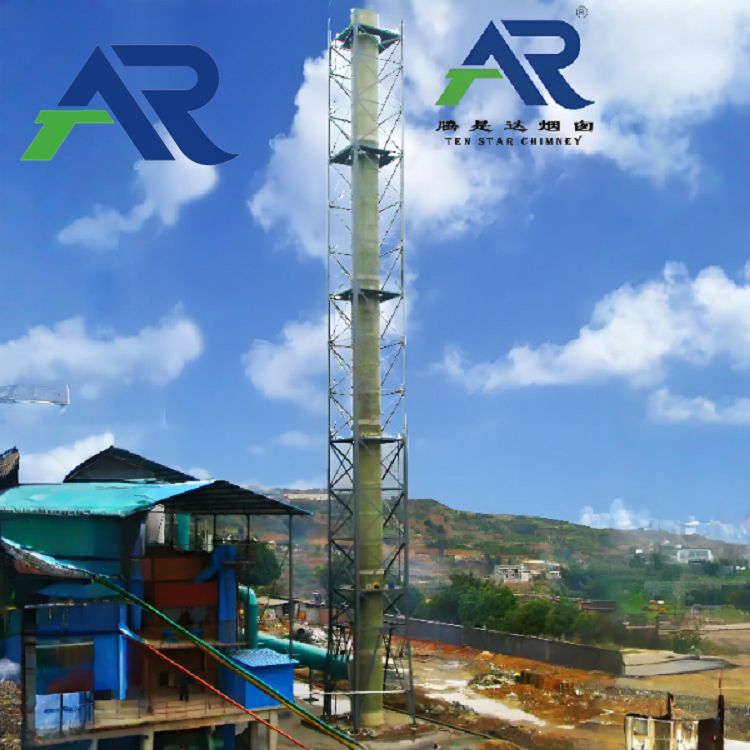
A fiberglass chimney is a remarkable innovation in the field of chimney technology, offering a range of benefits that make it a popular choice for various applications. As a supplier of fiberglass chimneys, I am excited to share in - depth knowledge about this product with you.
Composition and Structure
Fiberglass chimneys are primarily made from fiberglass - reinforced plastic (FRP). Fiberglass is a composite material consisting of fine glass fibers embedded in a polymer matrix. The glass fibers provide high strength and stiffness, while the polymer matrix binds the fibers together and protects them from environmental factors.
The structure of a fiberglass chimney is carefully designed to ensure optimal performance. It usually has a smooth inner surface, which reduces the resistance to the flow of flue gases. This smoothness also helps prevent the accumulation of soot and other debris, making the chimney easier to clean and maintain. The outer layer of the chimney is often designed to be weather - resistant, protecting the internal structure from the elements such as rain, snow, and UV radiation.
Advantages of Fiberglass Chimneys
Corrosion Resistance
One of the most significant advantages of fiberglass chimneys is their excellent corrosion resistance. Unlike traditional metal chimneys, such as Stainless Steel Chimneys, which can corrode over time when exposed to acidic flue gases, fiberglass is highly resistant to chemical attack. This makes fiberglass chimneys an ideal choice for industrial applications where the flue gases may contain high levels of sulfur dioxide, nitrogen oxides, and other corrosive substances.
Lightweight
Fiberglass chimneys are much lighter than their metal counterparts. This lightweight nature makes them easier to transport, install, and handle. In construction projects, the reduced weight can also lead to cost savings in terms of foundation requirements, as less support structure is needed to hold up the chimney. For example, in retrofit projects where an existing chimney needs to be replaced, the lighter weight of a fiberglass chimney can be a major advantage, as it may not require significant modifications to the building's structure.
Thermal Insulation
Fiberglass has good thermal insulation properties. A well - designed fiberglass chimney can help reduce heat loss from the flue gases, which is beneficial for energy efficiency. In some industrial processes, maintaining the temperature of the flue gases is crucial for the proper functioning of downstream equipment. The thermal insulation provided by fiberglass chimneys can help ensure that the flue gases reach the required temperature at the end of the chimney system.
Design Flexibility
Fiberglass can be molded into various shapes and sizes, offering great design flexibility. This means that fiberglass chimneys can be customized to meet the specific requirements of different applications. Whether it's a small residential chimney or a large - scale industrial chimney, Fiberglass Chimney can be designed and manufactured to fit the exact specifications.
Applications of Fiberglass Chimneys
Industrial Sector
In the industrial sector, fiberglass chimneys are widely used in power plants, chemical factories, and refineries. In power plants, they are used to exhaust the flue gases generated by coal - fired, gas - fired, or biomass - fired boilers. The corrosion resistance of fiberglass is especially important in coal - fired power plants, where the flue gases contain high levels of sulfur compounds. In chemical factories, fiberglass chimneys can handle the corrosive gases produced during chemical reactions.
Residential and Commercial Buildings
Fiberglass chimneys are also suitable for residential and commercial buildings. They can be used in heating systems, such as wood - burning stoves, gas furnaces, and oil - fired boilers. Their lightweight and easy - to - install nature make them a convenient choice for homeowners and building contractors. In addition, their aesthetic appeal can be enhanced through various finishing options, allowing them to blend in with the architectural style of the building.
Comparison with Other Chimney Types
Stainless Steel Chimneys
Stainless Steel Chimneys are a common alternative to fiberglass chimneys. While stainless steel is strong and has good heat resistance, it is more prone to corrosion in certain environments. Fiberglass chimneys, on the other hand, offer better corrosion resistance, especially in the presence of acidic flue gases. However, stainless steel chimneys may be more suitable for applications where high - temperature resistance is the primary concern, as they can withstand higher temperatures than fiberglass.
Titanium Steel Composite Plate Chimney
Titanium Steel Composite Plate Chimney combines the advantages of titanium and steel. It has high strength and good corrosion resistance. However, the cost of titanium steel composite plate chimneys is relatively high compared to fiberglass chimneys. Fiberglass chimneys provide a cost - effective solution for many applications, especially when corrosion resistance is required without the need for extremely high - end materials.
Manufacturing Process
The manufacturing process of fiberglass chimneys typically involves several steps. First, the raw materials, including glass fibers and resin, are prepared. The glass fibers are usually in the form of mats or rovings, and the resin is selected based on the specific requirements of the chimney, such as chemical resistance and mechanical properties.
The next step is the molding process. There are different molding techniques, such as hand lay - up, spray - up, and filament winding. In hand lay - up, the glass fibers are manually placed in a mold, and the resin is applied layer by layer. Spray - up involves spraying a mixture of chopped glass fibers and resin onto the mold. Filament winding is a more automated process, where continuous glass fibers are wound around a rotating mandrel in a specific pattern, and resin is applied during the winding process.
After the molding, the chimney undergoes a curing process to harden the resin. This may involve heating the chimney in an oven or allowing it to cure at room temperature, depending on the type of resin used. Finally, the chimney is finished, which may include trimming, sanding, and applying a protective coating.
Quality Assurance
As a fiberglass chimney supplier, quality assurance is of utmost importance. We follow strict quality control procedures throughout the manufacturing process. This includes testing the raw materials for their physical and chemical properties, inspecting the intermediate products during the manufacturing process, and conducting final tests on the finished chimneys.
The finished chimneys are tested for various parameters, such as strength, corrosion resistance, and dimensional accuracy. Non - destructive testing methods, such as ultrasonic testing and X - ray inspection, may be used to detect any internal defects. In addition, we ensure that our chimneys comply with relevant national and international standards, such as ASTM and ISO standards.
Maintenance of Fiberglass Chimneys
Fiberglass chimneys require relatively low maintenance. Regular inspections are recommended to check for any signs of damage, such as cracks or delamination. If any damage is detected, it should be repaired promptly to prevent further deterioration.
Cleaning the inner surface of the chimney periodically can help maintain its performance. This can be done using mild detergents and non - abrasive cleaning tools. It is important to avoid using harsh chemicals or abrasive materials, as they may damage the fiberglass surface.
Conclusion
Fiberglass chimneys offer a unique combination of advantages, including corrosion resistance, lightweight, thermal insulation, and design flexibility. They are suitable for a wide range of applications, from industrial to residential and commercial. Compared to other chimney types, such as stainless steel chimneys and titanium steel composite plate chimneys, fiberglass chimneys provide a cost - effective and reliable solution.
If you are in the market for a chimney and are considering the benefits of a fiberglass chimney, we invite you to contact us for more information and to discuss your specific requirements. Our team of experts is ready to assist you in choosing the right chimney for your needs and to provide you with high - quality products and excellent service.

References
- ASTM International. (Year). Standards related to fiberglass - reinforced plastics.
- ISO. (Year). International standards for chimney systems.
- Technical literature from fiberglass and chimney manufacturing associations.