
As a supplier of Municipal Light Poles, I often encounter questions from clients about power consumption. Understanding the power consumption of a typical municipal light pole is crucial for urban planners, municipalities, and facility managers. It not only impacts the operational costs but also has implications for energy efficiency and sustainability.
Understanding the Basics of Municipal Light Pole Power Consumption
Municipal light poles come in various shapes, sizes, and are equipped with different lighting technologies. The power consumption of these light poles largely depends on the type of lighting fixture they are using. Traditional lighting technologies such as incandescent bulbs, halogen lamps, and mercury vapor lamps were commonly used in the past. However, they are now being gradually replaced by more energy - efficient alternatives due to their high power consumption and relatively short lifespan.
Incandescent bulbs work by heating a filament until it glows. These bulbs are extremely inefficient, with only about 5 - 10% of the electrical energy being converted into visible light, while the rest is wasted as heat. A typical incandescent bulb used in a light pole might consume between 60 - 150 watts. Halogen lamps are a bit more efficient than incandescent bulbs, but they still consume a significant amount of power, typically ranging from 35 - 150 watts.
Mercury vapor lamps were widely used for street lighting in the past. They consume power in the range of 40 - 1000 watts, depending on the size and application. However, they have several drawbacks, including long warm - up times, low color rendering index (CRI), and the presence of mercury, which is a hazardous substance.
The Rise of Energy - Efficient Lighting Technologies
In recent years, high - intensity discharge (HID) lamps such as metal halide and high - pressure sodium (HPS) lamps have been popular choices for municipal lighting. Metal halide lamps produce a high - quality, white light and are commonly used in areas where good color rendering is required, such as advertising areas, parking lots, and sports fields. They typically consume between 70 - 1000 watts, with the efficiency being much higher than traditional incandescent and halogen lamps.
High - pressure sodium lamps are known for their high energy efficiency and long lifespan. They emit a yellow - orange light and are widely used for street lighting. HPS lamps can have power ratings ranging from 35 - 1000 watts, with smaller wattage lamps often used in residential areas and larger ones in highways and large commercial areas.
The most significant development in municipal lighting has been the adoption of light - emitting diode (LED) technology. LEDs are highly energy - efficient, converting a large percentage of electrical energy into visible light. They also have a long lifespan, reduced maintenance requirements, and can provide better light distribution. The power consumption of LED lights used in municipal light poles can range from as low as 10 watts for small decorative lights to 200 watts or more for high - intensity street lighting.
Factors Affecting Power Consumption
Apart from the type of lighting technology, several other factors can affect the power consumption of a municipal light pole:
- Lighting Level Requirements: Different areas have different lighting level requirements. For example, a busy city street may require higher lighting levels than a quiet residential lane. Higher lighting levels typically mean higher power consumption.
- Lighting Duration: The amount of time the light pole is in operation each day also affects power consumption. In some areas, lights may be on for 12 - 14 hours a day, while in others, they may be turned off during low - traffic hours to save energy.
- Light Distribution and Optics: The way light is distributed from the fixture can impact power consumption. Well - designed optics can direct light where it is needed, reducing the need for higher - wattage bulbs to achieve the desired lighting levels.
Calculating the Power Consumption of a Typical Municipal Light Pole
Let's take a look at a simple example of calculating the power consumption of a municipal light pole. Suppose we have a street with LED light poles, and each pole has a 100 - watt LED fixture. If the lights are on for 12 hours a day, we can calculate the daily power consumption of one light pole as follows:
Power consumption (kWh) = (Power (W) × Time (h)) / 1000
For a 100 - watt LED fixture operating for 12 hours a day:
Power consumption = (100 × 12) / 1000 = 1.2 kWh per day
If we have 100 such light poles in a particular area, the total daily power consumption would be 1.2 kWh × 100 = 120 kWh. In a month (assuming 30 days), the total power consumption would be 120 kWh × 30 = 3600 kWh.
The Economic and Environmental Impact of Power Consumption
The power consumption of municipal light poles has both economic and environmental implications. High power consumption means higher electricity bills for municipalities. By switching to energy - efficient lighting technologies such as LEDs, municipalities can significantly reduce their energy costs. For example, replacing traditional HPS lamps with LEDs can lead to energy savings of up to 50% or more.
From an environmental perspective, reducing power consumption in municipal lighting helps in reducing greenhouse gas emissions. The production of electricity often involves the burning of fossil fuels, which release carbon dioxide and other pollutants into the atmosphere. By using energy - efficient lighting, we can contribute to a more sustainable and greener urban environment.
Our Solutions as a Municipal Light Pole Supplier
As a leading supplier of Municipal Light Pole, we offer a wide range of lighting solutions designed to meet the diverse needs of our clients. Our product portfolio includes both traditional and energy - efficient lighting options, such as LED - based smart light poles.
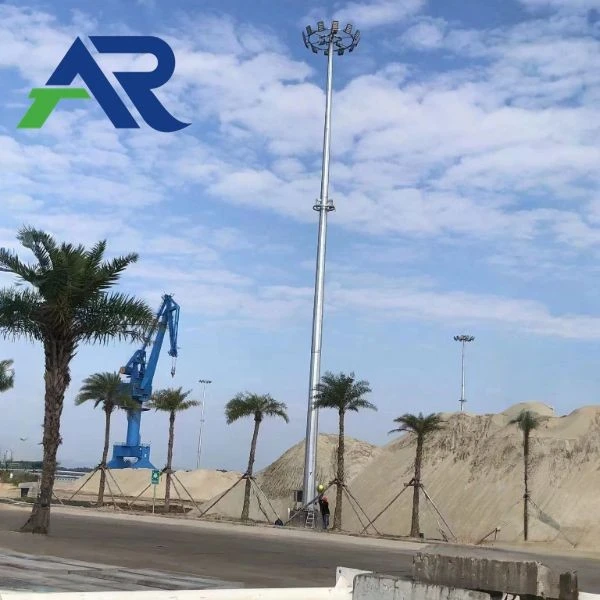
Our Smart Light Pole is a state - of - the - art solution that not only provides efficient lighting but also offers additional features such as smart controls, environmental monitoring, and Wi - Fi connectivity. These smart light poles can be programmed to adjust lighting levels based on factors such as time of day, traffic flow, and ambient light conditions, further reducing power consumption.
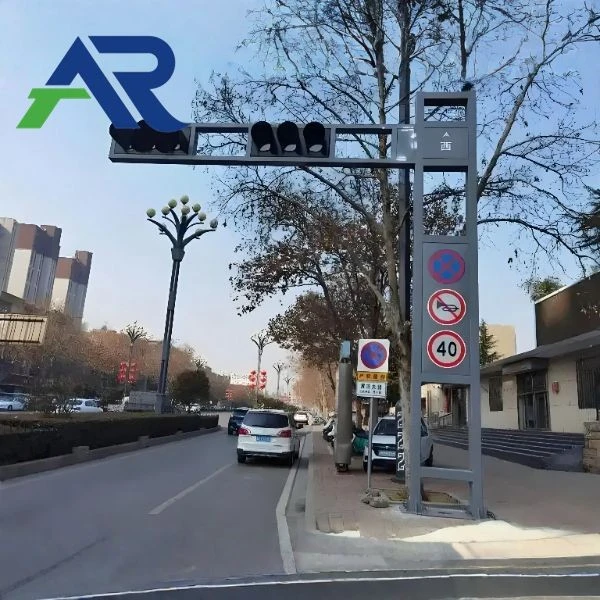
In addition to smart light poles, we also offer a variety of Traffic Signal Pole Types that are designed to meet the highest safety and performance standards. Our traffic signal poles are available in different materials, sizes, and configurations to suit various traffic management needs.
Contact Us for Your Lighting Needs
If you are a municipality, urban planner, or facility manager looking to upgrade your lighting infrastructure, we are here to help. Our team of experts can assist you in selecting the right lighting solution based on your specific requirements, budget, and energy - efficiency goals. We offer high - quality municipal light poles, reliable installation services, and ongoing maintenance support.
Don't hesitate to reach out to us for more information on our products and services. Let's work together to create a brighter, more energy - efficient, and sustainable urban environment.
References
- "LED Lighting Technology: Lifecycle Assessment and Environmental Impact." Lighting Research Center, Rensselaer Polytechnic Institute.
- "High - Intensity Discharge (HID) Lamps: A Guide to Selection and Application." U.S. Department of Energy.
- "Municipal Lighting Design and Energy Management." International Association of Lighting Designers.