

Hey there! As a supplier of steel corrugated culverts, I often get asked about how the cost of these culverts stacks up against concrete ones. So, I thought I'd break it down in this blog post to give you a clear idea of what to expect when making a choice between the two.
Let's start with the initial purchase cost. Concrete culverts are usually made from a combination of cement, aggregates, and water. They're heavy, which means they require special equipment for transportation. This transportation cost can add up quickly, especially if your project site is far from the manufacturing plant. On the other hand, steel corrugated culverts are lightweight. They're made from pre - fabricated steel sheets that are corrugated to increase their strength. Because of their light weight, the transportation cost is significantly lower. You can easily ship them to your project site without needing a huge fleet of heavy - duty trucks. For instance, if you're building a culvert in a rural area that's a few hundred miles from the supplier, the money you save on transporting steel corrugated culverts can be a game - changer.
Now, let's talk about the installation cost. Installing a concrete culvert is a labor - intensive process. You need a large crew to handle the heavy concrete sections. You also have to dig a very precise trench because the concrete culverts are rigid and don't adapt well to uneven ground. Any misalignment during installation can lead to long - term structural problems. Moreover, you need to use heavy machinery like cranes to lower the concrete culverts into place. All these factors drive up the installation cost.
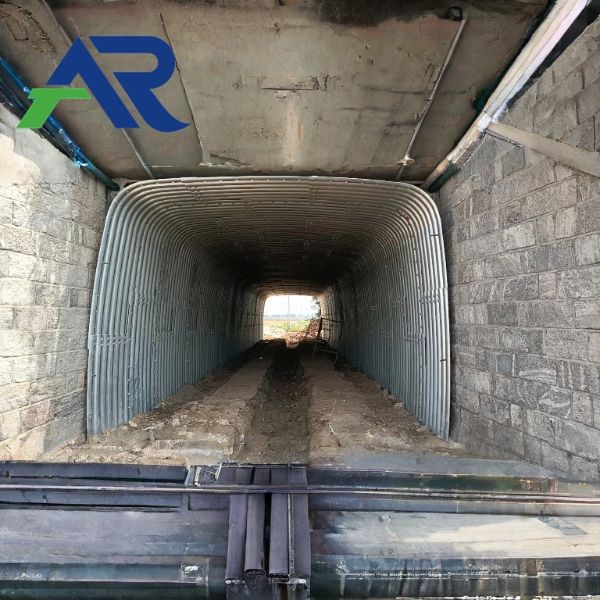
In contrast, steel corrugated culverts are a breeze to install. They come in sections that can be easily assembled on - site. You don't need a massive crew; a small team can do the job. Since they're flexible, they can adapt to minor variations in the ground without any issues. You can even install them in areas with difficult access because they're lightweight and easy to maneuver. This flexibility not only saves on labor but also reduces the need for expensive heavy machinery. You can check out Bridge Culvert Steel Corrugated Culvert to see some of the products that are easy to install.

Another cost factor is the long - term maintenance cost. Concrete culverts are prone to cracking over time. These cracks can allow water to seep in, which can lead to corrosion of any internal reinforcement bars. Once the reinforcement starts to corrode, the structural integrity of the culvert is compromised. Repairing these cracks and dealing with corrosion can be very expensive. You may need to hire specialized contractors and use high - end repair materials.
Steel corrugated culverts, however, are designed to be durable. The steel is often coated with protective layers like galvanization or polymer coatings. These coatings prevent rust and corrosion, which means you'll have fewer maintenance issues over the lifespan of the culvert. Even if there's a small scratch on the coating, the steel is still relatively resistant to the elements. And if you do need to make repairs, it's usually a lot simpler and cheaper than fixing a concrete culvert. You can easily patch up a small section of the corrugated steel rather than having to replace a large portion of a cracked concrete culvert.
When it comes to environmental costs, we also need to consider the big picture. Producing concrete is a very energy - intensive process. It involves heating limestone and other materials at extremely high temperatures, which releases a significant amount of carbon dioxide into the atmosphere. This contributes to global warming and has long - term environmental consequences. On the other hand, steel production has become more energy - efficient over the years. And since steel is highly recyclable, at the end of its useful life, a steel corrugated culvert can be recycled into new steel products. This reduces the demand for virgin materials and helps to conserve natural resources. You can find more information about sustainable options like Steel Urban Underground Integrated Pipeline Corridor.
In some cases, the cost of concrete culverts may seem lower at first glance, especially if you're only looking at the purchase price. But when you factor in transportation, installation, long - term maintenance, and environmental costs, steel corrugated culverts often turn out to be the more cost - effective option.
Let's take a real - world example. Suppose you're working on a small - scale road project that requires a culvert. The concrete culvert has an initial purchase price of $10,000. The transportation cost is $2,000, and the installation cost is $5,000. Over a 20 - year lifespan, you estimate that the maintenance cost will be around $8,000. So, in total, the concrete culvert will cost you $25,000.
Now, let's look at the steel corrugated culvert for the same project. The initial purchase price might be $11,000. The transportation cost is only $500 because of its light weight, and the installation cost is $2,000. Over the same 20 - year lifespan, the maintenance cost is estimated to be just $2,000. So, the total cost of the steel corrugated culvert is $15,500. That's a significant saving of $9,500!
There are also some additional benefits of steel corrugated culverts that can indirectly save you money. For example, their quick installation means that your project can be completed faster. This reduces the overall project timeline, which can save you money on things like project management fees and potential fines for late completion. Also, if you're working on a project in an area with strict environmental regulations, choosing a more sustainable option like a steel corrugated culvert can help you avoid any potential environmental fines.
If you're involved in projects like subway passages, steel corrugated culverts also have an edge. Corrugated Pipe for Subway Passage offers a great solution. They can be easily customized to fit the specific requirements of subway projects. Their flexibility allows them to withstand the vibrations and ground movements associated with subway operations. This means fewer maintenance issues and longer service life, which ultimately saves you money in the long run.
In conclusion, while the upfront cost of steel corrugated culverts may sometimes be slightly higher than concrete culverts, when you consider all the associated costs over the lifespan of the culvert, steel corrugated culverts are often the more economical choice. They're cheaper to transport, easier to install, require less maintenance, and are more environmentally friendly.
If you're thinking about a project that requires a culvert, I'd love to talk to you. Whether it's a small - scale road project or a large - scale urban infrastructure project, I can provide you with the right steel corrugated culvert solutions at a competitive price. Don't hesitate to reach out for more information and to start a purchase negotiation. I'm here to help you make the best decision for your project.
References
- Smith, J. (2020). Comparison of Infrastructure Materials Costs. Journal of Civil Engineering Economics.
- Brown, A. (2019). Environmental Impact of Construction Materials. Sustainable Building Journal.