

In the contemporary era of rapid technological advancement, smart light poles have emerged as a revolutionary solution in the realm of urban infrastructure, particularly in traffic management. As a dedicated smart light pole supplier, I have witnessed firsthand the transformative impact these innovative structures can have on optimizing traffic flow, enhancing safety, and promoting sustainable urban development. In this blog post, I will delve into the multifaceted ways in which smart light poles contribute to traffic management and explore their potential to shape the future of transportation.
1. Traffic Monitoring and Data Collection
One of the primary functions of smart light poles in traffic management is to serve as a comprehensive monitoring system. Equipped with an array of sensors, including cameras, radar, and lidar, these poles can collect real - time data on traffic volume, speed, and vehicle density. This data is invaluable for traffic planners and authorities as it allows them to gain a detailed understanding of traffic patterns, identify congestion hotspots, and make informed decisions regarding traffic control strategies.
For instance, the cameras installed on smart light poles can capture high - resolution images and videos of the roadways. Advanced image processing algorithms can then analyze these visuals to count the number of vehicles, classify their types (e.g., cars, trucks, motorcycles), and detect any abnormal behaviors such as illegal lane changes or traffic violations. Radar and lidar sensors, on the other hand, can accurately measure the speed and distance of vehicles, providing precise information on traffic flow dynamics.
This real - time data can be transmitted to a central traffic management center via wireless communication technologies such as 5G or LoRaWAN. At the center, traffic engineers can use this information to adjust traffic signal timings, deploy traffic enforcement resources more effectively, and implement proactive traffic management measures. By having access to up - to - the - minute traffic data, cities can significantly reduce traffic congestion, minimize travel times, and improve overall traffic efficiency.
2. Intelligent Traffic Signal Control
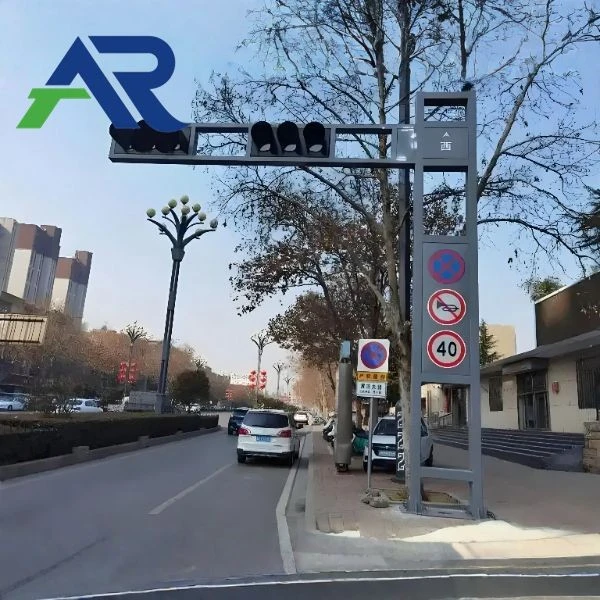
Smart light poles play a crucial role in enabling intelligent traffic signal control systems. Traditional traffic signals operate on fixed timings, which may not be optimal for varying traffic conditions throughout the day. In contrast, smart light poles can communicate with traffic signals in real - time, allowing for dynamic adjustment of signal timings based on actual traffic demand.
The sensors on smart light poles continuously monitor the traffic flow approaching an intersection. If there is a high volume of vehicles on one approach, the smart light pole can send a signal to the traffic controller to extend the green light time for that direction, thereby reducing queuing and improving traffic throughput. Conversely, if a particular approach has low traffic, the signal timing can be adjusted to shorten the green light time and allocate more time to other directions.
Moreover, smart light poles can be integrated with advanced traffic control algorithms that take into account multiple factors such as time of day, day of the week, and special events. For example, during rush hours or major events, the system can automatically optimize the traffic signal timings to accommodate the increased traffic volume. This intelligent traffic signal control not only improves traffic flow but also enhances fuel efficiency and reduces emissions by minimizing the time vehicles spend idling at intersections.
3. Road Safety Enhancement
Safety is a top priority in traffic management, and smart light poles contribute significantly to improving road safety. The high - intensity LED lights on smart light poles provide better illumination of roadways, reducing the risk of accidents during nighttime or low - visibility conditions. Unlike traditional streetlights, smart light poles can adjust the brightness of the lights based on the ambient light levels and traffic conditions. For example, the lights can be dimmed during periods of low traffic or increased in brightness when there is heavy traffic or poor weather.
In addition to lighting, smart light poles can be equipped with safety - related sensors and devices. For instance, they can be fitted with emergency call buttons that allow motorists and pedestrians to quickly contact emergency services in case of an accident or other emergencies. Some smart light poles also feature environmental sensors that can detect hazardous conditions such as fog, ice, or heavy rain. When such conditions are detected, the poles can send alerts to traffic management centers and display warning messages on electronic signage installed on the poles or along the roadways.
Furthermore, the data collected by smart light poles can be used to identify accident - prone areas. By analyzing the traffic patterns and incident data in these areas, traffic authorities can implement targeted safety measures such as installing additional traffic signs, improving road markings, or adjusting speed limits.
4. Integration with Other Traffic Management Systems
Smart light poles are highly versatile and can be integrated with a wide range of other traffic management systems. They can communicate with intelligent transportation systems (ITS) such as variable message signs, ramp meters, and electronic toll collection systems. For example, the data collected by smart light poles can be used to update variable message signs with real - time traffic information, such as congestion alerts, travel times, and alternate routes. This helps motorists make more informed decisions and avoid congested areas.
Smart light poles can also be integrated with public transportation systems. They can provide real - time information on bus and train schedules, arrival times, and service disruptions. This information can be displayed on digital signage installed on the poles or accessed by passengers through mobile applications. By integrating with public transportation systems, smart light poles can encourage the use of public transit, which in turn helps to reduce traffic congestion and environmental impact.
5. Sustainability and Energy Efficiency
As a smart light pole supplier, I am also proud of the positive environmental impact these poles can have. Smart light poles are typically equipped with energy - efficient LED lights that consume significantly less energy than traditional streetlights. Moreover, they can be integrated with solar panels and energy storage systems, allowing them to generate and store their own electricity. This not only reduces the reliance on the grid but also contributes to a more sustainable and resilient urban infrastructure.
In addition to energy savings, smart light poles can help to reduce carbon emissions by improving traffic flow. By minimizing traffic congestion and reducing the time vehicles spend idling, smart light poles contribute to a more efficient transportation system, which in turn leads to lower fuel consumption and fewer greenhouse gas emissions.
6. Cost - Effectiveness
Smart light poles offer a cost - effective solution for traffic management. While the initial investment in smart light poles may be higher than traditional streetlights, the long - term benefits far outweigh the costs. The data collected by smart light poles can be used to optimize traffic management strategies, which can lead to significant savings in terms of reduced congestion, lower fuel consumption, and improved road safety.
Moreover, smart light poles are highly scalable and modular. They can be easily upgraded and expanded to incorporate new sensors and technologies as needed. This means that cities can start with a small deployment of smart light poles and gradually expand the system over time, without having to replace the entire infrastructure.
Conclusion
In conclusion, smart light poles are a game - changer in traffic management. Their ability to monitor traffic, control signals intelligently, enhance safety, integrate with other systems, promote sustainability, and offer cost - effective solutions makes them an indispensable part of modern urban infrastructure. As a smart light pole supplier, I am committed to providing high - quality, innovative solutions that meet the evolving needs of cities and contribute to a more efficient, safe, and sustainable transportation system.
If you are interested in learning more about how smart light poles can benefit your traffic management efforts, or if you are considering a procurement of smart light poles, please feel free to reach out. We are here to discuss your specific requirements and provide you with the best solutions. You can explore our product range by visiting Smart Light Pole, Municipal Light Pole, and Traffic Signal Pole Types.
References
- “Intelligent Transportation Systems: A Primer.” Federal Highway Administration, U.S. Department of Transportation.
- “The Role of Smart City Technologies in Traffic Management.” Journal of Urban Technology.
- “Energy - Efficient Lighting Solutions for Urban Infrastructure.” International Energy Agency.