

As a supplier of Titanium Steel Composite Plate Chimney, I often encounter inquiries about the wind - resistance of this product. In this blog, I will delve into the factors that affect the wind - resistance of Titanium Steel Composite Plate Chimney and explain why it stands out in this regard.
Understanding the Basics of Wind - Resistance in Chimneys
Wind - resistance is a crucial factor when it comes to chimney design and installation. A chimney that cannot withstand the forces exerted by wind may experience structural damage, such as bending, cracking, or even collapse. This not only poses a threat to the safety of the surrounding environment but also leads to significant economic losses due to repair and replacement costs.
The wind - resistance of a chimney depends on several factors, including its height, shape, cross - sectional area, and the materials used in its construction. Taller chimneys are generally more susceptible to wind forces as the wind speed increases with height. The shape of the chimney also plays a vital role. For example, a chimney with a circular cross - section is more aerodynamic and can better resist wind forces compared to a chimney with a square or rectangular cross - section.
Why Titanium Steel Composite Plate is Ideal for Wind - Resistance
Titanium Steel Composite Plate is a combination of titanium and steel, which offers the best of both worlds. Titanium is known for its high strength - to - weight ratio, corrosion resistance, and excellent fatigue resistance. Steel, on the other hand, provides the necessary stiffness and toughness. When these two materials are combined, the resulting composite plate has superior mechanical properties that make it highly suitable for chimney construction.
One of the key advantages of Titanium Steel Composite Plate in terms of wind - resistance is its high strength. The composite plate can withstand large wind - induced stresses without deforming or breaking. This is particularly important for chimneys located in areas with high wind speeds, such as coastal regions or mountainous areas.
Another benefit is its lightweight nature. Compared to traditional steel chimneys, Titanium Steel Composite Plate Chimneys are lighter, which reduces the overall load on the chimney foundation. This not only makes the installation process easier but also improves the chimney's stability in windy conditions. A lighter chimney is less likely to be toppled by strong winds, as it has less mass to be affected by the wind forces.
Design Considerations for Wind - Resistance in Titanium Steel Composite Plate Chimneys
In addition to the material properties, the design of the Titanium Steel Composite Plate Chimney also plays a crucial role in its wind - resistance. Here are some important design considerations:
Height and Diameter Ratio
The height - to - diameter ratio of the chimney is an important parameter. A chimney with a relatively small height - to - diameter ratio is more stable in windy conditions. When designing a Titanium Steel Composite Plate Chimney, engineers need to carefully balance the height requirements with the need for wind - resistance. For example, if the chimney needs to be tall to meet emission requirements, a larger diameter may be necessary to improve its stability.
Aerodynamic Shape
As mentioned earlier, the shape of the chimney affects its wind - resistance. A circular or oval cross - section is preferred for Titanium Steel Composite Plate Chimneys as it reduces the drag force exerted by the wind. In addition, the chimney can be designed with a smooth outer surface to further minimize the wind resistance. Some modern designs also incorporate wind - guiding structures, such as spoilers or fins, to improve the chimney's aerodynamic performance.
Reinforcement and Bracing
To enhance the wind - resistance of the chimney, appropriate reinforcement and bracing systems can be used. For example, internal stiffeners can be added to the chimney walls to increase their stiffness. External bracing structures, such as guy wires or lattice frames, can also be installed to provide additional support. These reinforcement and bracing measures help to distribute the wind forces evenly and prevent local stress concentrations.
Comparison with Other Chimney Materials
Let's compare Titanium Steel Composite Plate Chimneys with other common chimney materials in terms of wind - resistance.
Stainless Steel Chimneys
Stainless Steel Chimneys are also popular in chimney construction. While stainless steel has good corrosion resistance, it may not have the same high strength - to - weight ratio as Titanium Steel Composite Plate. In areas with high wind speeds, Stainless Steel Chimneys may require thicker walls or more extensive reinforcement to achieve the same level of wind - resistance as Titanium Steel Composite Plate Chimneys.
Fiberglass Chimney
Fiberglass Chimney is another option. Fiberglass is lightweight and has good corrosion resistance. However, it may not be as strong as Titanium Steel Composite Plate. Fiberglass chimneys may be more prone to deformation or damage under high wind loads, especially in large - scale or tall chimney applications.
Case Studies
To illustrate the wind - resistance of Titanium Steel Composite Plate Chimneys, let's look at some real - world case studies.
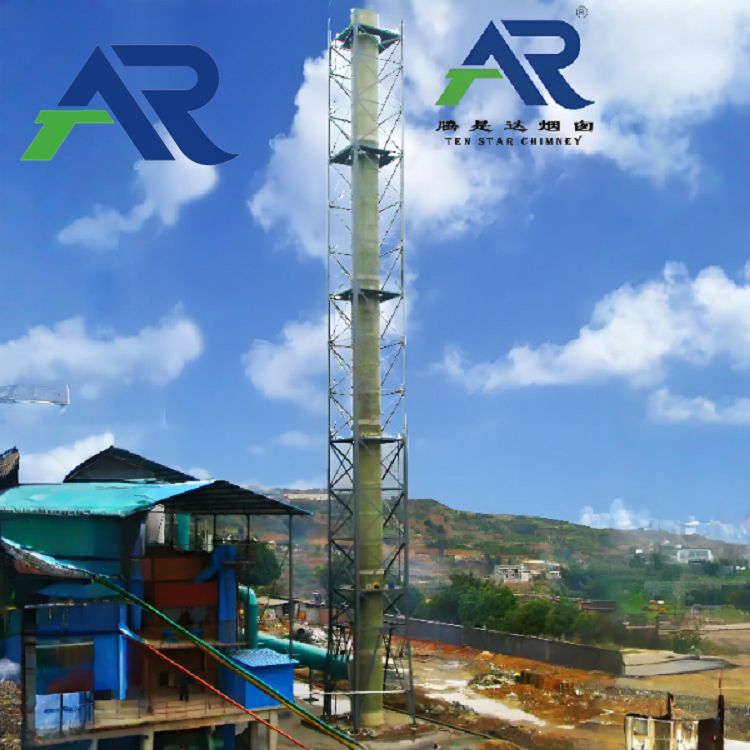

In a coastal industrial area, a Titanium Steel Composite Plate Chimney was installed. The area is known for its strong sea breezes and occasional typhoons. The chimney has been in service for several years without any signs of structural damage due to wind. The high strength and lightweight nature of the composite plate have allowed the chimney to withstand the harsh wind conditions.
In a mountainous region, where the wind speed can vary significantly with altitude, a Titanium Steel Composite Plate Chimney was designed with a special aerodynamic shape and internal stiffeners. This chimney has successfully withstood the strong winds in the area, demonstrating the effectiveness of proper design and material selection in ensuring wind - resistance.
Conclusion
In conclusion, Titanium Steel Composite Plate Chimneys offer excellent wind - resistance due to the unique properties of the composite plate and proper design considerations. Their high strength, lightweight nature, and ability to be customized in terms of shape and reinforcement make them a superior choice for chimney applications in windy areas.
If you are in the market for a chimney with high wind - resistance, consider Titanium Steel Composite Plate Chimney. Our company specializes in providing high - quality Titanium Steel Composite Plate Chimneys that are designed to meet your specific requirements. Whether you are building a new industrial facility or replacing an existing chimney, we can offer you the best solutions. Contact us for a consultation and let's discuss how we can help you with your chimney project.
References
- "Handbook of Chimney Design and Construction"
- "Materials Science and Engineering: An Introduction"
- Industry reports on chimney performance in windy conditions.