

What is the power consumption of the lights on a lighting pole?
As a lighting pole supplier, I often get asked about the power consumption of the lights on lighting poles. This is a crucial question, not only for budget - conscious municipalities and businesses but also for those aiming to reduce their environmental footprint. In this blog, I'll delve into the factors that influence the power consumption of lighting pole lights and provide some insights to help you make informed decisions.
Types of Lighting Poles and Their Associated Lights
Before discussing power consumption, it's important to understand the different types of lighting poles available. We offer a wide range of lighting poles, including Municipal Light Pole, Smart Light Pole, and Traffic Signal Pole Types. Each type of pole is designed for specific applications and may use different types of lights, which in turn have varying power requirements.
Municipal light poles are commonly used in streets, parks, and other public areas. They typically use high - intensity discharge (HID) lamps, such as high - pressure sodium (HPS) or metal halide lamps, or more recently, light - emitting diodes (LEDs). Smart light poles, on the other hand, are equipped with advanced sensors and controls in addition to the lighting function. They often use LEDs due to their energy efficiency and controllability. Traffic signal poles are designed to support traffic lights and other signaling devices, and the power consumption of the lights on these poles is relatively lower compared to general street lighting, but still an important consideration.
Factors Affecting Power Consumption
1. Type of Light Source
- High - Pressure Sodium (HPS) Lamps: HPS lamps have been a popular choice for street lighting for many years. They are known for their long lifespan and good luminous efficacy. However, they consume more power compared to LEDs. A typical HPS lamp used on a lighting pole can range from 70 watts to 400 watts. For example, a 150 - watt HPS lamp will consume 150 watt - hours of electricity for every hour of operation.
- Metal Halide Lamps: Metal halide lamps produce a white light that is more similar to natural daylight compared to HPS lamps. They are often used in areas where color rendering is important, such as commercial districts. Metal halide lamps also have relatively high power consumption, typically ranging from 70 watts to 1000 watts.
- Light - Emitting Diodes (LEDs): LEDs have revolutionized the lighting industry in recent years. They are highly energy - efficient, with luminous efficacies that can be two to three times higher than HPS and metal halide lamps. LED lights on lighting poles can have power ratings ranging from 10 watts to 200 watts, depending on the application and the required light output. For instance, a 60 - watt LED lamp can provide the same amount of light as a 150 - watt HPS lamp.
2. Lighting Design and Layout
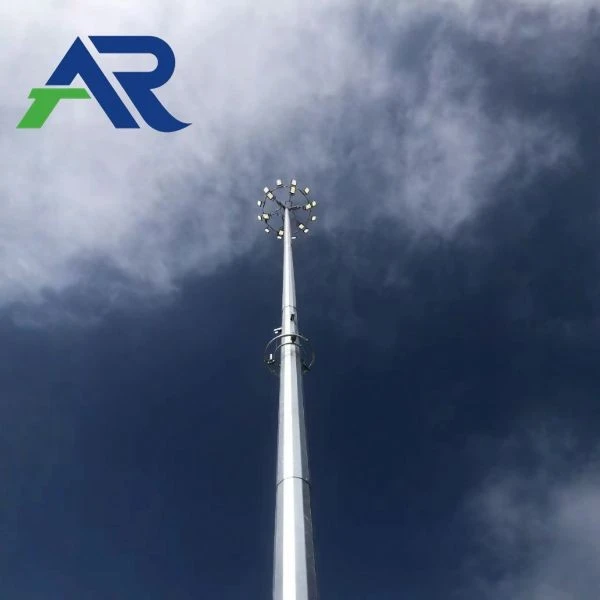
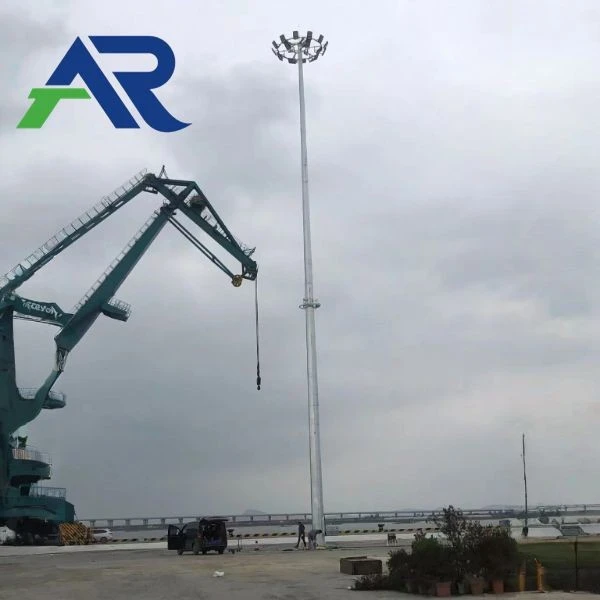
The number of lights on a lighting pole and their arrangement also affect power consumption. Some lighting poles may have multiple lights to provide uniform illumination over a large area. For example, a lighting pole in a large parking lot may have two or three lights, each with its own power rating. Additionally, the height and spacing of the lighting poles play a role. If the poles are spaced too far apart, higher - wattage lights may be required to achieve the desired level of illumination, resulting in increased power consumption.
3. Operating Hours
The amount of time the lights are turned on each day is a significant factor in power consumption. Street lights, for example, are typically on for 8 - 12 hours per day, depending on the location and the season. In some areas, where there is a need for continuous lighting, such as near hospitals or police stations, the operating hours can be even longer. The longer the lights are on, the more electricity they will consume.
4. Dimming and Control Systems
Smart lighting poles often come with dimming and control systems that can significantly reduce power consumption. These systems can adjust the light output based on factors such as the time of day, ambient light levels, and traffic flow. For example, during the early morning hours when there is less traffic, the lights can be dimmed to 50% of their full brightness, thereby reducing power consumption by half.
Calculating Power Consumption
To calculate the power consumption of the lights on a lighting pole, you need to know the power rating of the lights and the number of hours they are operated. The formula for calculating power consumption is:
Power Consumption (kWh) = Power Rating (kW) × Operating Hours
For example, if you have a lighting pole with a 100 - watt LED lamp that is operated for 10 hours per day, the daily power consumption would be:
100 watts = 0.1 kW
Power Consumption = 0.1 kW × 10 hours = 1 kWh per day
Over the course of a month (assuming 30 days), the power consumption would be 30 kWh.
Energy - Saving Tips for Lighting Pole Lights
- Upgrade to LEDs: As mentioned earlier, LEDs are much more energy - efficient than traditional HID lamps. By upgrading your lighting pole lights to LEDs, you can significantly reduce power consumption and save on electricity costs in the long run.
- Implement Dimming and Control Systems: Smart lighting control systems can help you optimize the light output based on real - time conditions, reducing unnecessary energy consumption.
- Proper Lighting Design: Work with a professional lighting designer to ensure that your lighting poles are properly spaced and the lights are appropriately sized for the area to be illuminated. This can help you achieve the desired level of lighting with the minimum amount of power.
Conclusion
Understanding the power consumption of the lights on a lighting pole is essential for making cost - effective and environmentally friendly lighting decisions. As a lighting pole supplier, I am committed to providing our customers with high - quality lighting solutions that not only meet their lighting needs but also help them reduce their energy consumption.
If you are in the market for lighting poles and want to learn more about the power consumption of different lighting options, or if you have any other questions related to our products, I encourage you to reach out to us for a detailed consultation. We are here to help you make the best choice for your project.
References
- "LED Lighting for Street and Area Lighting" - Illuminating Engineering Society
- "High - Intensity Discharge Lamps: Principles and Applications" - General Electric Lighting Handbook