

Hey there! As a supplier of Municipal Light Pole, I often get asked about the maintenance frequency for these essential city fixtures. So, I thought I'd sit down and share some insights on this topic.
First off, let's talk about why maintenance is so important. Municipal light poles are not just there to light up the streets; they play a crucial role in ensuring public safety. A well - maintained light pole provides proper illumination, which helps drivers see the road better, pedestrians cross safely, and deters criminal activities. Plus, it also enhances the overall aesthetic appeal of the city.
Now, the maintenance frequency of municipal light poles can vary depending on several factors. One of the most significant factors is the environment where the light poles are installed.
Environmental Factors
- Coastal Areas: If the light poles are located in coastal areas, they are exposed to saltwater, which is highly corrosive. Salt in the air can eat away at the metal of the light pole over time. In such areas, a more frequent maintenance schedule is required. I'd recommend a thorough inspection at least every six months. During these inspections, the poles should be checked for signs of rust, corrosion, and any structural damage. If any issues are found, they need to be addressed immediately to prevent further deterioration.
- Industrial Areas: In industrial areas, light poles can be exposed to pollutants, chemicals, and dust. These substances can also cause damage to the poles and the lighting fixtures. Similar to coastal areas, an inspection every six months is a good idea. Additionally, the lighting fixtures may need to be cleaned more often to ensure they are providing optimal illumination.
- Urban Areas with High Traffic: In busy urban centers, light poles are at a higher risk of being hit by vehicles. Regular inspections, perhaps every three to four months, are necessary to check for any signs of impact damage. Also, the high volume of people and vehicles means that the lighting fixtures may experience more wear and tear, so they should be checked for proper functioning during these inspections.
- Rural Areas: Rural areas generally have a less harsh environment compared to coastal, industrial, or busy urban areas. However, they are still subject to natural elements like wind, rain, and extreme temperatures. An annual inspection should be sufficient in most cases. But during severe weather events such as storms or heavy snowfall, it's a good idea to do a quick visual check to make sure the poles are still standing and the lights are working.
Components of Maintenance
- Structural Inspection: This is a key part of light pole maintenance. The pole itself should be checked for cracks, bends, and signs of corrosion. The base of the pole, where it is anchored to the ground, also needs to be inspected for stability. Any loose bolts or nuts should be tightened, and if there is significant damage, the pole may need to be replaced.
- Lighting Fixture Check: The bulbs, ballasts, and reflectors in the lighting fixtures should be inspected regularly. Bulbs that are burnt out should be replaced immediately. Ballasts, which regulate the electrical current to the bulbs, can also fail over time and need to be checked for proper functioning. Reflectors should be cleaned to ensure they are reflecting light efficiently.
- Electrical System Inspection: The electrical wiring inside the light pole is another critical component. It should be inspected for any signs of fraying, short - circuits, or loose connections. Faulty electrical systems can not only cause the lights to malfunction but also pose a safety hazard. In some cases, especially with older light poles, the entire electrical system may need to be upgraded to meet current safety standards.
Technological Advancements and Maintenance
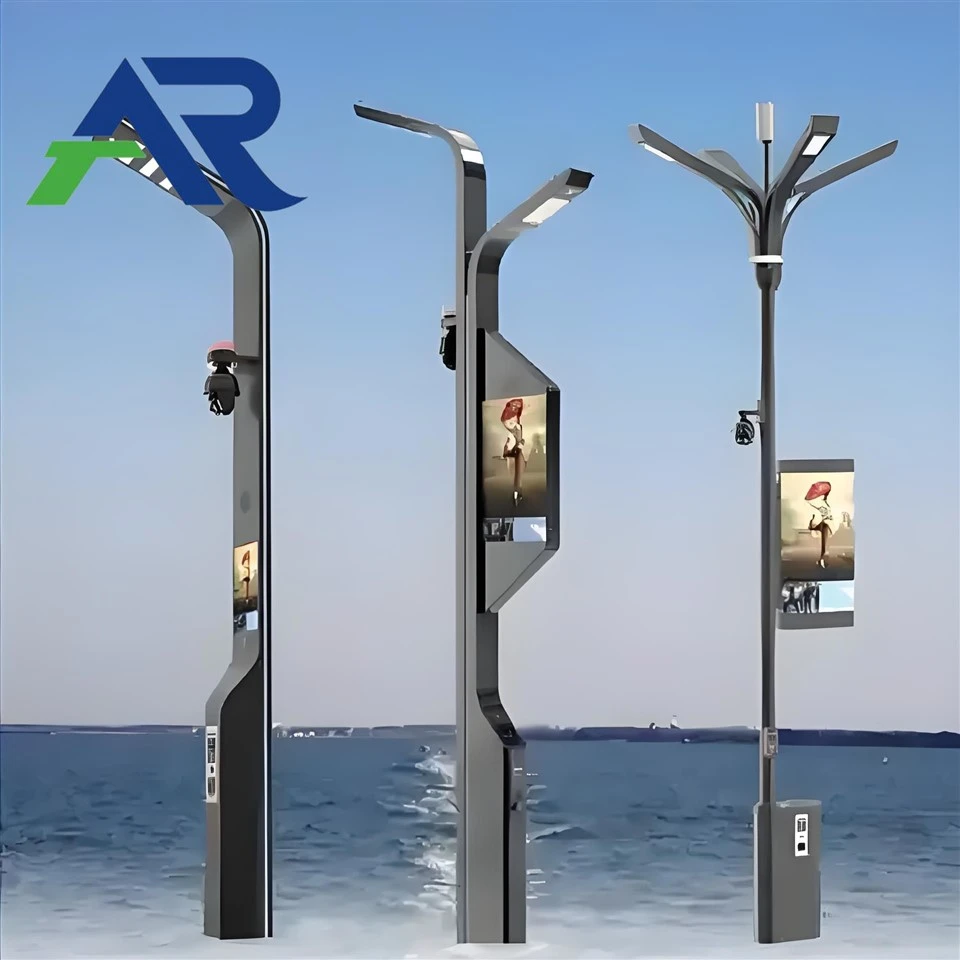
With the advent of Smart Light Pole technology, maintenance has become a bit more high - tech. Smart light poles are equipped with sensors that can monitor various aspects such as the brightness of the lights, energy consumption, and even the structural integrity of the pole. These sensors can send real - time data to a central management system, allowing for more proactive maintenance.
For example, if a sensor detects that a light is not as bright as it should be, maintenance crews can be dispatched to check and replace the bulb before it completely burns out. This not only saves time but also reduces the risk of having a dark street, which can be a safety concern.
Traffic Signal Poles and Their Maintenance
Traffic Signal Pole Types also fall under the category of municipal poles, and their maintenance frequency has some similarities and differences compared to regular light poles. Traffic signal poles are even more critical for public safety as they control the flow of traffic.
These poles should be inspected at least every three months. The traffic signals themselves need to be checked for proper functioning, including the timing of the lights, the visibility of the signals, and any signs of damage to the lenses or the housing. The electrical connections for the traffic signals are also crucial and should be inspected thoroughly during each maintenance visit.
Cost - Benefit Analysis of Maintenance
Some municipalities may be hesitant to invest in regular maintenance due to cost concerns. However, it's important to look at the long - term cost - benefit analysis. Regular maintenance can actually save money in the long run. By catching small problems early, you can prevent them from turning into major issues that require expensive repairs or even pole replacement.
For example, if a small amount of rust on a light pole is ignored, it can spread and weaken the structure over time. Eventually, the pole may need to be replaced, which is a much more costly solution compared to simply treating the rust early on.
Conclusion
So, in conclusion, the maintenance frequency for municipal light poles depends on a variety of factors, including the environment, the type of pole (regular light pole or traffic signal pole), and the technology used. By following a proper maintenance schedule, municipalities can ensure the safety and functionality of their light poles for years to come.
If you're in charge of a municipality or a project that requires municipal light poles, and you're looking for a reliable supplier, I'd love to chat. Whether you need advice on maintenance or are interested in purchasing high - quality light poles, I'm here to help. Reach out to me, and we can start a conversation about how I can meet your needs.
References
- "Municipal Lighting Infrastructure: Best Practices for Maintenance and Management" - A report by a leading urban planning institute.
- "The Impact of Environmental Factors on Light Pole Durability" - Research paper from a materials science journal.