

Hey there! As an iron tower supplier, I often get asked about the load - bearing capacity of the foundation of an iron tower. It's a super important topic, and I'm here to break it down for you in a way that's easy to understand.
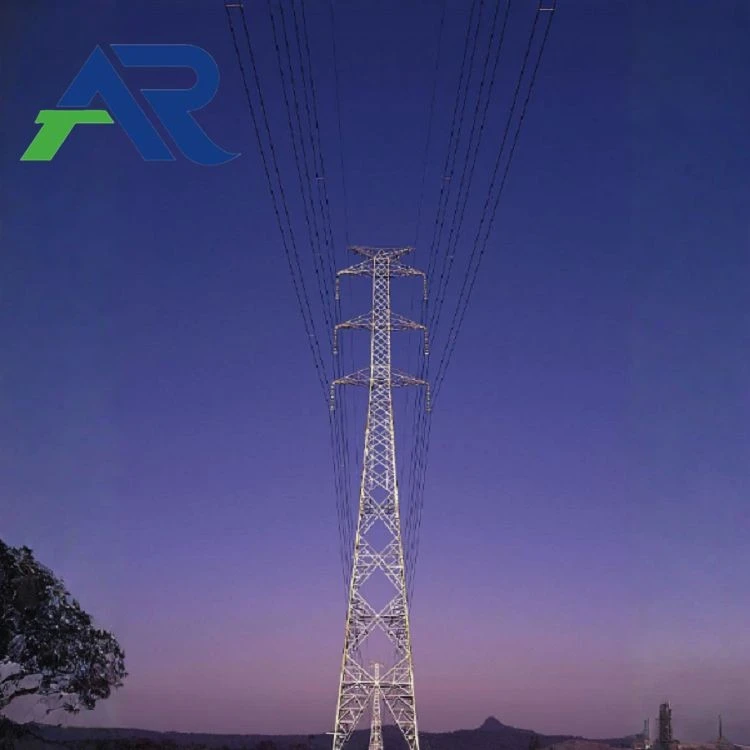
First off, let's talk about why the load - bearing capacity of the foundation matters so much. Iron towers are used in a variety of applications, like Communication Tower Building and Electrical Tower For Electricity Transmission. These towers have to withstand all sorts of forces, including their own weight, the weight of the equipment they carry, wind loads, and even seismic forces in some areas. If the foundation can't handle these loads, the tower could become unstable, which is a huge safety risk.
So, what factors affect the load - bearing capacity of an iron tower's foundation?
Soil Conditions
The type of soil where the tower is going to be built is a major factor. Different soils have different properties. For example, clayey soils can be quite compressible. When a tower is built on clay, the weight of the tower can cause the clay to compress over time, which might lead to settlement of the tower. On the other hand, sandy soils are more granular and tend to drain water better. They usually have better load - bearing capacity than clayey soils, but they can also be prone to erosion if not properly protected.
We often conduct soil tests before building an iron tower. These tests can tell us things like the soil's density, its shear strength, and its compressibility. Based on the results of these tests, we can design a foundation that's suitable for the specific soil conditions. For instance, if the soil is very soft, we might need to use deep foundations like piles to reach more stable soil layers below.
Tower Design and Loads
The design of the iron tower itself also plays a big role. Iron Towers come in all shapes and sizes, and each design has its own unique load - distribution characteristics. A taller tower will generally have a higher wind load because it's exposed to more wind at greater heights. Similarly, a tower that carries a lot of heavy equipment, like a communication tower with multiple antennas, will have a higher vertical load.
We need to calculate all these loads accurately. The vertical loads include the weight of the tower structure, the weight of the equipment, and any additional loads like ice or snow. The horizontal loads, mainly wind and seismic loads, are also crucial. Engineers use complex mathematical models and computer simulations to determine these loads and how they are distributed across the foundation.
Foundation Type
There are several types of foundations that can be used for iron towers. The most common ones are shallow foundations and deep foundations.
Shallow foundations, like spread footings, are used when the soil near the surface has sufficient load - bearing capacity. A spread footing is basically a large, flat concrete slab that spreads the load of the tower over a larger area of the soil. It's relatively simple and cost - effective to construct. However, it's only suitable for sites where the soil conditions are favorable.
Deep foundations, such as piles, are used when the soil near the surface is too weak to support the tower. Piles are long, slender columns that are driven or drilled into the ground until they reach a more stable soil layer. They transfer the load of the tower from the weak surface soil to the stronger soil or rock below. There are different types of piles, like driven piles, bored piles, and helical piles, each with its own advantages and disadvantages.

Calculating the Load - Bearing Capacity
Calculating the load - bearing capacity of a foundation is a complex process. Engineers use a combination of theoretical calculations and empirical data. They start by determining the loads acting on the tower, as I mentioned earlier. Then, they use soil mechanics principles to calculate how the soil will respond to these loads.
For example, the bearing capacity of a shallow foundation can be calculated using equations that take into account the soil's cohesion, its angle of internal friction, and the size and shape of the foundation. These equations are based on decades of research and field experience.
When it comes to deep foundations, the load - bearing capacity calculation is even more complicated. It involves considering factors like the pile's length, diameter, and the soil - pile interaction. Engineers often use specialized software to perform these calculations and ensure that the foundation can safely support the tower.
Importance of Quality Assurance
Once the foundation is designed and calculated, it's crucial to ensure that it's constructed properly. Quality assurance during the construction process is essential. This includes things like making sure the concrete used in the foundation has the right mix design, that the piles are installed at the correct depth and alignment, and that all the construction work meets the relevant standards and codes.
We also conduct regular inspections during and after the construction. Non - destructive testing methods can be used to check the integrity of the foundation. For example, ultrasonic testing can be used to detect any internal defects in the concrete.
Maintenance and Monitoring
Even after the tower is built and in operation, the foundation needs to be maintained and monitored. Over time, factors like soil settlement, corrosion of the foundation materials, and changes in the surrounding environment can affect the load - bearing capacity of the foundation.
We recommend setting up a long - term monitoring system. This can include installing sensors to measure things like settlement, tilt, and stress in the foundation. By regularly analyzing the data from these sensors, we can detect any potential problems early and take appropriate measures to address them.
So, as you can see, the load - bearing capacity of the foundation of an iron tower is a complex but crucial aspect of tower construction. Whether you're in the market for a Communication Tower Building or an Electrical Tower For Electricity Transmission, it's important to work with a reliable supplier who understands these concepts and can ensure the safety and stability of your tower.
If you're interested in purchasing iron towers or have any questions about their foundations, don't hesitate to reach out. We're here to help you make the right choices for your project.
References
- Bowles, J. E. (1996). Foundation Analysis and Design. McGraw - Hill.
- Coduto, D. P., Kitch, J. R., & Duncan, J. M. (2011). Geotechnical Engineering: Principles and Practices. Wiley.
- Terzaghi, K., Peck, R. B., & Mesri, G. (1996). Soil Mechanics in Engineering Practice. Wiley.