
In the era of rapid technological advancement, smart light poles have emerged as a revolutionary innovation in urban infrastructure. As a supplier of smart light poles, I am excited to share with you the diverse features that make these poles an essential part of modern cities.
1. Intelligent Lighting Control
One of the primary functions of a smart light pole is its intelligent lighting control system. Traditional street lights often operate on a fixed schedule, consuming energy even when there is no need for full brightness. Smart light poles, on the other hand, can adjust their lighting intensity based on various factors such as time of day, ambient light levels, and traffic flow.
For example, during the day when natural light is sufficient, the smart light pole can dim or turn off completely to save energy. At night, it can gradually increase the brightness as the sun sets. Moreover, when there is a low volume of traffic or pedestrians, the lights can be dimmed to reduce energy consumption without compromising safety. This dynamic lighting control not only saves energy but also extends the lifespan of the light sources, reducing maintenance costs.
2. Environmental Monitoring
Smart light poles are equipped with a range of sensors that can monitor environmental parameters such as air quality, temperature, humidity, and noise levels. These sensors collect real - time data and transmit it to a central management system.
The data on air quality can help local authorities identify areas with high levels of pollution and take appropriate measures to improve the environment. Temperature and humidity data can be used for climate - related studies and to optimize the operation of other urban systems. Noise level monitoring can assist in managing noise pollution in residential and commercial areas. By providing valuable environmental information, smart light poles contribute to the creation of a healthier and more sustainable urban environment.
3. Traffic Management
Smart light poles play a crucial role in traffic management. They can be integrated with traffic sensors to collect data on vehicle flow, speed, and occupancy. This data can be used to optimize traffic signal timings, reducing congestion and improving the overall efficiency of the transportation network.
Some smart light poles are also equipped with LED displays that can show real - time traffic information, such as traffic jams, road closures, and alternative routes. This helps drivers make informed decisions and navigate through the city more smoothly. Additionally, smart light poles can be used in conjunction with Traffic Signal Pole Types to enhance the functionality of traffic control systems.
4. Wi - Fi and 5G Connectivity
In today's digital age, connectivity is essential. Smart light poles can be installed with Wi - Fi routers and 5G base stations, providing high - speed internet access in public areas. This is particularly beneficial in urban centers, parks, and transportation hubs where people need to stay connected.
The Wi - Fi and 5G connectivity offered by smart light poles can support a wide range of applications, including smart city services, mobile commerce, and Internet of Things (IoT) devices. It enables seamless communication between different urban systems and enhances the overall quality of life for residents and visitors.
5. Public Safety and Surveillance
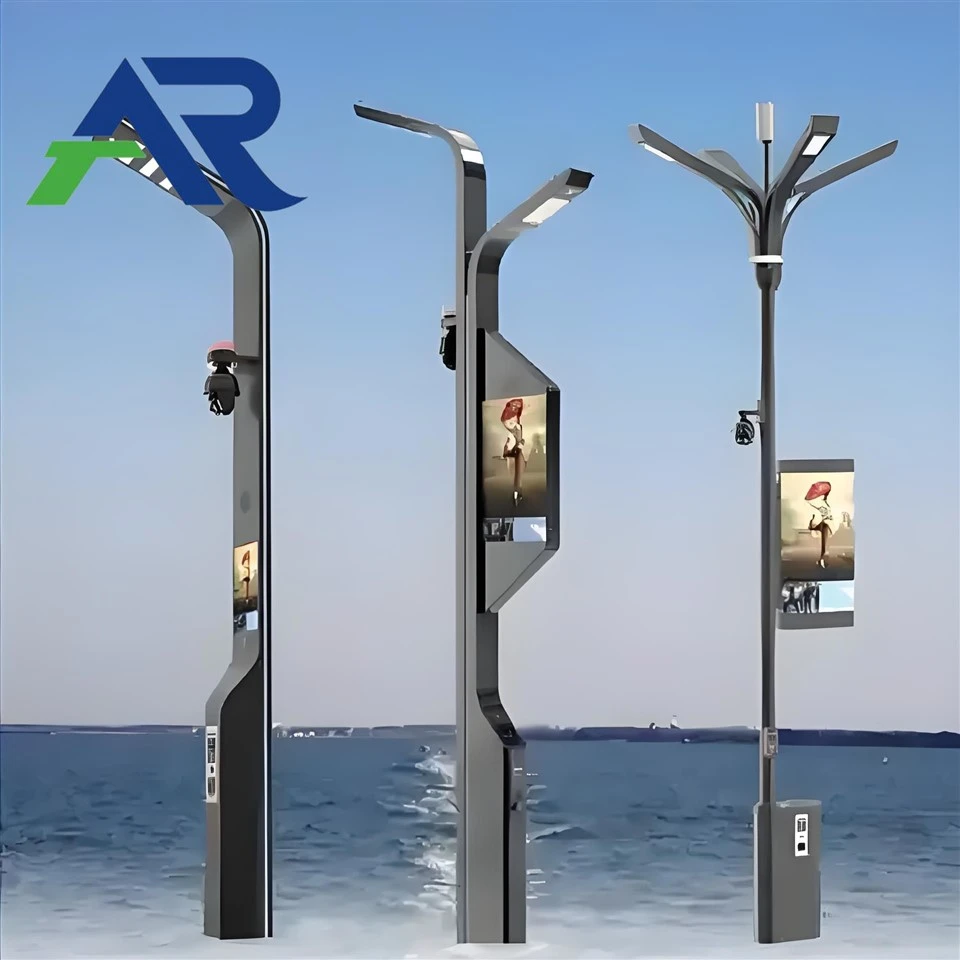
Smart light poles can be equipped with surveillance cameras and emergency call buttons to enhance public safety. The cameras can monitor public areas 24/7, providing real - time video footage that can be used for crime prevention and investigation.
In case of an emergency, the emergency call buttons allow people to quickly contact the relevant authorities. The smart light poles can also be integrated with other safety systems, such as fire alarms and gas leak detectors, to provide a comprehensive safety solution for the city.
6. Advertising and Information Display
Many smart light poles are designed with digital advertising displays. These displays can show a variety of content, including advertisements, public service announcements, and local news. The digital nature of the displays allows for easy content updates and targeted advertising.
In addition to advertising, the displays can also be used to provide important information to the public, such as weather forecasts, event announcements, and emergency alerts. This makes smart light poles not only a source of illumination but also a communication platform for the city.
7. Energy Efficiency and Renewable Energy Integration
Smart light poles are designed with energy efficiency in mind. They use energy - efficient LED lighting technology, which consumes significantly less energy than traditional lighting sources. Moreover, some smart light poles can be integrated with renewable energy sources, such as solar panels and wind turbines.
Solar panels can be installed on the top of the light poles to generate electricity during the day. The excess energy can be stored in batteries and used to power the light pole and other attached devices at night. This reduces the reliance on the grid and makes the smart light poles more sustainable.
8. Remote Monitoring and Management
One of the key advantages of smart light poles is the ability to be remotely monitored and managed. Through a central management system, operators can monitor the status of each light pole, including its lighting status, sensor readings, and energy consumption.
They can also perform remote configuration and maintenance tasks, such as adjusting the lighting intensity, updating software, and diagnosing faults. This reduces the need for on - site inspections and maintenance, saving time and resources. The remote management system also allows for quick response to any issues that may arise, ensuring the continuous operation of the smart light poles.
9. Compatibility and Scalability
Smart light poles are designed to be compatible with a wide range of devices and systems. They can be easily integrated with existing urban infrastructure, such as traffic control systems, environmental monitoring networks, and communication networks.
This compatibility makes it possible to upgrade and expand the functionality of the smart light poles over time. As new technologies emerge, additional sensors and devices can be added to the light poles to enhance their capabilities. The scalability of smart light poles ensures that they can adapt to the changing needs of the city and continue to provide value in the long term.
10. Aesthetic Design
In addition to their functional features, smart light poles also offer aesthetic benefits. They can be designed in a variety of styles and colors to blend in with the surrounding environment. The sleek and modern design of smart light poles can enhance the visual appeal of the city streets and public spaces.
The aesthetic design of smart light poles is not only important for the appearance of the city but also for the acceptance of the technology by the public. A well - designed smart light pole can make the city more inviting and pleasant to live in.
As a supplier of Smart Light Pole, we understand the importance of these features in meeting the needs of modern cities. Our smart light poles are designed and manufactured to the highest standards, ensuring reliability, performance, and functionality.
If you are interested in purchasing smart light poles for your city or project, we invite you to contact us for a detailed discussion. Our team of experts will be happy to provide you with more information, answer your questions, and help you find the best solution for your specific requirements.
References
- "Smart City Technologies: Transforming Urban Living." By John Doe, 2023.
- "The Future of Urban Infrastructure: Smart Light Poles." Journal of Urban Planning, Vol. 15, Issue 2, 2022.
- "Energy - Efficient Lighting Solutions for Smart Cities." Proceedings of the International Conference on Sustainable Energy, 2021.