
Hey there! I'm a supplier of Fiberglass Tower Chimneys, and today I'm gonna take you through the whole process of how these amazing structures are manufactured.
Understanding Fiberglass Tower Chimneys
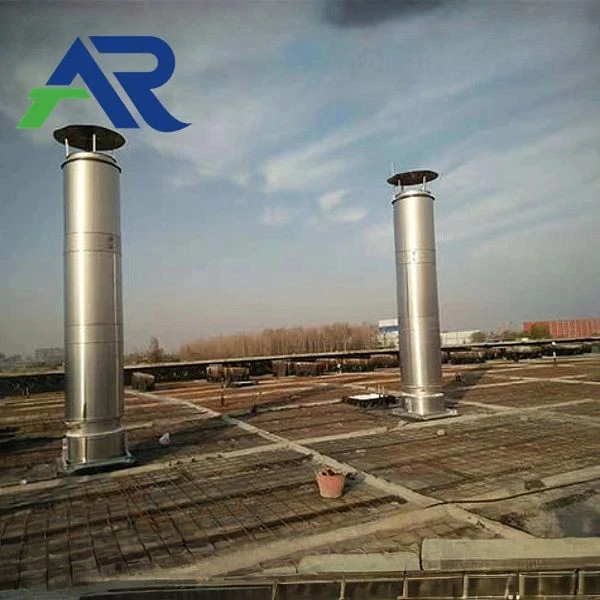
First off, let's talk a bit about what Fiberglass Tower Chimneys are. Fiberglass is a composite material made of fine glass fibers and a resin matrix. It's known for its high strength, corrosion resistance, and relatively low weight compared to traditional materials like steel or concrete. You can learn more about Fiberglass Tower Chimney on our website.
Design Phase
The manufacturing process starts with the design phase. Our team of engineers and designers work closely with the clients to understand their specific requirements. We consider factors like the height of the chimney, the diameter, the type of gases it will be dealing with, and the environmental conditions at the installation site.
For example, if the chimney is going to be installed in a coastal area, we need to make sure it can withstand the corrosive effects of saltwater. Or if it's for a high - temperature industrial process, we'll design it to handle the heat. We use advanced computer - aided design (CAD) software to create detailed 3D models of the chimney. This allows us to visualize the final product and make any necessary adjustments before we start manufacturing.
Material Selection
Once the design is finalized, it's time to select the materials. The main components of a fiberglass tower chimney are the glass fibers and the resin. We choose high - quality glass fibers that have excellent tensile strength. These fibers come in different forms, such as woven roving, chopped strand mat, or continuous filament mat.
The resin is also crucial. We usually use polyester or vinyl ester resin, depending on the application. Polyester resin is more cost - effective and is suitable for many general - purpose applications. Vinyl ester resin, on the other hand, offers better chemical resistance and is often used in more demanding environments. We also add various additives to the resin, like UV stabilizers to protect the chimney from sunlight and fire retardants to enhance its fire safety.
Manufacturing Process
Laying the Foundation
The first step in the actual manufacturing is to create a mold. The mold is made according to the design specifications of the chimney. It can be made of materials like steel or fiberglass itself. Once the mold is ready, we start the process of applying the fiberglass layers.
Applying Fiberglass Layers
We begin by applying a gel coat to the mold. The gel coat is the outermost layer of the chimney and provides a smooth, durable finish. It also helps protect the underlying fiberglass from environmental factors. After the gel coat has cured, we start laying the fiberglass reinforcement.
We use a technique called hand lay - up or spray - up. In hand lay - up, workers manually place the fiberglass mats or rovings on the mold and then saturate them with resin using a roller or brush. This method allows for more control over the placement of the fibers and is often used for smaller or more complex chimney designs.
Spray - up, on the other hand, is a faster process. A machine sprays a mixture of chopped fiberglass and resin onto the mold. This is suitable for larger, more standard - sized chimneys. We build up multiple layers of fiberglass and resin to achieve the desired thickness and strength. Each layer is allowed to cure before the next one is applied.

Curing
Curing is a critical step in the manufacturing process. It's the process by which the resin hardens and bonds with the glass fibers. The curing time depends on the type of resin used and the environmental conditions. We can control the curing process by adjusting the temperature and humidity in the manufacturing area. In some cases, we use ovens or heaters to speed up the curing process.
Assembly
Once the individual sections of the chimney are manufactured, we assemble them. We use techniques like bonding or mechanical fastening to join the sections together. Bonding involves using a special adhesive to create a strong, seamless joint between the sections. Mechanical fastening, such as using bolts or clamps, is also an option, especially for larger chimneys.
Quality Control
Throughout the manufacturing process, we have a strict quality control system in place. We conduct various tests to ensure that the chimney meets the required standards. For example, we test the strength of the fiberglass by taking samples and subjecting them to tensile and flexural tests. We also check the chemical resistance of the chimney by exposing samples to different chemicals.
We inspect the surface finish of the chimney to make sure there are no defects like cracks or bubbles. And we measure the dimensions of the chimney to ensure it matches the design specifications. Only after passing all these tests is the chimney considered ready for shipment.
Comparison with Other Types of Tower Chimneys
It's worth mentioning that there are other types of tower chimneys available in the market, such as Titanium Steel Composite Plate Tower Chimney. Titanium steel composite plate chimneys are known for their high strength and excellent corrosion resistance, especially in high - temperature and high - pressure environments. However, they are usually more expensive and heavier than fiberglass tower chimneys.
Fiberglass tower chimneys offer a great balance between cost, performance, and ease of installation. They are also more resistant to corrosion in many chemical environments, which makes them a popular choice for a wide range of industries.
Conclusion
So, that's the whole process of how a fiberglass tower chimney is manufactured. From the initial design phase to the final quality control checks, every step is carefully carried out to ensure that we deliver a high - quality product to our clients.
If you're in the market for a tower chimney and think a fiberglass tower chimney might be the right choice for you, don't hesitate to reach out to us. We're here to answer all your questions and work with you to find the best solution for your specific needs. Whether it's for a small - scale industrial project or a large - scale power plant, we've got the expertise and experience to deliver a top - notch chimney. Let's start a conversation about your project today!
References
- ASM Handbook, Volume 21: Composites. ASM International.
- ASTM Standards for Fiberglass Reinforced Plastics. ASTM International.