

Hey there! As a supplier of steel corrugated culverts, I've seen firsthand how the slope of the installation site can have a big impact on the performance of these culverts. In this blog, I'm gonna break down the relationship between the slope and the performance of steel corrugated culverts.
How the Slope Affects Flow Capacity
One of the most important things to consider when it comes to steel corrugated culverts is their flow capacity. The slope of the installation site plays a crucial role in determining how much water or other fluids the culvert can handle.
When the slope is steeper, the water or fluid flowing through the culvert will have a higher velocity. This increased velocity means that the culvert can carry more water or fluid in a shorter amount of time. On the other hand, if the slope is too gentle, the water might move too slowly, which can lead to sediment buildup and reduced flow capacity over time.
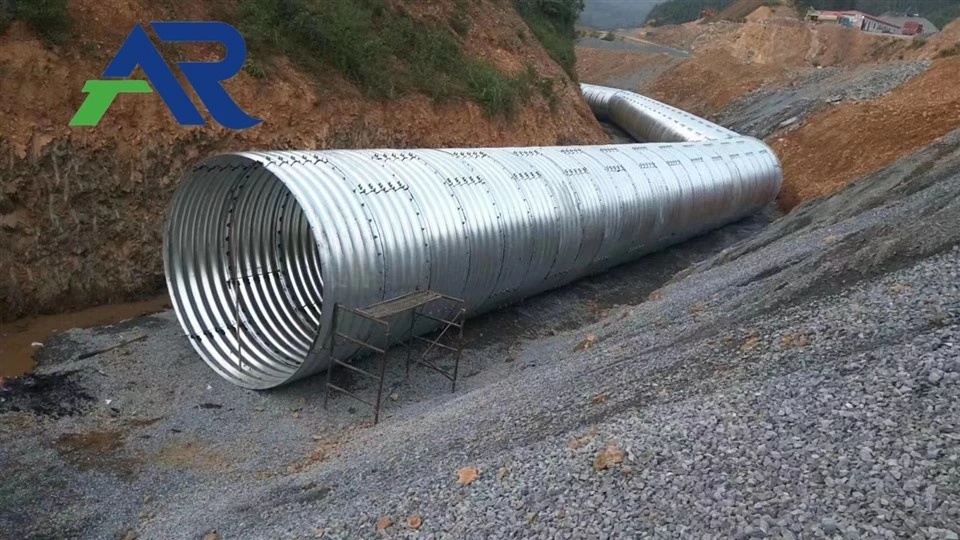
For example, in a mountainous area where the natural slope is quite steep, a steel corrugated culvert can efficiently carry large volumes of stormwater runoff. The high - speed flow helps prevent debris from getting stuck inside the culvert. But in a flat plain, the culvert might need to be designed differently to ensure proper flow. We might need to adjust the size or shape of the culvert to compensate for the lower slope and maintain an adequate flow rate.
Structural Stability and Slope
The slope of the installation site also affects the structural stability of steel corrugated culverts. When the culvert is installed on a slope, it experiences different forces compared to a culvert on a flat surface.
On a slope, the soil pressure on one side of the culvert can be greater than on the other. This uneven pressure can cause the culvert to shift or deform if it's not properly installed or designed. For instance, if the slope is very steep, the soil might exert a significant lateral force on the culvert. This force can push the culvert out of alignment or even cause it to collapse in extreme cases.
To counteract these forces, we need to take extra precautions during the installation process. We might use additional anchoring systems or backfill materials that can provide better support. For our Wind Tower Foundation Corrugated Outer Tube, which is a type of steel corrugated structure, proper installation on a sloped site is essential to ensure its long - term stability.
Erosion and Slope
Erosion is another factor that is closely related to the slope of the installation site. A steeper slope means that water will flow more quickly, which can increase the risk of erosion around the culvert.
The fast - flowing water can wash away the soil around the culvert, exposing the structure and potentially undermining its foundation. This can lead to a variety of problems, such as the culvert becoming unstable or losing its ability to function properly.
To prevent erosion, we can use erosion control measures like riprap or geotextiles. These materials can help slow down the water flow and protect the soil around the culvert. For Bridge Culvert Steel Corrugated Culvert, erosion control is especially important because it often has to withstand heavy water flow during floods.
Installation Challenges on Slopes
Installing steel corrugated culverts on slopes presents several challenges. First of all, it's more difficult to excavate and prepare the site. The uneven terrain makes it harder to get a level base for the culvert.
We also need to be more careful when transporting and positioning the culvert sections. On a slope, it's easier for the sections to slide or tip over, which can cause damage. Additionally, connecting the culvert sections on a slope requires more precision to ensure a watertight and structurally sound joint.
Design Considerations Based on Slope
When designing a steel corrugated culvert for a sloped site, we need to take the slope into account from the very beginning. We might adjust the shape of the culvert, for example, using a more elliptical shape to better handle the uneven soil pressure on a slope.
The corrugation pattern can also be optimized. A deeper or more closely - spaced corrugation can provide better structural strength to resist the forces exerted by the slope. And of course, we need to accurately calculate the flow rate based on the slope to determine the appropriate size of the culvert.
Applications on Different Slopes
Steel corrugated culverts have a wide range of applications on different slopes. In addition to the stormwater management examples we've already talked about, they are also used in Corrugated Pipe for Coal Mine Corridor. In a coal mine, the slope of the corridor can vary. A culvert on a steeper slope in the mine can quickly drain water, preventing flooding in the working areas.
On the other hand, in a rural road project where the slope might be relatively gentle, the culvert can be used to carry agricultural runoff or small streams. The versatility of steel corrugated culverts makes them suitable for various slope conditions.
Contact Us for Your Project
If you're working on a project that involves steel corrugated culverts, and you're not sure how to handle the slope of the installation site, don't worry! We're here to help. Our team of experts has years of experience in designing and installing steel corrugated culverts on all kinds of slopes.
We can provide customized solutions based on your specific site conditions and project requirements. Whether you need a culvert for a high - slope mountain area or a flat urban landscape, we've got you covered. So, if you're interested in purchasing our steel corrugated culverts, feel free to reach out to us for a consultation. We'll work with you to ensure that your project is a success.
References
- Smith, J. (2018). "The Impact of Site Slope on Infrastructure Performance". Journal of Civil Engineering Studies.
- Brown, A. (2020). "Design and Installation of Corrugated Culverts on Sloped Terrain". Construction Industry Review.