

As a supplier of Fiberglass Tower Chimneys, I understand the critical importance of safety standards in the design, manufacturing, and installation of these structures. Fiberglass tower chimneys are widely used in various industries due to their corrosion resistance, lightweight nature, and cost - effectiveness. However, ensuring their safety is paramount to protect the environment, personnel, and nearby facilities. In this blog, I will delve into the key safety standards that govern Fiberglass Tower Chimneys.
Material Quality and Durability
The quality of fiberglass used in tower chimneys is the foundation of safety. High - quality fiberglass materials should have excellent mechanical properties, including high strength and stiffness. They must be able to withstand the harsh environmental conditions they are exposed to, such as extreme temperatures, high winds, and chemical corrosion.
When selecting fiberglass materials, it is essential to source them from reputable suppliers. These suppliers should provide detailed material specifications and test reports. For example, the fiberglass should have a high resin content to ensure good chemical resistance. The resin used should be specifically formulated to resist the chemicals present in the exhaust gases passing through the chimney.
The durability of the fiberglass is also determined by its resistance to ultraviolet (UV) radiation. UV rays can degrade the surface of the fiberglass over time, weakening its structure. Therefore, the fiberglass should be treated with UV - resistant coatings. These coatings act as a protective layer, preventing the UV rays from penetrating the fiberglass and causing damage.
Structural Design and Engineering
Proper structural design is crucial for the safety of Fiberglass Tower Chimneys. The chimney must be designed to withstand the loads it will encounter during its service life. These loads include dead loads (the weight of the chimney itself), live loads (such as maintenance personnel and equipment), wind loads, and seismic loads.
Engineers use advanced software and mathematical models to analyze the structural integrity of the chimney. They consider factors such as the height of the chimney, its diameter, and the local environmental conditions. For tall chimneys, additional bracing and reinforcement may be required to ensure stability.
The design should also take into account the thermal expansion and contraction of the fiberglass. As the temperature of the exhaust gases changes, the fiberglass will expand and contract. If the design does not allow for this movement, it can lead to stress concentrations and potential structural failure. Expansion joints are often incorporated into the chimney design to accommodate thermal movement.
Manufacturing Processes
The manufacturing process of Fiberglass Tower Chimneys must adhere to strict quality control standards. The chimney is typically fabricated using techniques such as filament winding or hand - layup. In filament winding, continuous glass fibers are wound around a mandrel in a specific pattern, impregnated with resin, and then cured. This process ensures a uniform distribution of fibers and resin, resulting in a strong and consistent structure.
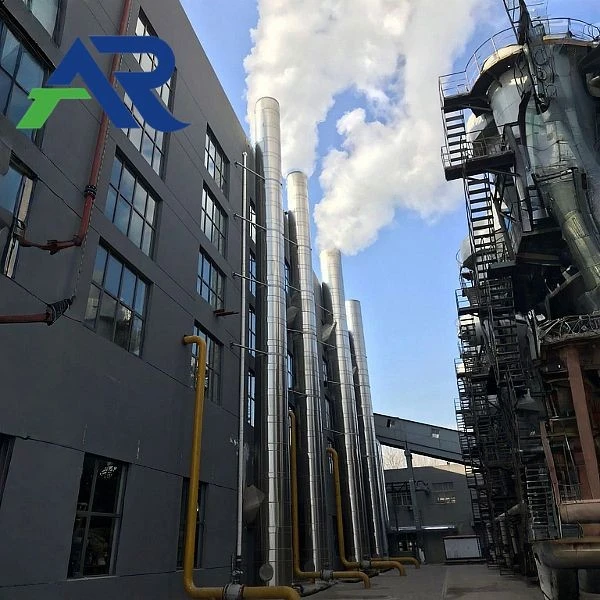

During manufacturing, regular inspections are carried out to detect any defects or irregularities. Non - destructive testing methods, such as ultrasonic testing and visual inspections, are used to check for internal and external flaws. For example, ultrasonic testing can detect voids or delaminations within the fiberglass structure that may not be visible to the naked eye.
The curing process is also critical. Improper curing can lead to a weak structure. The temperature and time of curing must be carefully controlled to ensure that the resin fully hardens and forms a strong bond with the glass fibers.
Installation and Assembly
Correct installation is essential for the safety of Fiberglass Tower Chimneys. The installation team should be experienced and trained in handling fiberglass structures. They must follow the manufacturer's installation instructions precisely.
The chimney is usually installed in sections, and proper alignment and connection of these sections are crucial. The joints between the sections should be sealed properly to prevent leakage of exhaust gases. Gaskets made of suitable materials are used to ensure a tight seal.
The chimney must be installed on a stable foundation. The foundation should be designed to support the weight of the chimney and resist the forces acting on it. Before installation, the foundation should be inspected to ensure its integrity.
Fire Safety
Fire safety is a significant concern for Fiberglass Tower Chimneys. Although fiberglass is not highly flammable, it can burn under certain conditions. Therefore, fire - resistant coatings can be applied to the chimney to reduce its flammability.
In addition, fire detection and suppression systems should be installed in the vicinity of the chimney. Smoke detectors can alert personnel in case of a fire, and sprinkler systems can be used to extinguish the fire before it spreads.
The chimney should also be located at a safe distance from other flammable materials and structures. This reduces the risk of fire spreading from the chimney to other parts of the facility.
Maintenance and Inspection
Regular maintenance and inspection are necessary to ensure the continued safety of Fiberglass Tower Chimneys. A maintenance schedule should be established, and inspections should be carried out at regular intervals.
During inspections, the condition of the chimney is evaluated. This includes checking for signs of corrosion, damage, or wear. Any defects found should be repaired immediately. Maintenance personnel should also clean the chimney regularly to remove any deposits that may accumulate inside, which could affect its performance.
The integrity of the fire - resistant coatings and gaskets should also be checked during maintenance. If the coatings are damaged or the gaskets are worn out, they should be replaced.
Comparison with Other Types of Tower Chimneys
When considering the safety of Fiberglass Tower Chimneys, it is also useful to compare them with other types of tower chimneys, such as the Titanium Steel Composite Plate Tower Chimney. Titanium steel composite plate tower chimneys are known for their high strength and excellent corrosion resistance. However, they are heavier and more expensive than fiberglass tower chimneys.
Fiberglass tower chimneys, on the other hand, offer advantages in terms of ease of installation and lower cost. Their lightweight nature also reduces the load on the foundation. In terms of safety, both types of chimneys need to meet similar standards in terms of structural integrity, fire safety, and corrosion resistance. The choice between the two depends on the specific requirements of the application, such as the type of exhaust gases, the local environmental conditions, and the budget.
Conclusion
As a supplier of Fiberglass Tower Chimneys, I am committed to providing products that meet the highest safety standards. By ensuring the quality of materials, proper design, strict manufacturing processes, correct installation, and regular maintenance, we can guarantee the safety and reliability of our Fiberglass Tower Chimneys.
If you are in need of a Fiberglass Tower Chimney for your industrial facility, I encourage you to contact us for a detailed discussion. We have a team of experts who can help you select the right chimney for your specific needs and ensure its safe installation and operation.
References
- "Handbook of Fiberglass and Advanced Plastics Composites" by Louis J. Progar
- "Structural Engineering Handbook" edited by S. C. Patnaik
- Industry standards and guidelines related to chimney design and safety, such as those published by ASTM International.