
In the era of rapid technological advancement, smart light poles have emerged as a revolutionary innovation in urban infrastructure. As a supplier of smart light poles, I am often asked a thought-provoking question: Can a smart light pole store energy? This blog post aims to delve into this topic, exploring the science behind energy storage in smart light poles, its feasibility, and the potential benefits it brings to our cities.
The Concept of Smart Light Poles
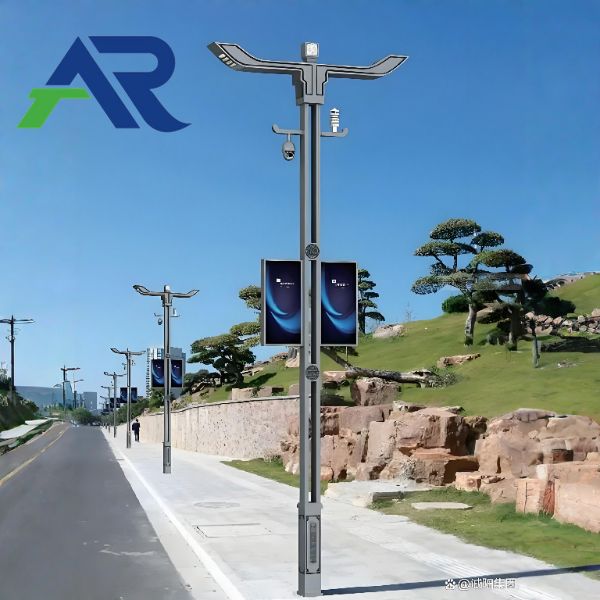
Before we discuss energy storage, let's first understand what smart light poles are. Smart light poles are not just ordinary lighting fixtures; they are multifunctional devices integrated with various technologies to enhance urban efficiency and sustainability. These poles can be equipped with sensors, cameras, Wi-Fi hotspots, environmental monitors, and even electric vehicle charging stations. They serve as a central node for collecting and transmitting data, enabling cities to manage their infrastructure more effectively and respond to real-time events.
Smart light poles are designed to be energy-efficient, using LED lighting technology that consumes significantly less power than traditional lighting sources. However, the question remains: Can they go a step further and store energy?
Energy Storage Technologies
To determine whether a smart light pole can store energy, we need to explore the available energy storage technologies. There are several options, each with its own advantages and limitations.
Batteries
Batteries are the most common form of energy storage. They can store electrical energy in chemical form and release it when needed. Lithium-ion batteries, in particular, have become popular due to their high energy density, long cycle life, and relatively low self-discharge rate. These batteries can be integrated into smart light poles to store excess energy generated during the day, such as from solar panels, and use it to power the lighting and other devices at night.

However, batteries also have some drawbacks. They are expensive, have a limited lifespan, and require proper management to ensure safe and efficient operation. Additionally, the disposal of batteries can pose environmental challenges if not handled correctly.
Supercapacitors
Supercapacitors, also known as ultracapacitors, are another energy storage option. They store energy electrostatically rather than chemically, allowing for rapid charging and discharging. Supercapacitors have a high power density, which means they can deliver a large amount of energy in a short period. This makes them suitable for applications that require quick bursts of power, such as emergency lighting or powering sensors during peak demand.
Compared to batteries, supercapacitors have a longer cycle life and can withstand a larger number of charge-discharge cycles. They are also more environmentally friendly, as they do not contain toxic chemicals. However, supercapacitors have a lower energy density than batteries, which means they can store less energy per unit volume.
Flywheels
Flywheels are mechanical energy storage devices that store energy in the form of rotational kinetic energy. They consist of a spinning rotor that is supported by bearings and enclosed in a vacuum chamber to reduce friction. When energy is available, an electric motor accelerates the flywheel, increasing its rotational speed. When energy is needed, the flywheel's kinetic energy is converted back into electrical energy by a generator.
Flywheels have several advantages, including high power density, long cycle life, and fast response time. They are also relatively maintenance-free and can operate in a wide range of temperatures. However, flywheels are expensive to manufacture and require a large physical space. They are also not suitable for long-term energy storage.
Feasibility of Energy Storage in Smart Light Poles
Now that we have explored the energy storage technologies, let's consider the feasibility of integrating them into smart light poles.
Technical Challenges
One of the main technical challenges is the limited space available in a smart light pole. Smart light poles are designed to be compact and aesthetically pleasing, which means there is not much room for large energy storage devices. Additionally, the energy storage system needs to be integrated with the other components of the smart light pole, such as the lighting, sensors, and communication modules, without causing interference or compatibility issues.
Another challenge is the management of the energy storage system. The system needs to be able to monitor the state of charge of the energy storage device, control the charging and discharging processes, and ensure the safety and reliability of the system. This requires sophisticated control algorithms and monitoring equipment.
Cost Considerations
The cost of energy storage is another important factor to consider. Energy storage devices, such as batteries and supercapacitors, are expensive, and the cost of integrating them into smart light poles can significantly increase the overall cost of the product. This may make it difficult for cities and municipalities to justify the investment, especially in areas with limited budgets.
However, as the technology continues to evolve and the cost of energy storage devices decreases, the feasibility of energy storage in smart light poles is expected to improve. Additionally, the long-term benefits of energy storage, such as reduced energy consumption, lower operating costs, and increased reliability, may outweigh the initial investment.
Benefits of Energy Storage in Smart Light Poles
Despite the challenges, there are several potential benefits of integrating energy storage into smart light poles.
Energy Independence
By storing energy, smart light poles can become more energy-independent. They can rely less on the grid for power, which reduces the strain on the electrical infrastructure and improves the resilience of the city's lighting system. In the event of a power outage, the energy stored in the smart light poles can be used to provide emergency lighting, ensuring the safety of pedestrians and motorists.
Peak Shaving
Energy storage in smart light poles can also help to reduce peak demand on the grid. During periods of high electricity consumption, such as in the evening when the lighting is turned on, the smart light poles can use the stored energy instead of drawing power from the grid. This can help to flatten the demand curve and reduce the need for expensive peak power generation.
Renewable Energy Integration
Smart light poles can be equipped with solar panels or other renewable energy sources to generate electricity. By storing the excess energy generated during the day, the smart light poles can make better use of renewable energy and reduce their reliance on fossil fuels. This contributes to a more sustainable and environmentally friendly urban environment.
Data Backup
In addition to powering the lighting and other devices, the energy stored in the smart light poles can also be used to provide backup power for the data collection and communication systems. This ensures that the smart light poles can continue to function even during a power outage, allowing cities to maintain access to critical data and information.
Conclusion
In conclusion, the question of whether a smart light pole can store energy is a complex one. While there are technical and cost challenges to overcome, the potential benefits of energy storage in smart light poles are significant. As a supplier of smart light poles, we are constantly exploring new technologies and solutions to make energy storage more feasible and cost-effective.
If you are interested in learning more about our smart light poles or discussing the possibility of integrating energy storage into your urban infrastructure, please feel free to [initiate a conversation with us]. We are committed to providing high-quality, innovative solutions that meet the needs of our customers and contribute to a smarter, more sustainable future.
References
- "Energy Storage Technologies and Applications in Smart Grids," IEEE Transactions on Smart Grid, Vol. 4, No. 4, December 2013.
- "Supercapacitors: Principles, Technologies, and Applications," Wiley-IEEE Press, 2014.
- "Flywheel Energy Storage Systems: Technology and Applications," Springer, 2015.