

When it comes to industrial and residential ventilation systems, chimneys play a crucial role in expelling harmful gases and ensuring air quality. As a dedicated supplier of Stainless Steel Chimneys, I often encounter inquiries about the weight of a typical stainless steel chimney. Understanding the weight is not only essential for installation planning but also for assessing the structural requirements of the building. In this blog, we will delve into the factors that influence the weight of stainless steel chimneys and provide a comprehensive analysis to help you make informed decisions.
Factors Affecting the Weight of Stainless Steel Chimneys
1. Material Thickness
The thickness of the stainless steel used in the chimney construction is a primary factor determining its weight. Thicker steel sheets will naturally add more mass to the chimney. In industrial applications where chimneys need to withstand high temperatures and harsh environmental conditions, thicker stainless steel is often preferred. For example, a chimney with a wall thickness of 3mm will weigh significantly more than one with a 1mm wall thickness. The choice of thickness depends on the specific requirements of the project, such as the type of fuel being burned, the height of the chimney, and the local building codes.
2. Chimney Size and Dimensions
The overall size and dimensions of the chimney have a direct impact on its weight. Taller and wider chimneys will generally weigh more due to the increased amount of material required. For instance, a large - scale industrial chimney that reaches several stories high will be much heavier than a small residential chimney. The diameter of the chimney also matters; a wider chimney will need more stainless steel to cover the larger surface area. When designing a chimney, it is crucial to balance the size requirements with the structural capacity of the building to support the weight.
3. Design Complexity
The design of the chimney can also contribute to its weight. Chimneys with complex shapes, such as those with bends, curves, or multiple sections, may require additional material for construction. For example, a chimney with a helical design or a chimney that needs to be integrated with other building components may weigh more than a simple straight - tube chimney. The complexity of the design is often driven by architectural or functional requirements, such as the need to fit into a limited space or to improve the draft efficiency.
4. Additional Features and Accessories
Many stainless steel chimneys come with additional features and accessories that can add to their weight. These may include insulation layers, flue liners, dampers, and caps. Insulation is commonly used to prevent heat loss and protect the surrounding structure from high temperatures. However, insulation materials can be quite heavy, especially if they are made of dense materials such as ceramic fiber. Flue liners are also important for protecting the chimney from corrosion and improving the efficiency of the exhaust system. The type and thickness of the flue liner will affect the overall weight of the chimney.
Calculating the Weight of a Typical Stainless Steel Chimney
To estimate the weight of a stainless steel chimney, we can use a simple formula based on the volume of the stainless steel used and its density. The density of stainless steel typically ranges from 7,500 to 8,000 kg/m³, depending on the specific alloy.
Let's assume we have a straight - tube chimney with a circular cross - section. The volume of the chimney can be calculated using the formula for the volume of a cylinder: V = πr²h, where r is the radius of the chimney and h is its height.
For example, if we have a chimney with a radius of 0.5 meters and a height of 10 meters, and the wall thickness of the stainless steel is 2mm (or 0.002 meters), we first need to calculate the outer and inner volumes of the cylinder and then find the volume of the stainless steel.
The outer volume of the cylinder, V_outer = πr_outer²h = π(0.5)²×10 = 2.5π m³
The inner volume of the cylinder, V_inner = πr_inner²h = π(0.5 - 0.002)²×10 ≈ 2.49π m³
The volume of the stainless steel, V = V_outer - V_inner ≈ 0.01π m³
If we assume the density of the stainless steel is 7,800 kg/m³, the weight of the chimney, W = V×ρ = 0.01π×7,800 ≈ 245 kg
Comparison with Other Chimney Materials
In addition to stainless steel, there are other materials commonly used for chimney construction, such as Titanium Steel Composite Plate Chimney and Fiberglass Chimney.
Titanium steel composite plate chimneys are known for their high corrosion resistance and strength. However, they are generally heavier than stainless steel chimneys due to the combination of titanium and steel. The titanium layer adds to the overall mass of the chimney, and the manufacturing process may also require additional material for bonding the two layers together.
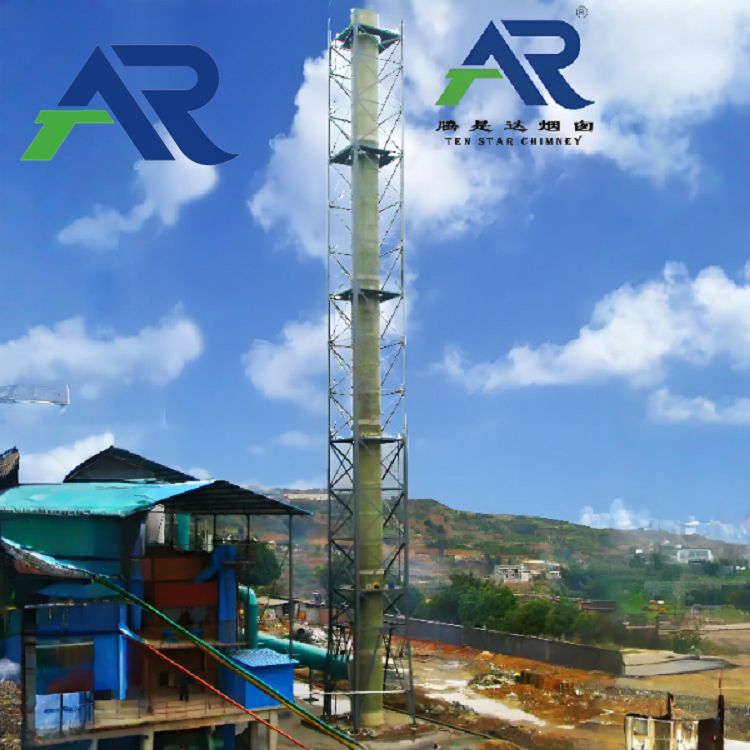
Fiberglass chimneys, on the other hand, are much lighter than stainless steel chimneys. Fiberglass is a lightweight material with good insulation properties. It is often used in applications where weight is a critical factor, such as in mobile homes or small - scale residential buildings. However, fiberglass chimneys may not be as durable as stainless steel chimneys in high - temperature or high - stress environments.
Importance of Knowing the Weight
Understanding the weight of a stainless steel chimney is crucial for several reasons. Firstly, it helps in the installation process. The weight of the chimney needs to be considered when planning the lifting and positioning of the chimney on the building. Special equipment may be required to handle heavy chimneys safely.
Secondly, the weight affects the structural design of the building. The building's foundation and supporting structures need to be able to bear the load of the chimney. If the weight is underestimated, it can lead to structural problems, such as cracks in the foundation or damage to the supporting beams.
Finally, knowing the weight is important for transportation. The weight of the chimney will determine the type of vehicle and the transportation method required. Heavy chimneys may need to be transported on flatbed trucks with appropriate securing mechanisms to prevent damage during transit.
Conclusion
In conclusion, the weight of a typical stainless steel chimney is influenced by several factors, including material thickness, size and dimensions, design complexity, and additional features. By understanding these factors, you can make more accurate estimates of the weight and ensure that your chimney installation is safe and successful.
As a supplier of Stainless Steel Chimneys, we have the expertise and experience to help you choose the right chimney for your project. Whether you need a small residential chimney or a large - scale industrial chimney, we can provide you with high - quality products that meet your specific requirements.
If you are interested in purchasing stainless steel chimneys or have any questions about their weight, design, or installation, please feel free to contact us. We look forward to discussing your project and providing you with the best solutions.

References
- "Chimney Design and Installation Handbook", Industrial Press Inc.
- "Materials Science and Engineering: An Introduction", William D. Callister Jr. and David G. Rethwisch