

Hey there! As a supplier of Double - layer Insulation Chimneys, I often get asked about the thermal conductivity of these amazing products. So, let's dive right in and talk about what thermal conductivity means for a double - layer insulation chimney.
First off, what is thermal conductivity? Simply put, it's a measure of how well a material can conduct heat. When it comes to chimneys, we want to keep as much heat as possible inside the chimney and prevent it from escaping to the surrounding environment. A low thermal conductivity is what we're aiming for in a double - layer insulation chimney.
In a double - layer insulation chimney, there are typically two main layers. The inner layer is usually made of a material that can withstand high temperatures, like stainless steel. Stainless steel is great because it's durable and can handle the heat from the flue gases without deforming. However, stainless steel on its own has a relatively high thermal conductivity. That means it can transfer heat quite easily.
That's where the outer layer comes in. The outer layer is an insulation material, such as ceramic fiber or mineral wool. These materials have very low thermal conductivity. They act as a barrier, slowing down the transfer of heat from the inner layer to the outside.
Let's take a closer look at how this works. When hot flue gases travel through the inner layer of the chimney, the heat wants to move from the hot gases to the cooler surrounding air. But the insulation layer in the middle resists this heat transfer. It traps the heat inside the chimney, making the chimney more energy - efficient.
One of the big advantages of a double - layer insulation chimney with low thermal conductivity is energy savings. When less heat is lost through the chimney walls, the heating system connected to the chimney doesn't have to work as hard to maintain the desired temperature. This can lead to significant cost savings on energy bills over time.
Another benefit is safety. By reducing the amount of heat that reaches the outer surface of the chimney, the risk of fire hazards is minimized. The outer layer of the chimney stays cooler to the touch, which is especially important in areas where there are flammable materials nearby.
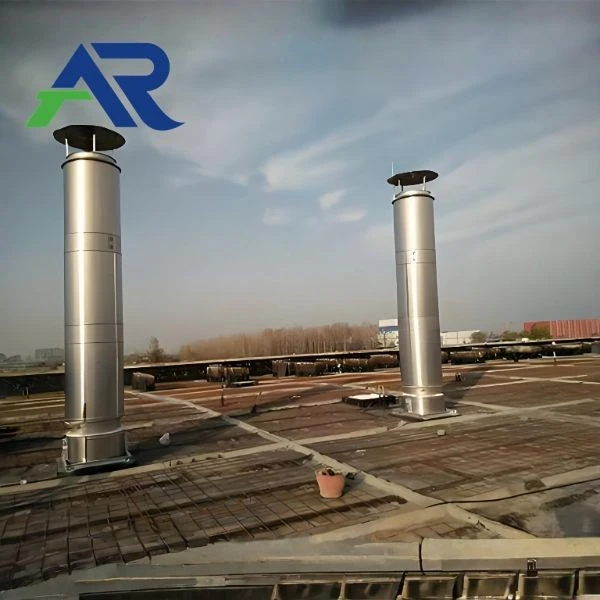
Now, let's talk about some real - world applications. Double - layer insulation chimneys are commonly used in industrial settings, like factories. Chimney For Factory require efficient and safe chimney systems to handle the large amounts of hot flue gases produced by industrial processes. Our double - layer insulation chimneys are a great fit for these applications because they can handle high temperatures and keep the heat where it belongs.

They're also used in residential settings. In homes, a double - layer insulation chimney can improve the efficiency of a fireplace or a wood - burning stove. It helps to keep the warmth inside the house and reduces the risk of heat damage to the surrounding walls.
And if you're looking for something a bit more aesthetically pleasing, we also offer Landscape Chimney. These chimneys not only perform well in terms of thermal conductivity but also add a nice touch to the overall look of your property.
When it comes to choosing the right double - layer insulation chimney, there are a few factors to consider. The first is the type of insulation material. As I mentioned earlier, ceramic fiber and mineral wool are popular choices, but there are other options available as well. You'll want to choose a material that has a low thermal conductivity and is suitable for your specific application.
The thickness of the insulation layer also matters. A thicker insulation layer generally means better heat resistance and lower thermal conductivity. However, you'll need to balance this with the overall size and cost of the chimney.
The quality of the installation is another crucial factor. Even the best double - layer insulation chimney won't perform well if it's not installed correctly. Make sure to hire a professional installer who has experience working with these types of chimneys.
At our company, we take pride in offering high - quality Double - layer Insulation Chimney. We use the latest materials and manufacturing techniques to ensure that our chimneys have excellent thermal conductivity properties. Our team of experts can also provide you with advice on choosing the right chimney for your needs and help with the installation process.
If you're in the market for a double - layer insulation chimney, whether it's for an industrial or residential application, I encourage you to get in touch with us. We can discuss your specific requirements, provide you with a quote, and answer any questions you may have. Our goal is to help you find the best chimney solution that meets your needs in terms of performance, energy efficiency, and safety.
In conclusion, the thermal conductivity of a double - layer insulation chimney is a critical factor that affects its performance, energy efficiency, and safety. By choosing a chimney with low thermal conductivity, you can enjoy energy savings, reduced fire risks, and a more comfortable living or working environment. So, don't hesitate to reach out to us if you're interested in learning more or making a purchase.
References
- Incropera, F. P., DeWitt, D. P., Bergman, T. L., & Lavine, A. S. (2007). Fundamentals of Heat and Mass Transfer. Wiley.
- Holman, J. P. (2010). Heat Transfer. McGraw - Hill.