

Hey there! As a tower chimney supplier, I've gotten a ton of questions about the pressure distribution inside a tower chimney. It's a super important topic, especially if you're in the market for a new chimney or looking to optimize the performance of an existing one. So, let's dive right in and break down what's going on inside these tall structures.
First off, what exactly is pressure distribution? Well, in simple terms, it's how the pressure changes at different points within the chimney. This is crucial because it affects everything from the flow of gases to the overall efficiency of the chimney.
Factors Affecting Pressure Distribution
There are several factors that can influence the pressure distribution inside a tower chimney. One of the main ones is the height of the chimney. You see, as the chimney gets taller, the pressure at the bottom is higher than at the top. This is due to the weight of the air column above. The taller the chimney, the more air there is pressing down, creating a greater pressure difference between the bottom and the top.
Another factor is the temperature of the gases inside the chimney. Hot gases are less dense than cold gases, so they tend to rise. This creates a natural draft, which helps to pull the gases up through the chimney. The greater the temperature difference between the inside and outside of the chimney, the stronger the draft and the more efficient the chimney will be.
The shape and design of the chimney also play a role. A well-designed chimney will have a smooth interior surface to minimize friction and allow the gases to flow freely. Additionally, the diameter of the chimney can affect the pressure distribution. A wider chimney will generally have a lower pressure drop than a narrower one, which means the gases can flow more easily.
Types of Pressure in a Tower Chimney
There are two main types of pressure in a tower chimney: static pressure and dynamic pressure. Static pressure is the pressure exerted by the air or gas at rest. It's like the pressure you feel when you're standing still in a room. Dynamic pressure, on the other hand, is the pressure exerted by the moving air or gas. It's like the pressure you feel when you stick your hand out of a moving car window.
In a tower chimney, the static pressure is highest at the bottom and decreases as you move up the chimney. This is because of the weight of the air column above. The dynamic pressure, on the other hand, is highest at the point where the gases are moving the fastest, which is usually near the top of the chimney.
Measuring Pressure Distribution
So, how do we measure the pressure distribution inside a tower chimney? Well, there are several methods that can be used. One common method is to use pressure sensors. These sensors can be placed at different points inside the chimney to measure the pressure at each location. The data from these sensors can then be used to create a pressure profile of the chimney.
Another method is to use a manometer. A manometer is a device that measures the pressure difference between two points. By placing the manometer at different points inside the chimney, we can measure the pressure drop between those points and get an idea of the pressure distribution.
Importance of Pressure Distribution
Understanding the pressure distribution inside a tower chimney is crucial for several reasons. First, it can help us to optimize the performance of the chimney. By ensuring that the pressure is distributed evenly throughout the chimney, we can maximize the flow of gases and improve the efficiency of the chimney.
Second, it can help us to identify potential problems. If the pressure distribution is not as expected, it could indicate a blockage or a leak in the chimney. By detecting these problems early, we can take steps to fix them before they cause more serious issues.
Our Tower Chimney Offerings
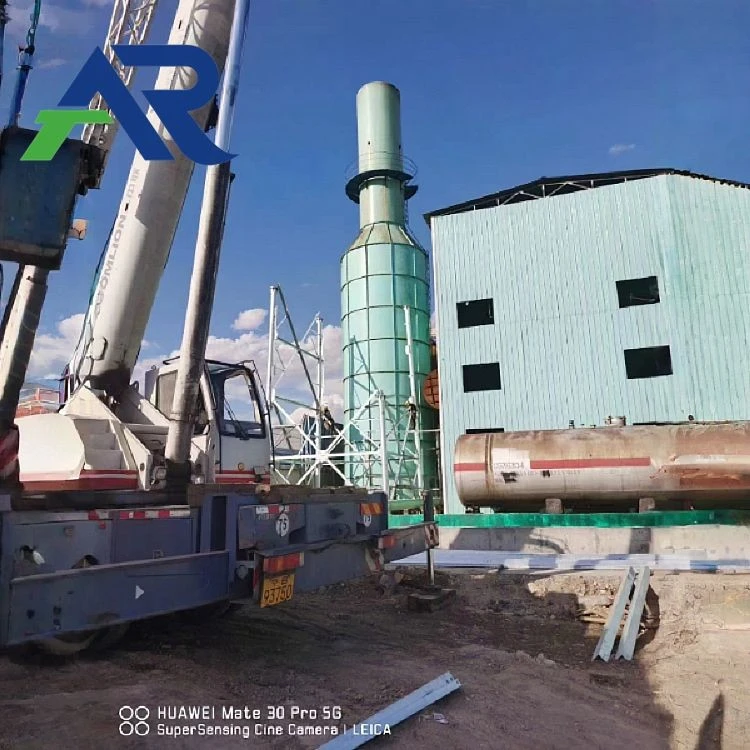
At our company, we offer a wide range of tower chimneys to meet the needs of our customers. One of our popular options is the Titanium Steel Composite Plate Tower Chimney. This type of chimney is made from a combination of titanium and steel, which makes it highly resistant to corrosion and high temperatures. It's a great choice for industries that deal with harsh chemicals or high-temperature gases.
Another option is the Fiberglass Tower Chimney. Fiberglass is a lightweight and durable material that is also resistant to corrosion. It's a cost-effective option for many applications and is easy to install and maintain.
Contact Us for a Quote
If you're in the market for a new tower chimney or need to optimize the performance of an existing one, we'd love to hear from you. Our team of experts can help you to choose the right chimney for your needs and ensure that it's installed and maintained properly. Contact us today to discuss your requirements and get a quote.
References
- Perry, R. H., & Green, D. W. (Eds.). (2008). Perry's Chemical Engineers' Handbook. McGraw-Hill.
- Incropera, F. P., & DeWitt, D. P. (2002). Fundamentals of Heat and Mass Transfer. Wiley.