

What is the function of an electric power tower?
Electric power towers, often seen as silent sentinels across vast landscapes, play a pivotal role in the modern infrastructure that powers our daily lives. As a supplier of electric power towers, I have witnessed firsthand the significance of these structures and the crucial functions they serve.
At its core, the primary function of an electric power tower is to support high - voltage transmission lines. These lines are the arteries of the electrical grid, carrying large amounts of electricity over long distances from power generation sources, such as power plants (including coal - fired, hydroelectric, nuclear, and wind farms), to substations and ultimately to consumers.
One of the key advantages of using power towers for high - voltage transmission is the reduction of power loss. According to the laws of physics, when electricity is transmitted over long distances, there is a certain amount of energy loss in the form of heat due to the resistance of the transmission lines. By increasing the voltage of the electricity, the current can be reduced for a given amount of power (since (P = VI), where (P) is power, (V) is voltage, and (I) is current). And since the power loss in a transmission line is proportional to the square of the current ((P_{loss}=I^{2}R), where (R) is the resistance of the line), transmitting electricity at high voltages significantly minimizes these losses. Electric power towers are designed to safely support these high - voltage lines, which can operate at hundreds of thousands of volts.
Another important function of power towers is to ensure the safety of the electrical system and the public. They are engineered to withstand various environmental conditions, such as strong winds, heavy snow, and ice. The height of the towers keeps the high - voltage lines well above the ground, preventing accidental contact by people, animals, or vehicles. This separation also reduces the risk of short - circuits caused by external factors, such as falling trees or debris.
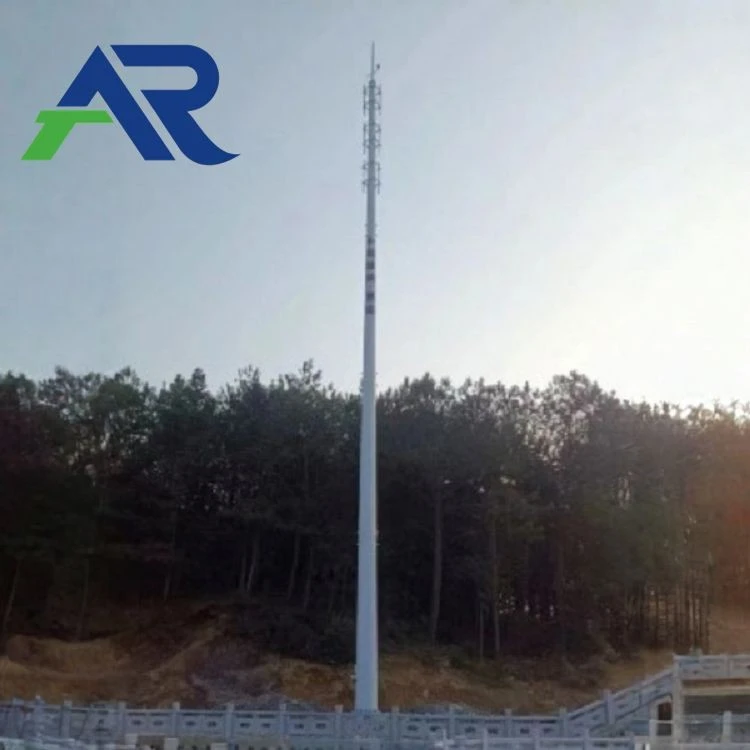
In addition to their role in power transmission, electric power towers can also be used for communication purposes. Some power towers are equipped with communication equipment, such as antennas for radio and mobile networks. This dual - use approach not only maximizes the utility of the existing infrastructure but also helps in reducing the overall cost of building separate communication towers. For more information on communication tower building, you can visit Communication Tower Building.
The design of electric power towers is also crucial for their functionality. There are different types of power towers, each with its own unique design characteristics and applications. For example, suspension towers are used to support the weight of the transmission lines between two points, while tension towers are used at corners, dead - ends, or where there is a significant change in the direction of the line. The design of these towers takes into account factors such as the terrain, the type of transmission lines, and the expected load.
When it comes to the materials used in power towers, steel is the most common choice. Steel offers high strength, durability, and corrosion resistance, making it suitable for long - term use in various environmental conditions. The manufacturing process of steel power towers involves precise engineering and quality control to ensure that they meet the required standards. Our company, as a supplier of electric power towers, is committed to using high - quality steel and advanced manufacturing techniques to produce reliable and efficient power towers. For more details on our iron towers, you can check Iron Towers.

The installation of electric power towers is a complex and carefully planned process. It requires a team of experienced engineers, technicians, and construction workers. The first step is to conduct a detailed site survey to determine the best location for the towers. This includes assessing the terrain, soil conditions, and any potential obstacles. Once the location is determined, the foundation of the tower is constructed. The foundation is crucial as it provides the stability and support for the entire structure. After the foundation is completed, the tower components are transported to the site and assembled. The transmission lines are then strung between the towers, and the entire system is tested to ensure proper operation.
In the context of the growing demand for electricity, especially with the increasing adoption of renewable energy sources, the role of electric power towers becomes even more important. Renewable energy sources such as wind and solar are often located in remote areas, far from the major population centers where the electricity is needed. Electric power towers are essential for transmitting the electricity generated from these renewable sources to the grid and then to consumers. For more information on electrical towers for electricity transmission, you can visit Electrical Tower For Electricity Transmission.
As a supplier of electric power towers, we understand the importance of providing high - quality products and excellent customer service. We work closely with our clients, including power companies, contractors, and developers, to meet their specific requirements. Our team of experts can provide technical support, from the initial design stage to the installation and maintenance of the power towers.
If you are in the market for electric power towers, whether for a new project or the replacement of existing towers, we invite you to contact us for a detailed discussion. We can offer competitive pricing, customized solutions, and timely delivery. Our goal is to help you build a reliable and efficient electrical infrastructure that meets the needs of your community or business.
In conclusion, electric power towers are an indispensable part of the modern electrical grid. Their functions, from supporting high - voltage transmission lines to ensuring safety and enabling communication, are essential for the reliable supply of electricity. As a supplier, we are proud to contribute to the development of this critical infrastructure and look forward to serving your needs.
References
- Grover, N. K. (2018). Electrical Power Systems. Pearson India.
- Stevenson, W. D. (1982). Elements of Power System Analysis. McGraw - Hill.
- Chapman, S. J. (2012). Electric Machinery Fundamentals. McGraw - Hill.