

Hey there! As a supplier of Multi - sleeve Chimneys, I often get asked about the heat transfer coefficient of these nifty pieces of equipment. So, I thought I'd sit down and have a chat with you all about it.
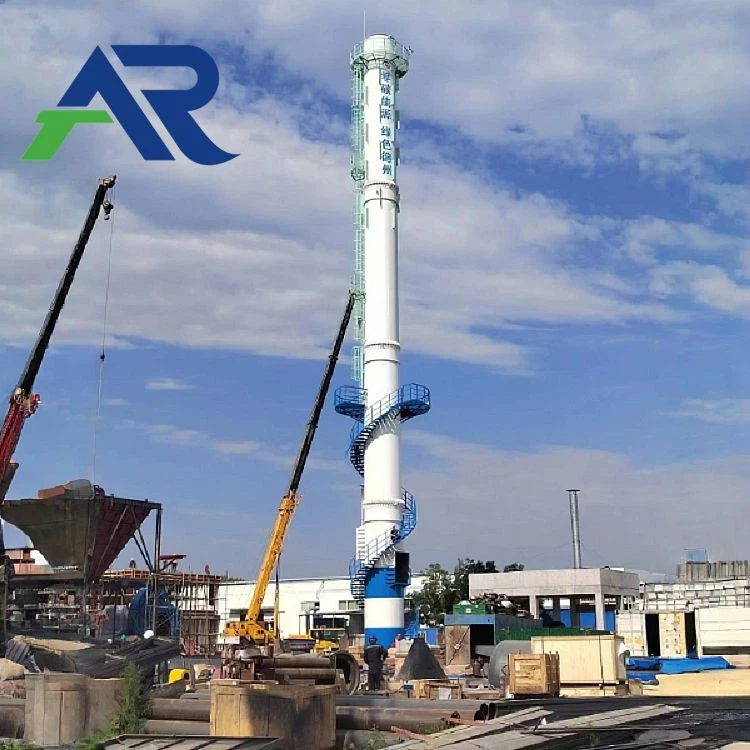
First off, let's quickly understand what a Multi - sleeve Chimney is. It's a type of chimney that has multiple sleeves or layers. This design is quite different from a Single Sleeve Chimney, which, as the name suggests, has just one layer. Multi - sleeve chimneys are commonly used in industrial settings, especially in factories where there's a need to handle high - temperature exhaust gases. They're also a popular choice for Stainless Steel Factory Chimney installations because of their durability and efficiency. You can check out more about our Multi - sleeve Chimney on our website.
Now, onto the heat transfer coefficient. In simple terms, the heat transfer coefficient is a measure of how well heat can move from one place to another. In the context of a Multi - sleeve Chimney, it tells us how efficiently heat is transferred from the hot exhaust gases inside the chimney to the outside environment.
There are a few factors that can affect the heat transfer coefficient of a Multi - sleeve Chimney. One of the main factors is the material of the sleeves. Different materials have different thermal conductivities. For example, stainless steel, which is commonly used in our Stainless Steel Factory Chimney products, has a relatively high thermal conductivity. This means that it can transfer heat quite well. On the other hand, materials with low thermal conductivity, like some types of insulation materials, can slow down the heat transfer process.
The thickness of the sleeves also plays a role. Thicker sleeves can provide more insulation, reducing the rate of heat transfer. However, if the sleeves are too thick, it might also affect the overall performance of the chimney, such as the flow of exhaust gases.
The design of the Multi - sleeve Chimney is another important factor. The way the sleeves are arranged and the gaps between them can impact the heat transfer. For instance, if there are large gaps between the sleeves, it might allow for more air circulation, which can either enhance or reduce the heat transfer depending on the situation.
Let's talk about how we measure the heat transfer coefficient. There are several methods available, but one common approach is to use experimental testing. We can set up a test rig where we simulate the conditions inside a real - world Multi - sleeve Chimney. By measuring the temperature of the exhaust gases at different points and the temperature of the outside environment, we can calculate the heat transfer rate. Then, using some mathematical formulas, we can determine the heat transfer coefficient.
Another method is to use computer simulations. With the help of advanced software, we can create a virtual model of the Multi - sleeve Chimney. We can input all the relevant parameters, such as the material properties, the dimensions of the sleeves, and the flow rate of the exhaust gases. The software can then calculate the heat transfer coefficient based on the laws of thermodynamics.
So, why is the heat transfer coefficient so important? Well, for one, it affects the energy efficiency of the chimney. A high heat transfer coefficient means that more heat is being transferred to the outside environment. This can be a good thing if you're trying to get rid of excess heat quickly. However, in some cases, you might want to minimize heat loss to save energy. For example, in a factory where energy costs are high, having a chimney with a well - optimized heat transfer coefficient can lead to significant savings.
It also impacts the durability of the chimney. If the heat transfer is not properly managed, it can cause thermal stress on the materials of the chimney. Over time, this can lead to cracking, corrosion, and other forms of damage. By understanding and controlling the heat transfer coefficient, we can ensure that the Multi - sleeve Chimney lasts longer and performs better.
As a supplier, we take the heat transfer coefficient very seriously. We use high - quality materials and advanced manufacturing techniques to ensure that our Multi - sleeve Chimneys have the optimal heat transfer coefficient for different applications. Whether you're running a small factory or a large industrial plant, we can provide you with a chimney that meets your specific needs.
If you're in the market for a Multi - sleeve Chimney and want to learn more about the heat transfer coefficient and how it can benefit your operations, don't hesitate to get in touch. We're always happy to have a chat and answer any questions you might have. We can also provide you with detailed technical information and quotes based on your requirements.
In conclusion, the heat transfer coefficient of a Multi - sleeve Chimney is a crucial factor that affects its performance, energy efficiency, and durability. By understanding the factors that influence it and using appropriate measurement and optimization methods, we can ensure that our customers get the best - possible chimney for their needs. So, if you're thinking about purchasing a Multi - sleeve Chimney, give us a shout, and let's work together to find the perfect solution for you.

References:
- Incropera, F. P., & DeWitt, D. P. (2002). Fundamentals of Heat and Mass Transfer. John Wiley & Sons.
- Holman, J. P. (2002). Heat Transfer. McGraw - Hill.