

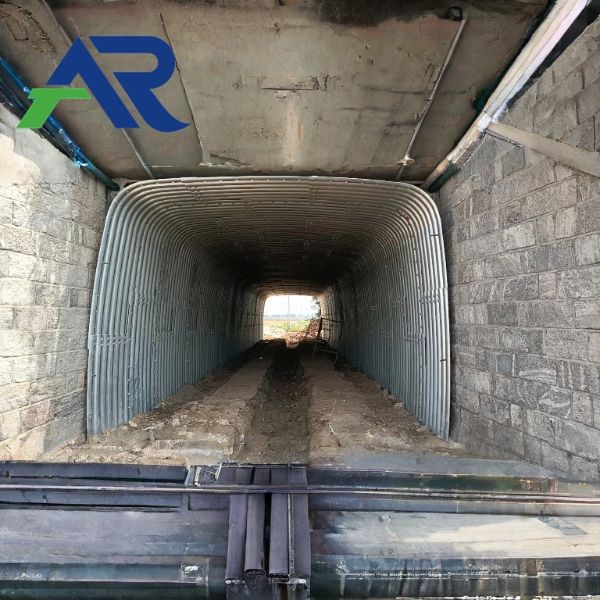
Soft ground poses significant challenges for the installation of steel corrugated culverts. As a supplier of steel corrugated culverts, I have witnessed firsthand the importance of proper ground improvement measures to ensure the long - term performance and stability of these structures. In this blog, I will discuss the various ground improvement measures necessary for steel corrugated culverts on soft ground.
Understanding the Challenges of Soft Ground
Soft ground typically consists of soils with low shear strength, high compressibility, and poor drainage characteristics. These soils can include clay, silt, peat, and other fine - grained materials. When a steel corrugated culvert is installed on soft ground, the weight of the culvert and the overlying soil can cause excessive settlement, lateral movement, and even structural failure.
Excessive settlement can lead to misalignment of the culvert, which may affect its hydraulic performance and increase the risk of water leakage. Lateral movement can cause the culvert to deform, leading to stress concentrations and potential damage to the structure. In addition, the poor drainage properties of soft ground can result in the accumulation of water around the culvert, which can further weaken the soil and increase the risk of corrosion.

Ground Improvement Measures
Compaction
Compaction is one of the most common ground improvement measures for soft ground. It involves increasing the density of the soil by applying mechanical energy, such as through the use of rollers, vibratory compactors, or dynamic compaction equipment. Compaction can improve the shear strength of the soil, reduce its compressibility, and increase its bearing capacity.
For steel corrugated culverts, compaction is typically carried out in the foundation area before the culvert is installed. The soil is compacted to a specified density and moisture content to ensure that it can support the weight of the culvert and the overlying soil. Compaction can also be used to improve the soil around the culvert after installation to prevent lateral movement and settlement.
Soil Replacement
Soil replacement involves removing the soft, unsuitable soil and replacing it with a more stable and competent material, such as gravel, sand, or crushed stone. This method is particularly effective when the soft soil layer is relatively thin.
The depth and extent of soil replacement depend on the characteristics of the soft soil and the design requirements of the culvert. After the soft soil is removed, the replacement material is placed in layers and compacted to the required density. Soil replacement can significantly improve the bearing capacity of the ground and reduce the risk of settlement.
Geosynthetics
Geosynthetics are synthetic materials, such as geotextiles, geogrids, and geomembranes, that can be used to improve the performance of soft ground. Geotextiles can be used as a separation layer between the soft soil and the overlying fill material to prevent the mixing of the two materials and to improve drainage. Geogrids can be used to reinforce the soil and increase its tensile strength, which can help to distribute the load of the culvert more evenly and reduce the risk of settlement.
Geomembranes can be used as a barrier to prevent the infiltration of water into the soft soil, which can help to maintain the stability of the ground. When using geosynthetics, it is important to select the appropriate type and specification of the material based on the specific requirements of the project.
Pile Foundations
Pile foundations are often used when the soft soil layer is thick and the bearing capacity of the soil is insufficient to support the weight of the culvert. Piles are long, slender structural elements that are driven or drilled into the ground to transfer the load of the culvert to a deeper, more competent soil layer.
There are several types of piles that can be used for steel corrugated culverts, including driven piles, bored piles, and helical piles. Driven piles are installed by driving them into the ground using a pile hammer, while bored piles are constructed by drilling a hole in the ground and then filling it with concrete. Helical piles are screwed into the ground using a torque - controlled installation process.
Pile foundations can provide a stable support system for the culvert and reduce the risk of settlement and lateral movement. However, the design and installation of pile foundations require careful consideration of the soil conditions, the load requirements of the culvert, and the environmental factors.
Chemical Stabilization
Chemical stabilization involves the addition of chemical agents, such as cement, lime, or fly ash, to the soft soil to improve its engineering properties. The chemical agents react with the soil particles to form a stronger and more stable material.
Cement stabilization is one of the most common methods of chemical stabilization. It involves mixing cement with the soft soil to form a cement - soil mixture, which is then compacted to the required density. Cement stabilization can significantly improve the shear strength and bearing capacity of the soil and reduce its compressibility.
Case Studies
Let's take a look at some real - world examples of ground improvement measures for steel corrugated culverts on soft ground.
In a recent project, we supplied steel corrugated culverts for a road construction project in an area with soft clay soil. The design engineers decided to use a combination of soil replacement and geosynthetics. The soft clay soil was removed to a depth of 1.5 meters and replaced with well - graded gravel. A geotextile was placed between the gravel and the original soil to prevent the mixing of the two materials and to improve drainage. A geogrid was also installed within the gravel layer to reinforce the soil and distribute the load of the culvert more evenly. After the installation of the culvert, the surrounding area was backfilled with compacted soil. The project was completed successfully, and the culvert has been performing well without any signs of settlement or damage.
In another project, a wind tower foundation Wind Tower Foundation Corrugated Outer Tube required a steel corrugated culvert to be installed on soft peat soil. Due to the extremely low bearing capacity of the peat soil, pile foundations were used. Bored piles were drilled to a depth of 10 meters into a more competent sand layer. The steel corrugated culvert was then installed on top of the pile caps. This approach ensured the stability of the culvert and the wind tower foundation, even under the heavy loads.
Conclusion
In conclusion, proper ground improvement measures are essential for the successful installation of steel corrugated culverts on soft ground. Compaction, soil replacement, geosynthetics, pile foundations, and chemical stabilization are all effective methods for improving the performance of soft ground and ensuring the long - term stability of the culvert.
As a Bridge Culvert Steel Corrugated Culvert supplier, we understand the importance of working closely with engineers and contractors to select the most appropriate ground improvement measures for each project. By providing high - quality steel corrugated culverts and offering technical support, we can help to ensure the success of your projects.
If you are planning a project that requires steel corrugated culverts, such as for a bridge culvert or a Corrugated Pipe for Coal Mine Corridor, please feel free to contact us for more information and to discuss your specific requirements. We are committed to providing you with the best solutions and products to meet your needs.
References
- Bowles, J. E. (1996). Foundation analysis and design (5th ed.). McGraw - Hill.
- Das, B. M. (2010). Principles of geotechnical engineering (7th ed.). Cengage Learning.
- Holtz, R. D., Kovacs, W. D., & Sheahan, T. C. (2011). An introduction to geotechnical engineering. Prentice Hall.