

Hey there! As a supplier of Traffic Signal Pole Types, I've been in the business long enough to know that one of the most crucial aspects of these poles is their fatigue - resistance properties. In this blog, I'm gonna break down the fatigue - resistance of different traffic signal pole types, so you can make an informed decision when it comes to purchasing.
Let's start with the basics. Fatigue in traffic signal poles occurs due to repeated loading. Think about it: these poles are constantly exposed to wind, traffic vibrations, and even temperature changes. Over time, these repeated stresses can cause tiny cracks to form, which can eventually lead to the failure of the pole. So, understanding the fatigue - resistance of different pole types is super important.
Steel Traffic Signal Poles
Steel poles are one of the most common types of traffic signal poles out there. They're known for their strength and durability. Steel has a high yield strength, which means it can withstand a significant amount of stress before it starts to deform. When it comes to fatigue - resistance, steel poles do pretty well.
The key to the fatigue - resistance of steel poles lies in their material properties. Steel has a crystalline structure that allows it to redistribute stress. When a load is applied, the steel can shift the stress around, preventing it from concentrating in one area. This helps to prevent the formation of cracks.
However, steel poles aren't perfect. They're susceptible to corrosion, especially in areas with high humidity or near the coast. Corrosion can weaken the steel and reduce its fatigue - resistance. To combat this, many steel poles are coated with a protective layer, like galvanization. Galvanized steel poles have a zinc coating that acts as a sacrificial layer, corroding before the steel itself. This helps to extend the lifespan of the pole and maintain its fatigue - resistance. You can check out more about different Traffic Signal Pole Types on our website.
Aluminum Traffic Signal Poles
Aluminum poles are another popular option. They're lightweight, which makes them easier to install and transport. But how do they stack up in terms of fatigue - resistance?
Aluminum has a lower density than steel, but it still has good strength - to - weight ratio. In terms of fatigue, aluminum can handle repeated loading quite well. It has a high resistance to corrosion, which is a big plus. Unlike steel, aluminum forms a natural oxide layer on its surface when exposed to air. This oxide layer acts as a barrier, protecting the aluminum from further corrosion.
However, aluminum poles have some limitations. They're not as strong as steel poles, so they may not be suitable for areas with high wind loads or heavy traffic vibrations. Also, aluminum has a lower modulus of elasticity than steel, which means it may deform more under load. This can potentially affect its long - term fatigue - resistance.
Fiberglass Traffic Signal Poles
Fiberglass poles are a relatively new option in the market. They're made by combining glass fibers with a resin matrix. Fiberglass poles have some unique properties that make them interesting in terms of fatigue - resistance.
One of the main advantages of fiberglass poles is their high strength - to - weight ratio. They're much lighter than steel poles but can still withstand significant loads. Fiberglass also has excellent corrosion resistance, making it a great choice for harsh environments.
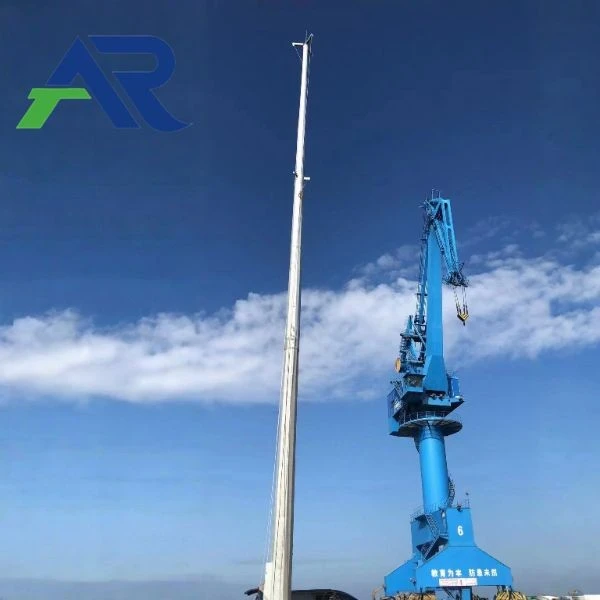

In terms of fatigue, fiberglass poles can handle repeated loading well. The glass fibers in the pole help to distribute stress evenly, preventing the formation of cracks. Also, fiberglass has a high impact resistance, which means it can better withstand sudden loads, like a vehicle hitting the pole.
But fiberglass poles also have their drawbacks. They're more expensive than steel or aluminum poles. And while they're strong, they can be brittle. If a fiberglass pole is damaged, it may be more difficult to repair compared to a steel or aluminum pole.
Composite Traffic Signal Poles
Composite poles are a combination of different materials, usually a mix of fiberglass, resin, and sometimes other additives. These poles are designed to take advantage of the best properties of each material.
Composite poles offer good fatigue - resistance. The combination of materials allows for better stress distribution. For example, the fiberglass provides strength, while the resin helps to bind the materials together and distribute stress.
Composite poles also have excellent corrosion resistance, similar to fiberglass poles. They're lightweight, which makes installation easier. However, like fiberglass poles, they can be more expensive.
Smart Light Poles and Municipal Light Poles
Now, let's talk about Smart Light Pole and Municipal Light Pole. Smart light poles are equipped with various sensors and communication devices, while municipal light poles are used in public areas like streets and parks.
The fatigue - resistance requirements for these poles are similar to regular traffic signal poles. However, smart light poles may have additional considerations. The added weight of the sensors and devices can increase the load on the pole. So, it's important to choose a pole type that can handle this extra weight without sacrificing fatigue - resistance.
Municipal light poles are often exposed to a lot of traffic and environmental factors. They need to be able to withstand repeated loading over a long period. The choice of pole type will depend on the specific location and usage requirements.
In conclusion, each type of traffic signal pole has its own set of fatigue - resistance properties. Steel poles are strong but susceptible to corrosion. Aluminum poles are lightweight and corrosion - resistant but not as strong. Fiberglass and composite poles offer good fatigue - resistance and corrosion resistance but are more expensive.
If you're in the market for traffic signal poles, it's important to consider the fatigue - resistance properties based on your specific needs. Whether you need a pole for a high - wind area, a coastal location, or a smart city project, we can help you find the right solution.
If you're interested in purchasing traffic signal poles or have any questions about their fatigue - resistance properties, don't hesitate to reach out. We're here to assist you in making the best choice for your project.
References
- "Materials Science and Engineering: An Introduction" by William D. Callister Jr. and David G. Rethwisch
- "Structural Design of Steel Transmission Towers" by A. R. S. Ponniah
- Industry reports on traffic signal pole materials and performance.