
Can a Smart Light Pole detect vehicle speed?
In the era of rapid technological advancement, the concept of smart cities has been gaining significant traction. One of the key components in the infrastructure of smart cities is the smart light pole. As a leading supplier of Smart Light Pole, I am often asked whether these innovative poles can detect vehicle speed. In this blog post, I will explore this question in detail, delving into the technology behind smart light poles and their potential for speed detection.
The Evolution of Light Poles
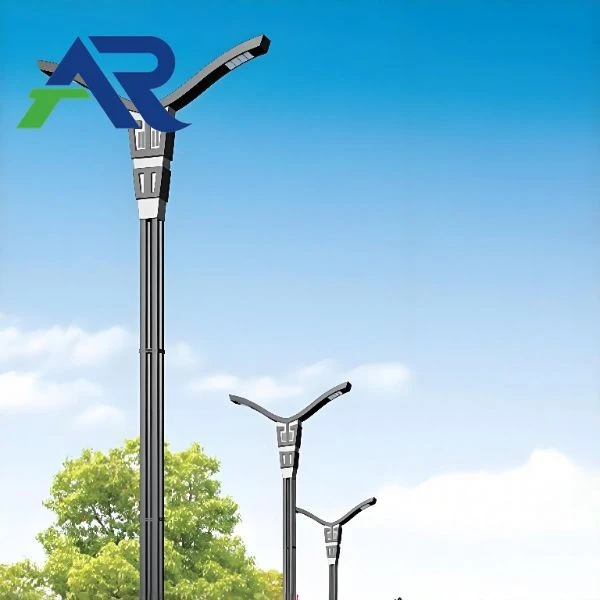
Traditional Municipal Light Pole have long served as a fundamental part of urban infrastructure, providing illumination for roads, sidewalks, and public spaces. However, with the advent of the Internet of Things (IoT) and the increasing demand for more intelligent and efficient city management, light poles have undergone a remarkable transformation. Smart light poles are equipped with a variety of sensors and communication devices, enabling them to collect and transmit data in real - time. This not only enhances the functionality of the light poles but also contributes to the overall smart city ecosystem.
Components of a Smart Light Pole
A typical smart light pole is a multi - functional device that integrates several key components. At its core, it has a lighting system, which can be controlled remotely to adjust brightness based on environmental conditions or time of day. In addition to lighting, smart light poles are often equipped with environmental sensors to monitor air quality, temperature, humidity, and noise levels. They may also feature Wi - Fi access points, surveillance cameras, and emergency call buttons.
The Potential for Vehicle Speed Detection
Now, let's address the question of whether a smart light pole can detect vehicle speed. The answer is yes, it is entirely possible. Smart light poles can be outfitted with speed detection sensors, such as radar or lidar sensors.
Radar Sensors
Radar sensors work on the principle of the Doppler effect. When a radar signal is emitted towards a moving vehicle, the frequency of the reflected signal changes based on the speed of the vehicle. By analyzing this frequency shift, the radar sensor can accurately calculate the speed of the vehicle. Radar sensors are widely used in traffic management systems due to their high accuracy and long - range detection capabilities. They can operate in various weather conditions, making them suitable for outdoor applications like smart light poles.
Lidar Sensors
Lidar sensors, on the other hand, use laser light to measure distances. By emitting laser pulses and measuring the time it takes for the pulses to bounce back from objects, lidar sensors can create a 3D map of the surrounding environment. When it comes to vehicle speed detection, lidar sensors can track the movement of a vehicle over time and calculate its speed based on the change in position. Lidar sensors offer high - resolution data and can detect multiple objects simultaneously, which is beneficial in areas with heavy traffic.
Advantages of Using Smart Light Poles for Speed Detection
There are several advantages to using smart light poles for vehicle speed detection.
Cost - Effectiveness
Integrating speed detection sensors into smart light poles can be a cost - effective solution compared to installing standalone speed detection devices. Since smart light poles are already part of the urban infrastructure, adding speed detection capabilities does not require significant additional infrastructure investment.
Data Integration
Smart light poles can collect and integrate data from multiple sensors, including speed detection sensors, environmental sensors, and surveillance cameras. This integrated data can provide a comprehensive view of traffic conditions, which can be used for traffic management, urban planning, and safety analysis.
Enhanced Safety
By detecting vehicle speeds, smart light poles can contribute to improving road safety. Speed data can be used to identify areas with high - speed violations and implement appropriate traffic control measures, such as speed limits and traffic calming devices. Additionally, real - time speed information can be shared with drivers through variable message signs on the smart light poles, alerting them to adjust their speed.
Challenges and Limitations
While the potential of smart light poles for vehicle speed detection is promising, there are also some challenges and limitations that need to be addressed.
Accuracy and Calibration
The accuracy of speed detection sensors depends on proper calibration. Environmental factors such as weather conditions, interference from other objects, and sensor aging can affect the accuracy of the speed measurements. Regular calibration and maintenance are required to ensure reliable performance.
Privacy Concerns
The use of surveillance and speed detection sensors on smart light poles raises privacy concerns. It is essential to implement strict data protection policies and ensure that the collected data is used only for legitimate purposes, such as traffic management and safety improvement.
Compatibility and Standardization
As the smart city market is still evolving, there is a lack of standardization in the design and operation of smart light poles. Ensuring compatibility between different sensors, communication protocols, and data management systems can be a challenge.
Applications in Traffic Management
Smart light poles with speed detection capabilities have a wide range of applications in traffic management.
Traffic Flow Optimization
By analyzing vehicle speed data, traffic managers can identify traffic congestion points and adjust traffic signal timings accordingly. For example, if a particular stretch of road has consistently low - speed traffic, traffic signals can be adjusted to allow more vehicles to pass through, improving the overall traffic flow.
Speed Enforcement
Speed data collected by smart light poles can be used for speed enforcement. Law enforcement agencies can access this data remotely and issue citations to drivers who violate speed limits. This can act as a deterrent to speeding and improve road safety.
Planning and Infrastructure Development
Vehicle speed data can also be used for urban planning and infrastructure development. Planners can use this data to identify areas that require additional traffic lanes, roundabouts, or other traffic - calming measures. It can also help in determining the optimal locations for new roads and intersections.
Conclusion
In conclusion, smart light poles have the potential to detect vehicle speed effectively. With the integration of radar or lidar sensors, these multi - functional poles can provide valuable speed data that can be used for traffic management, safety improvement, and urban planning. While there are challenges and limitations that need to be overcome, the benefits of using smart light poles for speed detection are significant.
As a supplier of Smart Light Pole, we are committed to providing high - quality products that incorporate the latest technology. Our smart light poles are designed to be flexible and customizable, allowing for the easy integration of speed detection sensors and other advanced features. If you are interested in exploring the possibilities of using smart light poles for vehicle speed detection or other smart city applications, we invite you to contact us for a procurement discussion. We look forward to working with you to build smarter and safer cities.
References
- "Traffic Signal Pole Types", [/lighting-pole/traffic-signal-pole-types.html]
- IoT in Smart Cities: Technologies, Standards, and Applications, edited by S. Kumar and S. Misra.
- "The Future of Urban Lighting: Smart Light Poles and Their Applications", Journal of Urban Technology.