

Hey there! As a supplier of Stainless Steel Factory Chimney, I've been diving deep into the world of stainless steel used in factory chimneys. Today, I'm gonna share with you the different types of stainless steel commonly used in this industry.
Why Stainless Steel for Factory Chimneys?
First off, let's talk about why stainless steel is such a popular choice for factory chimneys. Factory chimneys are exposed to some pretty harsh conditions. They have to deal with high temperatures, corrosive gases, and sometimes even abrasive particles. Stainless steel is a great material because it's resistant to corrosion, heat, and oxidation. This means it can last a long time in these tough environments, saving factories money on replacements and maintenance.
Types of Stainless Steel
Austenitic Stainless Steel
Austenitic stainless steel is probably the most commonly used type in factory chimneys. It's known for its excellent corrosion resistance and high ductility. This type of stainless steel contains a high percentage of chromium and nickel, which gives it its anti - corrosion properties.
One of the most popular grades in this category is 304 stainless steel. It's relatively inexpensive and offers good general corrosion resistance. In a factory chimney, it can handle many types of acidic and alkaline gases without rusting easily. However, in more extreme environments with high levels of chlorides, 316 stainless steel might be a better choice. 316 has a higher nickel content and also contains molybdenum, which makes it even more resistant to corrosion, especially in marine or chloride - rich environments.
If you're dealing with a factory chimney that releases gases with a lot of salt or is located near the coast, 316 stainless steel will provide better long - term performance. For example, in a chemical factory near the ocean, using 316 stainless steel for the chimney can prevent premature corrosion and extend the chimney's lifespan.
Ferritic Stainless Steel
Ferritic stainless steel is another option for factory chimneys. It contains a lower amount of nickel compared to austenitic stainless steel, which makes it more cost - effective. It has good resistance to stress - corrosion cracking and is magnetic.
Grade 430 is a well - known ferritic stainless steel grade. It's often used in less severe environments where the corrosion requirements are not as high. For instance, in a small - scale food processing factory where the chimney is mainly dealing with steam and relatively clean exhaust gases, 430 stainless steel can be a suitable choice. It's also easier to form and weld compared to some other types of stainless steel, which can save on manufacturing costs.
However, ferritic stainless steel has some limitations. It's not as ductile as austenitic stainless steel, so it may not be the best choice for chimneys that need to withstand a lot of mechanical stress or bending.
Martensitic Stainless Steel
Martensitic stainless steel is known for its high strength and hardness. It contains more carbon than austenitic and ferritic stainless steels, which gives it its unique properties.
Grade 410 is a common martensitic stainless steel grade. It can be heat - treated to achieve different levels of hardness and strength. In a factory chimney, it can be used in parts that need to withstand high - velocity exhaust gases or abrasive particles. For example, in a power plant chimney where the exhaust contains fly ash or other solid particles, 410 stainless steel can be used in the inner lining of the chimney to resist wear and tear.
But martensitic stainless steel has relatively poor corrosion resistance compared to austenitic stainless steel. So, it usually needs to be coated or used in combination with other more corrosion - resistant materials to protect it from the corrosive gases in the chimney.
Duplex Stainless Steel
Duplex stainless steel combines the best of both austenitic and ferritic stainless steels. It has a microstructure that consists of both austenite and ferrite phases. This gives it a good balance of strength, corrosion resistance, and weldability.
Grade 2205 is a widely used duplex stainless steel grade. It has high strength, which means it can withstand high internal pressures in the chimney. It also has excellent resistance to stress - corrosion cracking and pitting corrosion. In large - scale industrial chimneys, especially those in the oil and gas industry where the exhaust gases are very corrosive and the chimney needs to be structurally strong, 2205 duplex stainless steel is a great option.
Choosing the Right Type for Different Chimney Designs
Single Sleeve Chimney
A single - sleeve chimney is a simple design where there is only one layer of stainless steel. When choosing the stainless steel for a single - sleeve chimney, you need to consider the type of gases it will be handling and the environmental conditions.
If the chimney is in a normal industrial environment with average corrosion levels, 304 stainless steel can be a good choice. It's cost - effective and provides sufficient corrosion resistance for most common exhaust gases. But if the chimney is in a more corrosive environment, like a chemical factory or near the ocean, 316 or 2205 stainless steel should be used to ensure long - term durability.

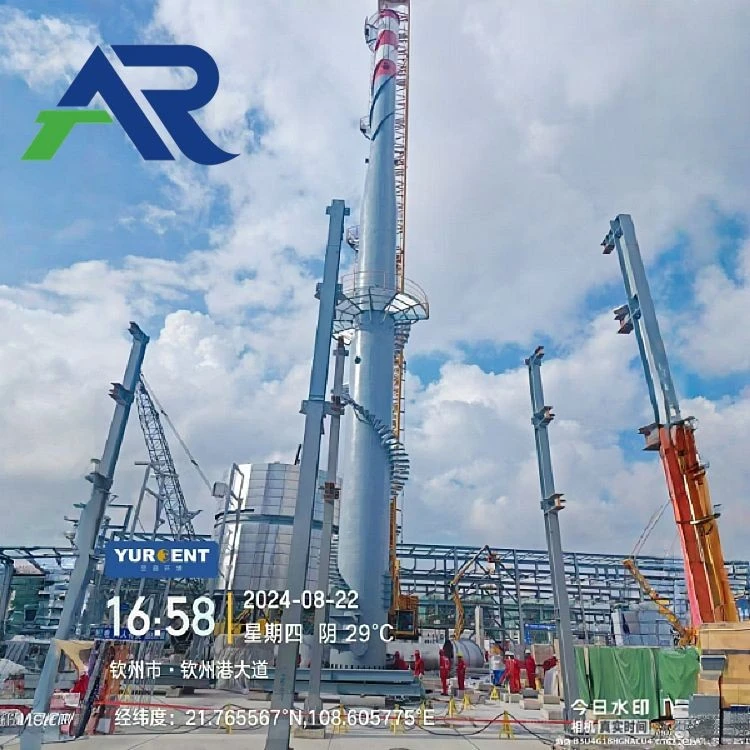
Multi - sleeve Chimney
A multi - sleeve chimney consists of multiple layers of stainless steel or other materials. The inner sleeve is usually the one that comes into direct contact with the exhaust gases, so it needs to have excellent corrosion resistance.
For the inner sleeve, a high - grade stainless steel like 316 or 2205 is often used. The outer sleeve can be made of a less expensive material like 430 stainless steel if it's mainly for protection and structural support. This way, you can balance cost and performance. For example, in a large industrial complex with a multi - sleeve chimney, using 2205 for the inner sleeve and 430 for the outer sleeve can provide a cost - effective solution while still ensuring good performance and durability.
Factors to Consider When Selecting Stainless Steel for Factory Chimneys
- Exhaust Gas Composition: Analyze the types of gases, acids, and particles in the exhaust. If there are high levels of chlorides, sulfur, or other corrosive substances, choose a stainless steel grade with high corrosion resistance.
- Temperature: Consider the maximum and minimum temperatures the chimney will experience. Some stainless steels perform better at high temperatures than others. For example, austenitic stainless steels generally have better high - temperature stability.
- Cost: Balance the cost of the stainless steel with the performance requirements. If the environment is not extremely corrosive, using a less expensive grade like 304 or 430 can save money without sacrificing too much performance.
- Location: If the factory is near the coast or in a high - pollution area, choose a stainless steel grade with better corrosion resistance to protect against the harsh environmental conditions.
Conclusion
As a supplier of Stainless Steel Factory Chimney, I understand that choosing the right type of stainless steel for your factory chimney is crucial. Each type of stainless steel has its own advantages and limitations, and the decision should be based on a careful consideration of the chimney's environment, the exhaust gas composition, and your budget.
Whether you need a Single Sleeve Chimney or a Multi - sleeve Chimney, we can help you select the most suitable stainless steel grade. If you're in the process of building or replacing a factory chimney, don't hesitate to contact us for professional advice. We're here to ensure that your chimney is made of the right material and will provide long - term, reliable performance.
If you're interested in discussing your specific requirements or have any questions about the types of stainless steel for factory chimneys, feel free to reach out to us. We're more than happy to assist you in making the best choice for your factory.
References
- ASM Handbook Volume 13A: Corrosion - Fundamentals, Testing, and Protection
- Stainless Steel World Magazine
- The Welding Institute (TWI) Publications on Stainless Steel Applications