

Hey there! As a supplier of various Traffic Signal Pole Types, I've seen firsthand how different pole installations can have a significant impact on vehicle safety. In this blog, I'll dive into the ins and outs of how these poles play a crucial role in keeping our roads safe.
First off, let's talk about the different Traffic Signal Pole Types out there. You can check out more about these types on our site Traffic Signal Pole Types. There are several common ones, each with its own unique features and safety implications.
The most basic type is the single - arm pole. It's pretty straightforward, with a single horizontal arm that holds the traffic signals. These are often used at small intersections or in areas with lower traffic volumes. The advantage of a single - arm pole is that it's simple and easy to install. It also provides a clear view of the signals for approaching vehicles. However, if it's not installed correctly in terms of height and angle, the signals might be blocked by large trucks or buses, which can be a real safety hazard. For example, if the pole is too low, a semi - truck traveling in the outside lane might obstruct the view of the traffic lights for cars in the inner lanes, leading to confusion and potential accidents.
Then we have the double - arm pole. As the name suggests, this type has two horizontal arms, which can hold multiple sets of traffic signals. Double - arm poles are great for larger intersections with multiple lanes or complex traffic patterns. They allow for better organization of signals, making it easier for drivers to understand which lane they should follow. But again, the installation is key. If the arms aren't properly balanced, the pole could become unstable over time. A strong gust of wind or a minor collision might cause the arms to sway or even break, which could not only damage the signals but also pose a danger to passing vehicles and pedestrians.
Another important type is the mast - arm pole. These are tall, vertical poles with long horizontal arms that can span across multiple lanes. Mast - arm poles are commonly used on highways and major roads. They offer a wide - angle view of the traffic signals, ensuring that drivers from different lanes can see them clearly. However, due to their height and length, the installation process is more complex. The foundation needs to be extremely sturdy to support the weight of the pole and the signals. If the foundation isn't properly constructed, the pole could lean or topple over, especially during extreme weather conditions like hurricanes or earthquakes.
Now, let's talk about how the installation process itself affects vehicle safety. The location of the traffic signal pole is of utmost importance. It should be placed in a way that maximizes visibility for all approaching vehicles. For instance, it shouldn't be hidden behind trees, buildings, or other obstacles. If a driver can't see the traffic signals in time, they might not be able to react appropriately, which can lead to rear - end collisions, running red lights, and other dangerous situations.
The height of the pole also matters a lot. It needs to be set at a height that is visible to all types of vehicles, from small compact cars to large commercial trucks. A standard height ensures that the signals are not obscured by other vehicles in the traffic stream. In addition, the angle at which the signal heads are mounted on the pole is crucial. They should be angled so that they are visible from different distances and angles approaching the intersection.
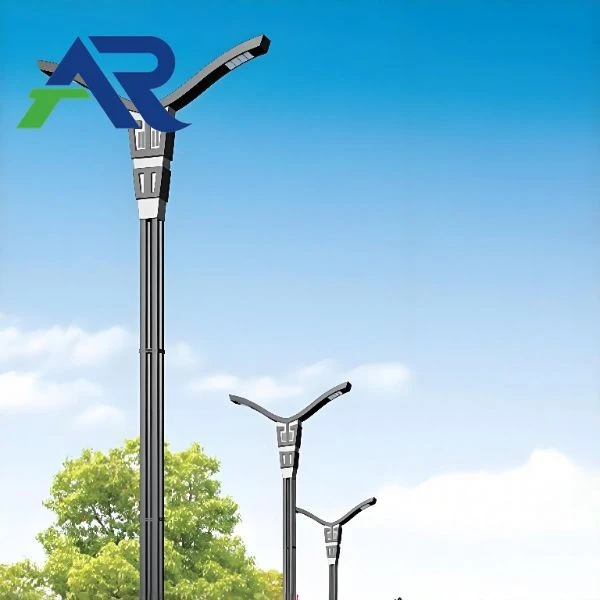

Proper installation also involves ensuring that the electrical connections are secure. Faulty electrical connections can cause the traffic signals to malfunction. For example, a short circuit might cause the lights to flicker or not work at all. This can create a chaotic situation on the road, with drivers not knowing when to stop or go. It's a recipe for accidents.
Let's not forget about the maintenance aspect. Once the traffic signal poles are installed, regular maintenance is necessary to keep them in good working condition. Over time, the poles can get damaged by weather, vehicle collisions, or general wear and tear. For example, rust can weaken the structure of the pole, making it unstable. If the signals are not properly maintained, their bulbs might burn out, and the reflectors may become dirty or damaged, reducing their visibility. We also offer solutions like Smart Light Pole which can help with real - time monitoring and maintenance alerts.
In some cases, the integration of traffic signal poles with other infrastructure elements can enhance vehicle safety. For instance, when combined with Municipal Light Pole, they can provide better illumination at intersections, making it easier for drivers to see the signals and other road users at night.
As a supplier, I've seen how a well - installed traffic signal pole can make a huge difference in preventing accidents and keeping traffic flowing smoothly. Whether it's choosing the right type of pole for a specific location or ensuring a proper installation process, every detail counts.
If you're in charge of a project that involves traffic signal poles or are looking to upgrade your existing systems, getting the right advice and products is crucial. Don't hesitate to reach out for a consultation. We have a team of experts who can help you choose the best Traffic Signal Pole Types for your needs and ensure a safe and efficient installation. Contact us today to start the procurement process and let's work together to make our roads safer!
References
- Transportation Research Board. (20XX). Traffic Signal Design Handbook.
- Federal Highway Administration. (20XX). Guidelines for Traffic Signal Installation.
- International Association of Traffic and Safety Sciences. (20XX). Impact of Traffic Signal Infrastructure on Road Safety.