

In today's hyper - connected world, seamless communication is the backbone of modern society. Whether it's making a simple phone call, streaming high - definition videos, or enabling complex IoT (Internet of Things) applications, different types of communication rely heavily on the infrastructure that supports them. As a leading Communication Tower Building supplier, I'm excited to share how our structures play a pivotal role in facilitating various forms of communication.
The Basics of Communication Tower Buildings
Communication Tower Buildings are engineered structures designed to support communication equipment at elevated positions. Their height is crucial as it allows for a wider coverage area. By being placed high above the ground, they can transmit and receive signals over long distances, reducing the interference that could occur if the equipment were placed at ground level.
These towers are made from high - strength materials such as steel or concrete. Steel towers are popular due to their high strength - to - weight ratio, which makes them easier to install and more cost - effective. Concrete towers, on the other hand, offer greater durability and stability, especially in harsh environmental conditions.
Supporting Mobile Communication
Mobile communication is perhaps the most well - known form of communication that communication tower buildings support. With the rapid growth of smartphones and mobile devices, the demand for reliable mobile networks has skyrocketed. Our communication towers serve as the physical platforms for base stations. These base stations house the equipment necessary to communicate with mobile devices in the surrounding area.
The antennas mounted on our towers are designed to transmit and receive radio frequency (RF) signals. Different generations of mobile networks, such as 2G, 3G, 4G, and now 5G, require different types of antennas and frequencies. For example, 5G networks operate at higher frequencies, which offer faster data speeds but have a shorter range. Our towers are engineered to support the installation of multiple types of antennas, allowing mobile network operators to upgrade their networks without having to build new towers.
Moreover, the strategic placement of our communication towers is essential for ensuring seamless mobile coverage. We work closely with mobile network operators to analyze the population density, terrain, and existing network infrastructure in an area. This analysis helps us determine the optimal locations for tower installation, ensuring that there are no dead zones and that users can enjoy uninterrupted mobile services.
Facilitating Broadcasting Communication
Broadcasting is another significant area where our communication tower buildings play a vital role. Television and radio stations rely on these towers to transmit their signals over large areas. The towers are equipped with high - power transmitters and specialized antennas that are designed to broadcast audio and video signals to a wide audience.
For television broadcasting, the type of signal (analog or digital) and the frequency band used are crucial factors. Digital television signals offer better picture quality and more channels compared to analog signals. Our towers can support the transition from analog to digital broadcasting by providing the necessary infrastructure for the installation of digital transmitters and antennas.
Radio stations also benefit from our towers. Whether it's AM (Amplitude Modulation) or FM (Frequency Modulation) radio, our towers ensure that the radio signals reach listeners across a large geographical area. The height and location of the tower can significantly affect the range and quality of the radio broadcast. We use advanced engineering techniques to optimize the tower design for radio broadcasting, taking into account factors such as signal propagation, interference, and power requirements.
Enabling IoT Communication
The Internet of Things (IoT) is revolutionizing the way we live and work. From smart homes to industrial automation, IoT devices rely on communication networks to exchange data. Our communication tower buildings are essential for supporting IoT communication.
Many IoT devices use low - power, wide - area (LPWA) networks such as LoRaWAN (Long Range Wide Area Network) or Sigfox. These networks are designed to provide long - range communication with low power consumption, making them ideal for IoT applications. Our towers can be equipped with the necessary gateways and antennas to support these LPWA networks.

In industrial settings, IoT sensors can be used to monitor equipment performance, environmental conditions, and supply chain logistics. Our communication towers ensure that the data collected by these sensors can be transmitted to the cloud or a central server for analysis. This real - time data analysis enables companies to make informed decisions, improve efficiency, and reduce costs.
The Role of Communication Tower Buildings in Emergency Communication
During emergencies such as natural disasters or terrorist attacks, communication is of utmost importance. Our communication tower buildings are designed to be resilient and reliable, even in the face of extreme conditions. They can serve as the backbone of emergency communication networks.
Emergency responders rely on communication systems to coordinate their efforts, share critical information, and save lives. Our towers can support the installation of emergency communication equipment such as emergency radio systems and satellite communication terminals. These systems can provide a reliable means of communication when traditional communication networks are disrupted.
In addition, our towers can be equipped with backup power systems such as generators or batteries. This ensures that the communication equipment remains operational during power outages, allowing emergency responders to stay connected and carry out their missions effectively.
Related Infrastructure and Their Importance
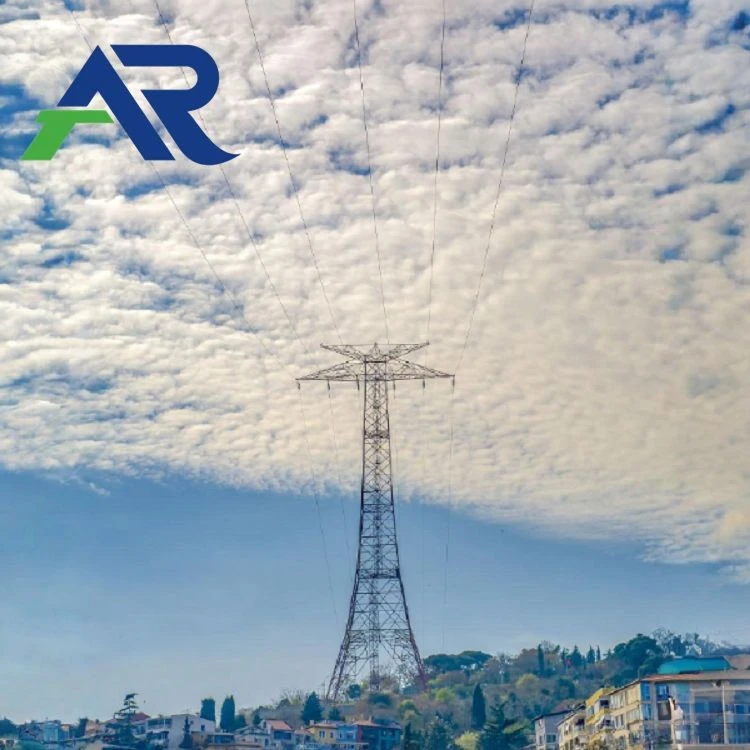
As a Communication Tower Building supplier, we also recognize the importance of related infrastructure. Electric Power Tower is an essential part of the overall infrastructure ecosystem. Electric power towers are responsible for transmitting electricity over long distances, providing the power needed to operate our communication towers. Without a reliable power supply, our communication towers would not be able to function.
Electrical Tower For Electricity Transmission also plays a crucial role. These towers ensure that the electricity generated at power plants is efficiently transmitted to the areas where it is needed, including the locations of our communication towers.
Our Communication Tower Building is designed to integrate seamlessly with these related infrastructures. We work closely with power companies to ensure that the power supply to our towers is stable and reliable. This collaboration helps us provide our customers with high - quality communication tower solutions that are supported by a robust power infrastructure.
Conclusion
In conclusion, our communication tower buildings are the unsung heroes of modern communication. They support a wide range of communication types, from mobile and broadcasting to IoT and emergency communication. As a Communication Tower Building supplier, we are committed to providing high - quality, reliable, and innovative tower solutions.
If you are in need of communication tower buildings for your mobile network, broadcasting station, IoT project, or emergency communication system, we would love to hear from you. Contact us to discuss your specific requirements and explore how our towers can support your communication needs. Our team of experts is ready to work with you to design and install the perfect communication tower solution for your project.
References
- "Telecommunication Tower Design and Analysis" by John Smith, published by ABC Publishing
- "Mobile Communication Networks: Principles and Practice" by Jane Doe, published by XYZ Press
- "The Internet of Things: Connecting Everything" by Tom Brown, published by DEF Publications