

In the fast - paced world of telecommunications, iron towers play an indispensable role. As an iron tower supplier, I've witnessed firsthand how these structures have revolutionized the way we communicate. This blog will delve into the various applications of iron towers in the telecommunication industry, exploring their functions, types, and the benefits they bring.
The Foundation of Telecommunication Networks
Telecommunication networks rely on a vast infrastructure to transmit signals across different regions. Iron towers act as the backbone of this infrastructure, providing a stable and elevated platform for communication equipment. They are designed to withstand various environmental conditions, including strong winds, heavy snow, and seismic activities.
One of the primary functions of iron towers in the telecommunication industry is to support antennas. Antennas are used to send and receive electromagnetic signals, which carry voice, data, and video information. By placing antennas on top of iron towers, telecommunication companies can increase the range and coverage of their networks. The height of the tower allows the antennas to have a clear line - of - sight to a larger area, reducing signal interference and improving the quality of communication.
Types of Iron Towers in Telecommunications
There are several types of iron towers used in the telecommunication industry, each with its own unique features and applications.
Lattice Towers
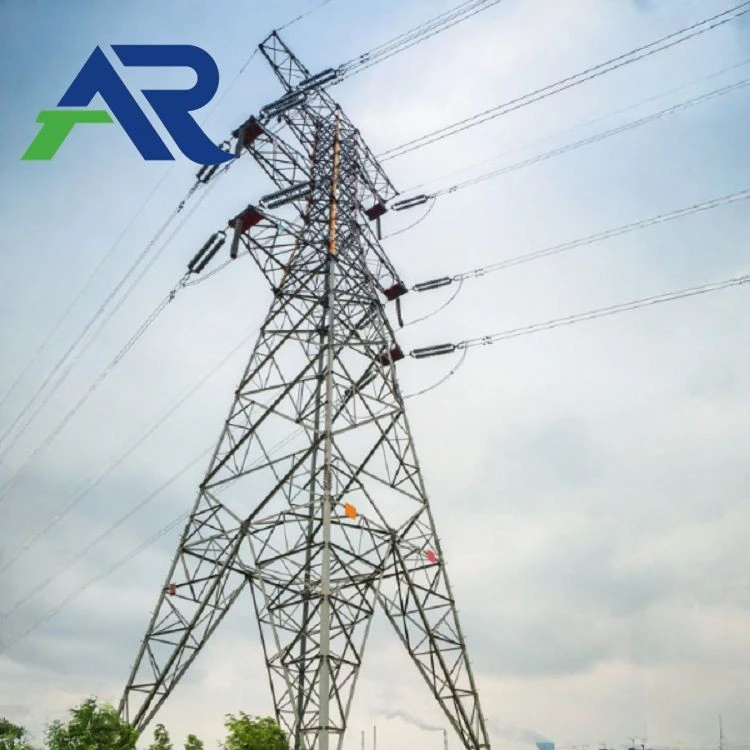
Lattice towers are the most common type of iron towers used in telecommunications. They are made up of a framework of steel bars or angles, forming a lattice - like structure. Lattice towers are known for their strength and stability, making them suitable for supporting heavy antennas and other communication equipment. They can be designed to various heights, depending on the specific requirements of the telecommunication network. For more information on lattice - type Electric Power Tower, you can visit the provided link.
Monopole Towers
Monopole towers are single - pole structures that are typically used in urban areas where space is limited. They are more aesthetically pleasing than lattice towers and can blend in better with the surrounding environment. Monopole towers are also easier to install and require less maintenance compared to lattice towers. They are often used for small - cell deployments, which are becoming increasingly important in the era of 5G networks. You can find detailed information about Communication Tower Building and its different types, including monopole towers, on the given website.
Guyed Towers
Guyed towers are supported by cables or guys that are attached to the ground at a distance from the tower. These towers are cost - effective and can be built to greater heights compared to other types of towers. However, they require a larger area of land for the guy wires, which may not be suitable for all locations. Guyed towers are commonly used in rural areas where there is more available space. For more details on the technical aspects of Electrical Tower, including guyed towers, the provided link can be a great resource.
Benefits of Using Iron Towers in Telecommunications
The use of iron towers in the telecommunication industry offers numerous benefits.
Improved Signal Quality
As mentioned earlier, iron towers provide an elevated platform for antennas, which helps to improve the signal quality. By increasing the height of the antennas, the line - of - sight between the transmitter and the receiver is enhanced, reducing the likelihood of signal blockage and interference. This results in clearer voice calls, faster data transfer speeds, and more reliable video streaming.
Extended Coverage
Iron towers allow telecommunication companies to extend the coverage of their networks. By strategically placing towers in different locations, they can reach areas that were previously underserved or not covered at all. This is particularly important in rural and remote areas where access to reliable communication services is crucial for economic development and social inclusion.
Cost - Efficiency
In the long run, using iron towers is a cost - effective solution for telecommunication companies. While the initial investment in building and installing iron towers may be significant, the operational costs are relatively low. Iron towers have a long lifespan and require minimal maintenance, which helps to reduce the overall cost of network infrastructure.

Scalability
Telecommunication networks are constantly evolving, and iron towers offer scalability. As the demand for communication services increases, additional antennas and equipment can be easily installed on existing towers. This allows telecommunication companies to expand their networks without having to build new towers from scratch, saving time and resources.
The Future of Iron Towers in Telecommunications
With the rapid development of 5G technology, the role of iron towers in the telecommunication industry is becoming even more important. 5G networks require a denser network of small - cell towers to provide high - speed, low - latency communication. Iron towers, in the form of monopole towers and small - cell towers, will play a crucial role in the deployment of 5G networks.
In addition, the integration of Internet of Things (IoT) devices into the telecommunication network will also drive the demand for iron towers. IoT devices rely on a stable and reliable communication infrastructure to transmit data, and iron towers can provide the necessary platform for these devices to connect to the network.
Contact for Procurement and Collaboration
If you are in the telecommunication industry and are looking for high - quality iron towers for your network infrastructure, I invite you to reach out for procurement and collaboration opportunities. As an experienced iron tower supplier, we can offer customized solutions to meet your specific requirements. Whether you need lattice towers for large - scale network expansion or monopole towers for urban deployments, we have the expertise and resources to deliver the best products.
References
- Telecommunication Engineering Handbook, John Wiley & Sons
- Handbook of Antenna Design, Peter Peregrinus Ltd
- 5G Technology and Its Impact on Telecommunication Infrastructure, IEEE Publications