

When it comes to the construction of electric power towers, the choice of materials is crucial as it directly impacts the tower's performance, durability, and cost - effectiveness. As a seasoned Electric Power Tower supplier, I've witnessed firsthand the importance of selecting the right materials for these vital structures that transmit electricity across vast distances.
Steel
Steel is perhaps the most commonly used material in the construction of electric power towers. Its popularity stems from several key properties. First and foremost, steel has high strength - to - weight ratio. This means that it can support heavy loads, such as the weight of the electrical conductors and the forces exerted by wind and ice, while still being relatively lightweight compared to other materials. This makes it easier to transport and erect the towers.
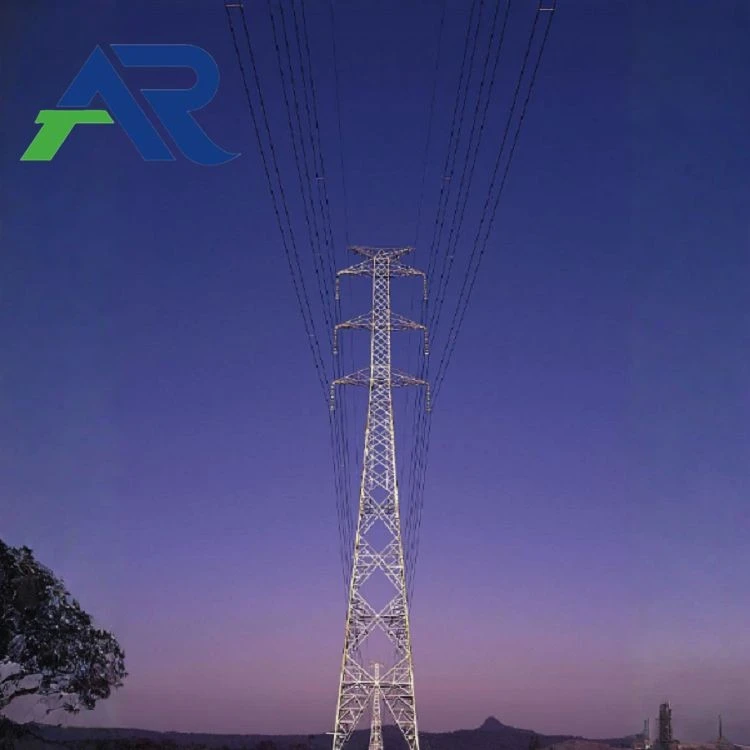
There are different types of steel used in power tower construction. Carbon steel is a popular choice due to its affordability and good mechanical properties. It can be easily fabricated into various shapes and sizes, allowing for the customization of power towers to meet specific project requirements. For example, lattice towers, which are widely used for high - voltage transmission lines, are often made of carbon steel sections that are bolted or welded together.
Stainless steel, on the other hand, is used in more corrosive environments. It contains chromium, which forms a passive oxide layer on the surface, protecting the steel from rust and corrosion. While stainless steel is more expensive than carbon steel, it offers long - term durability, especially in coastal areas or industrial regions where the air is polluted.
Concrete
Concrete is another important material for electric power towers, particularly for monopole towers. Monopole towers are single - shaft structures that are often used in urban or suburban areas where space is limited. Concrete offers excellent compressive strength, which means it can withstand heavy vertical loads.
The construction process of concrete power towers involves pouring concrete into a formwork on - site or pre - casting the tower sections in a factory. Pre - cast concrete towers have the advantage of better quality control as they are manufactured in a controlled environment. They can also be quickly assembled on - site, reducing construction time.
One of the main benefits of concrete towers is their low maintenance requirements. Unlike steel towers, which may require regular painting or coating to prevent corrosion, concrete towers are relatively resistant to environmental factors. However, concrete is heavy, which can pose challenges during transportation and installation.
Wood
Wood has been used in the construction of electric power towers for many years, especially in rural areas or for low - voltage distribution lines. Wood is a renewable resource, and it is relatively inexpensive compared to steel and concrete. It also has good insulation properties, which can reduce the risk of electrical arcing.
There are different types of wood used for power towers, such as Douglas fir and pine. These woods are treated with preservatives to protect them from decay, insects, and fungi. Treated wood can last for several decades, making it a cost - effective option for some applications.
However, wood has some limitations. It is susceptible to fire, and its strength can be affected by moisture and weathering over time. As a result, wood power towers may require more frequent inspections and maintenance compared to steel or concrete towers.
Composite Materials
In recent years, composite materials have emerged as an alternative for electric power tower construction. Composites are made by combining two or more materials with different properties to create a material with enhanced performance. For example, fiberglass - reinforced polymer (FRP) composites are commonly used.
FRP composites have high strength - to - weight ratio, corrosion resistance, and electrical insulation properties. They are also non - conductive, which can be an advantage in areas where there is a risk of lightning strikes. Additionally, FRP composites can be molded into complex shapes, allowing for innovative tower designs.
The main drawback of composite materials is their high cost. However, as technology advances and production processes become more efficient, the cost of composite power towers is expected to decrease, making them a more viable option in the future.
Aluminum
Aluminum is sometimes used in the construction of electric power towers, especially for lightweight and portable towers. Aluminum has a low density, which makes it much lighter than steel. This property is beneficial for applications where the tower needs to be easily transported or installed in remote areas.
Aluminum also has good corrosion resistance, as it forms a thin oxide layer on its surface that protects it from rust. However, aluminum has lower strength compared to steel, so it may not be suitable for large - scale, high - voltage transmission towers.
Hybrid Materials
In some cases, hybrid materials are used to combine the advantages of different materials. For example, a power tower may have a steel frame with a concrete base. This combination allows the tower to benefit from the high strength of steel and the excellent compressive strength of concrete.
Another example of a hybrid tower is one that uses a steel lattice structure with a composite outer layer. The steel provides the structural support, while the composite layer offers corrosion resistance and electrical insulation.
As an Electric Power Tower supplier, we understand the importance of choosing the right materials for each project. We work closely with our clients to assess their specific needs, including the location of the tower, the voltage of the transmission line, and the environmental conditions. Whether you need an Electrical Tower, Iron Towers, or an Electric Power Tower, we have the expertise and resources to provide you with a high - quality solution.
If you are interested in purchasing electric power towers or have any questions about the materials and design options, please feel free to contact us for a detailed consultation. We are committed to providing you with the best products and services to meet your power transmission needs.
References
- American Society of Civil Engineers (ASCE). (2010). Guidelines for Electrical Transmission Line Structural Loading.
- International Electrotechnical Commission (IEC). (2016). Standard for Design and Construction of Steel Transmission Towers.
- Concrete Reinforcing Steel Institute (CRSI). (2018). Design Manual for Concrete Structures.