

Hey there! I'm a supplier of Corrugated Pipe for Coal Mine Corridor. Today, I wanna have a chat about a super important topic: What is the pressure - bearing capacity of corrugated pipes in coal mine corridors?
First off, let's understand the significance of corrugated pipes in coal mine corridors. Coal mine corridors are tough environments. There are all sorts of pressures at play, like the weight of the surrounding rock, the pressure from groundwater, and even the impact of mining operations. Corrugated pipes are used for various purposes in these corridors, such as drainage, ventilation, and cable protection. And their pressure - bearing capacity is crucial for the smooth and safe operation of the coal mine.
So, what factors affect the pressure - bearing capacity of these corrugated pipes?
Material of the Corrugated Pipe
The material is a major factor. Most corrugated pipes for coal mine corridors are made of steel or high - density polyethylene (HDPE). Steel pipes are known for their high strength. They can withstand a large amount of external pressure. The carbon content and alloying elements in the steel determine its mechanical properties. For example, a steel pipe with a higher carbon content generally has higher strength, which means it can bear more pressure. On the other hand, HDPE pipes are lightweight and corrosion - resistant. Although they may not have the same strength as steel pipes, they can still handle a certain level of pressure. Their flexibility also allows them to adapt to some degree of deformation without breaking. You can check out more about different types of corrugated pipes at Corrugated Pipe for Subway Passage.
Corrugation Design
The shape and size of the corrugations play a big role in the pressure - bearing capacity. The corrugations act like ribs, providing additional stiffness to the pipe. A well - designed corrugation can distribute the pressure evenly along the pipe wall. For instance, pipes with deeper and wider corrugations can usually bear more pressure compared to those with shallow and narrow ones. The pitch between the corrugations also matters. A smaller pitch means more corrugations per unit length, which can enhance the pipe's ability to resist deformation under pressure.
Installation Conditions
How the pipe is installed in the coal mine corridor can greatly affect its pressure - bearing capacity. If the pipe is not properly supported, it may experience uneven stress, which can lead to premature failure. The backfill material around the pipe is also important. A well - compacted backfill can provide lateral support to the pipe, helping it to withstand the external pressure. Moreover, the alignment of the pipe during installation is crucial. Any misalignment can cause stress concentrations at certain points on the pipe wall, reducing its overall pressure - bearing capacity.
External Environment
The coal mine environment is full of challenges. The depth of the corridor, the type of rock formation, and the groundwater level all impact the pressure on the pipe. In deeper corridors, the overburden pressure is higher, which means the pipe has to bear more weight. Different rock formations have different stiffness and strength. For example, hard rock may exert a more concentrated pressure on the pipe compared to soft rock. Groundwater can also increase the pressure on the pipe, especially if there is a high water table. In addition, mining activities such as blasting can generate shock waves that put additional stress on the pipe.
Now, let's talk about how to calculate the pressure - bearing capacity of corrugated pipes.
There are several methods to calculate the pressure - bearing capacity. One common approach is the theoretical calculation method based on mechanics of materials. This method takes into account the material properties, the geometry of the pipe (including the corrugation design), and the boundary conditions. However, theoretical calculations often make some simplifications and assumptions, so the results may not be completely accurate in real - world situations.
Another method is the experimental method. By conducting full - scale or small - scale tests on the pipes, we can measure their actual pressure - bearing capacity under different conditions. These tests can simulate the real - world environment in the coal mine corridor, including the external pressure, the backfill conditions, and the dynamic effects of mining activities. The data obtained from these tests can be used to validate and improve the theoretical models.
As a supplier of Corrugated Pipe for Coal Mine Corridor, I've seen firsthand the importance of ensuring the high pressure - bearing capacity of our products. We use high - quality materials and advanced manufacturing processes to produce pipes that can meet the strict requirements of coal mine corridors. Our R & D team is constantly working on improving the corrugation design to enhance the pipes' performance.

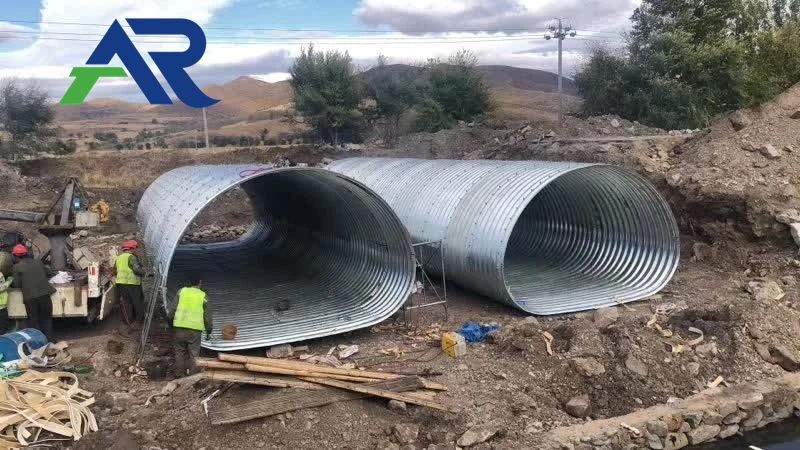
We also provide professional installation guidance to our customers. We know that a proper installation is as important as the quality of the pipe itself. By following our installation instructions, customers can ensure that the pipes can发挥 (oops, I meant "perform") at their best and have a long service life in the coal mine environment.
In addition to coal mine corridors, our corrugated pipes are also suitable for other applications, such as Steel Urban Underground Integrated Pipeline Corridor. The same principles of pressure - bearing capacity apply in these different scenarios.
If you're in the coal mining industry or involved in related projects, and you're looking for reliable corrugated pipes with high pressure - bearing capacity, don't hesitate to get in touch with us. We're here to provide you with the best products and services. Whether you have questions about the product specifications, the installation process, or the price, we're happy to answer them. Let's have a chat and see how we can work together to meet your needs.
References
- "Mechanics of Materials" by James M. Gere
- "Pipeline Engineering in the Mining Industry" by John Smith
- Industry reports on corrugated pipe applications in coal mines