

Hey there! As a supplier of Steel Corrugated Culverts, I've got a ton of experience in this industry. Today, I wanna share with you the quality control points during the manufacturing of steel corrugated culverts.
Material Selection
First off, material selection is super crucial. We need to pick the right type of steel. Usually, high - strength low - alloy steel is a top choice. It offers good corrosion resistance and mechanical properties. We check the steel's chemical composition to make sure it meets the required standards. For instance, the carbon content should be within a specific range. If it's too high, the steel might become brittle, and if it's too low, the strength won't be sufficient.
We also look at the steel's thickness. The thickness directly affects the culvert's strength and durability. A thinner steel might not be able to withstand heavy loads, while an overly thick one can increase the cost unnecessarily. We source our steel from reliable suppliers and always ask for quality certificates. This way, we can be confident in the material we're using. You can learn more about different types of corrugated products like Corrugated Pipe for Coal Mine Corridor on our website.
Corrugation Process
The corrugation process is where the magic happens. The shape and dimensions of the corrugations play a big role in the culvert's performance. The height and pitch of the corrugations need to be accurate. If the height is too low, the culvert might not have enough strength to resist external pressure. On the other hand, if the pitch is too wide, the culvert might not be stable enough.
We use advanced corrugation machines that are precisely calibrated. These machines can produce corrugations with high precision. During the process, we constantly measure the corrugation parameters. We use special measuring tools like calipers and micrometers to ensure that the corrugations meet the design requirements. Any deviation from the standard can lead to problems later on, such as leakage or structural failure.
Welding Quality
Welding is another important aspect. In some cases, we need to weld different sections of the culvert together. The quality of the weld can make or break the culvert's integrity. We use qualified welders who have the necessary certifications. They follow strict welding procedures.
The welding speed, current, and voltage need to be carefully controlled. If the welding speed is too fast, the weld might not be strong enough. And if the current is too high, it can cause over - heating and damage the steel. We also inspect the welds visually and use non - destructive testing methods like ultrasonic testing. This helps us detect any internal defects in the welds. For large - scale projects like Wind Tower Foundation Corrugated Outer Tube, high - quality welding is even more critical.
Surface Treatment
To protect the culvert from corrosion, we apply surface treatments. Galvanizing is a common method. We dip the culvert into a bath of molten zinc. This creates a protective layer on the steel surface. The thickness of the zinc coating is important. If it's too thin, it won't provide sufficient protection. We measure the coating thickness using special instruments.
Another option is painting. We use high - quality paints that are resistant to weathering and chemicals. Before painting, we make sure the surface is clean and free of rust and dirt. A good surface treatment can significantly extend the lifespan of the culvert, especially in harsh environments.
Dimensional Accuracy
The overall dimensions of the culvert must be accurate. The diameter, length, and ovality need to be within the specified tolerance. For example, if the diameter is off, it might not fit properly during installation. We use large - scale measuring equipment like laser measuring devices to ensure the dimensional accuracy.
We also check the straightness of the culvert. A bent or crooked culvert can cause problems during installation and operation. If the culvert is not straight, it can lead to uneven stress distribution and potential failure.
Assembly and Installation
Even after manufacturing, the assembly and installation process need quality control. We provide detailed installation instructions to our customers. During the assembly, we make sure all the parts fit together properly. Any misalignment can cause problems later.
We also conduct on - site inspections during installation if possible. This helps us ensure that the culvert is installed correctly. A well - installed culvert can perform better and last longer. You can find more information about our Steel Corrugated Culvert and its installation on our website.

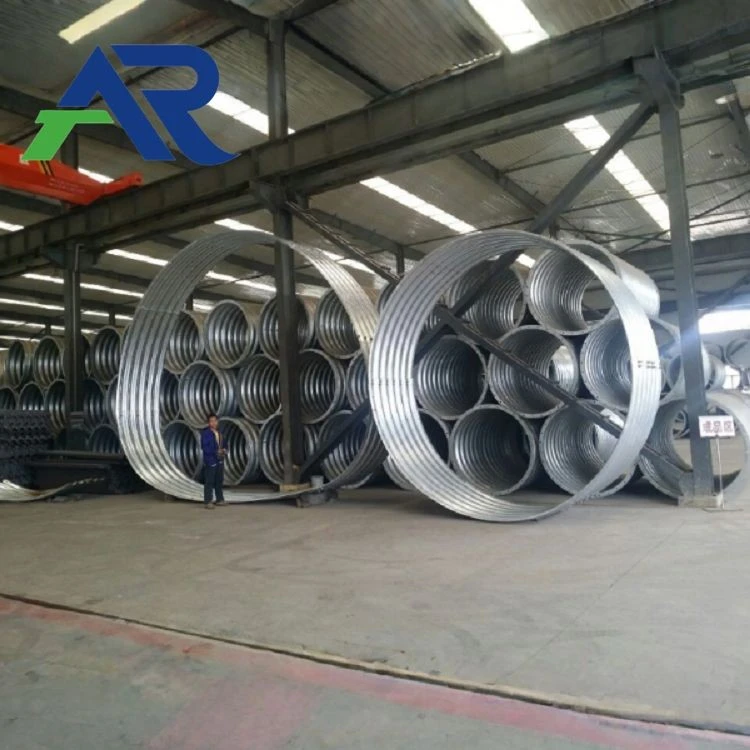
Final Inspection
Before shipping the culvert, we conduct a final inspection. We check all the aspects we've mentioned above one last time. This includes the material quality, corrugation, welding, surface treatment, dimensions, and assembly. We make sure the culvert meets all the quality standards and customer requirements.
If any issues are found during the final inspection, we take immediate action to correct them. We don't want to send out a product that doesn't meet our high - quality standards.
Conclusion
In conclusion, quality control during the manufacturing of steel corrugated culverts is a multi - step process. From material selection to final inspection, every step is crucial. By paying attention to these quality control points, we can produce high - quality culverts that are reliable and durable.
If you're in the market for steel corrugated culverts, don't hesitate to contact us. We're here to provide you with the best products and services. Whether you need a small - scale culvert for a local project or a large - scale one for an industrial application, we've got you covered.
References
- Steel Construction Manual, American Institute of Steel Construction
- ASTM Standards for Corrugated Steel Culverts
- National Association of Corrugated Steel Pipe Manufacturers' Guidelines