
Hey there! As a supplier of Traffic Signal Pole Types, I've gotten a lot of questions about the fire - resistance properties of different traffic signal pole types. So, I thought I'd share some insights on this topic.

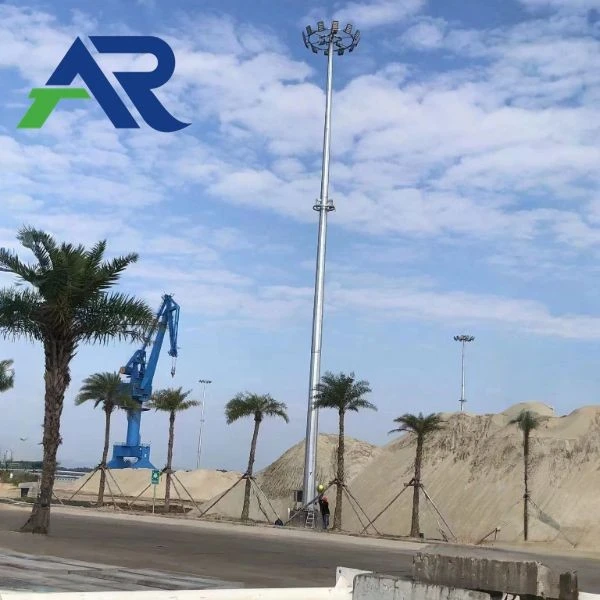
Let's start by understanding why fire - resistance is so important for traffic signal poles. These poles are out in the open, exposed to all sorts of conditions. There could be accidental fires from nearby sources like wildfires, electrical malfunctions, or even arson. A fire - resistant pole can withstand these situations better, ensuring that the traffic signals remain functional and safe for the public.
Steel Traffic Signal Poles
Steel is one of the most common materials used for traffic signal poles. It's strong, durable, and relatively inexpensive. But what about its fire - resistance?
Steel has good structural integrity at normal temperatures. However, when exposed to high temperatures, its strength starts to degrade. At around 500 - 600 degrees Celsius, steel begins to lose its strength significantly. In a fire situation, if the steel pole reaches these temperatures, it can bend or even collapse.
To improve the fire - resistance of steel poles, manufacturers often apply fire - resistant coatings. These coatings act as a barrier between the steel and the heat. They can slow down the rate at which the steel heats up, giving the pole more time to withstand the fire. Some coatings are designed to expand when heated, forming an insulating layer that further protects the steel.
But it's important to note that the effectiveness of these coatings depends on several factors. The quality of the coating, the thickness of the application, and the duration and intensity of the fire all play a role. If the coating is damaged or not applied correctly, its fire - resistant properties can be compromised.
Aluminum Traffic Signal Poles
Aluminum is another popular choice for traffic signal poles. It's lightweight, corrosion - resistant, and easy to install. But when it comes to fire - resistance, aluminum has its own characteristics.
Aluminum has a relatively low melting point compared to steel, around 660 degrees Celsius. When exposed to high temperatures, aluminum can melt quickly. However, unlike steel, aluminum doesn't lose its strength gradually. Instead, once it reaches its melting point, it rapidly loses its structural integrity.
Similar to steel poles, aluminum poles can also be treated with fire - resistant coatings. But because of aluminum's lower melting point, these coatings need to be even more effective at insulating the metal. Some advanced coatings can form a ceramic - like layer when heated, which helps to protect the aluminum from melting.
One advantage of aluminum poles in a fire situation is their light weight. If a fire does cause damage to an aluminum pole, it's less likely to cause as much destruction as a collapsing steel pole. But on the other hand, the quick melting of aluminum can lead to the rapid failure of the traffic signal system.
Fiberglass Traffic Signal Poles
Fiberglass poles are becoming more popular in recent years. They're made of a composite material that consists of glass fibers embedded in a resin matrix. This combination gives fiberglass poles some unique fire - resistant properties.
Fiberglass has a high resistance to heat. It doesn't melt like aluminum or lose its strength like steel at high temperatures. Instead, fiberglass can char on the surface when exposed to fire, but the inner structure remains relatively intact.
The resin used in fiberglass poles also plays a role in its fire - resistance. Some resins are formulated to be self - extinguishing. This means that if a fire starts on the pole, the resin will stop burning once the source of ignition is removed.
However, fiberglass poles also have their limitations. The surface charring can reduce the pole's aesthetic appeal over time. And if the fire is intense enough and lasts for a long time, the fiberglass can eventually break down.
Municipal Light Pole and Smart Light Pole Considerations
When it comes to municipal light poles and smart light poles, which often incorporate traffic signal functions, fire - resistance is even more crucial. These poles are not only responsible for traffic signals but also for lighting and sometimes other smart city features like sensors and communication devices.
Municipal light poles are usually installed in public areas where there's a high risk of fire exposure. Whether it's from a nearby building fire or a wildfire, these poles need to be able to withstand the heat. Smart light poles, on the other hand, have additional electronic components. These components are sensitive to heat and can be easily damaged in a fire.
For both types of poles, choosing the right material and fire - resistant treatment is essential. Steel or aluminum poles with high - quality fire - resistant coatings can be a good option. Fiberglass poles are also a viable choice, especially for their inherent heat resistance.
Factors Affecting Fire - Resistance
Apart from the material and coatings, there are other factors that can affect the fire - resistance of traffic signal poles.
The location of the pole is an important factor. Poles installed in areas prone to wildfires or with a high density of buildings are at a higher risk of fire exposure. In these areas, poles need to have better fire - resistant properties.
The design of the pole also matters. A pole with a more open design allows for better ventilation, which can help to reduce the heat build - up during a fire. On the other hand, a pole with a closed or complex design may trap heat, increasing the risk of damage.
Maintenance is another crucial factor. Regular inspections of the poles can help to identify any damage to the fire - resistant coatings or other components. If a coating is damaged, it should be repaired or reapplied as soon as possible to maintain the pole's fire - resistance.
Making the Right Choice
So, how do you choose the right traffic signal pole with the best fire - resistance properties for your project?
First, consider the location and the fire risk in the area. If you're in a high - risk area, a fiberglass pole or a steel/aluminum pole with advanced fire - resistant coatings may be the way to go.
Second, think about your budget. Fiberglass poles are generally more expensive than steel or aluminum poles, but they offer better fire - resistance in some cases. You need to balance the cost with the level of protection you need.
Finally, don't forget about the long - term maintenance. Choose a pole that is easy to maintain and inspect. This will ensure that the fire - resistant properties of the pole are maintained over time.
If you're interested in learning more about our Traffic Signal Pole Types and their fire - resistance properties, or if you have a specific project in mind, feel free to reach out. We're here to help you make the best choice for your traffic signal needs. Let's start a conversation and see how we can work together to provide you with high - quality, fire - resistant traffic signal poles.
References
- Fire Protection Handbook, National Fire Protection Association
- Composite Materials Handbook, ASTM International
- Research papers on traffic signal pole materials and fire - resistance from leading engineering journals