
Hey there! As a supplier of Traffic Signal Pole Types, I've been getting a lot of questions lately about how wind resistance varies among different types of traffic signal poles. So, I thought I'd dive into this topic and share some insights.
First off, let's talk about why wind resistance matters. Traffic signal poles are out in the open, exposed to all kinds of weather conditions. Strong winds can put a lot of stress on these poles, and if they're not designed to handle it, it could lead to damage or even collapse. That's not only a safety hazard but also a huge headache for maintenance crews and local authorities.
There are several factors that affect a traffic signal pole's wind resistance. One of the most important is the shape of the pole. Poles come in different shapes, such as round, square, and octagonal. Round poles generally have better wind resistance compared to square or octagonal ones. This is because the circular shape allows the wind to flow around the pole more smoothly, reducing the drag force. Square and octagonal poles have flat surfaces that can catch the wind, creating more resistance.
Another factor is the material of the pole. Most traffic signal poles are made of steel or aluminum. Steel poles are known for their strength and durability, but they can be heavier. Aluminum poles, on the other hand, are lighter and more corrosion-resistant. In terms of wind resistance, both materials can perform well if they're properly designed. However, the weight of the pole can play a role. A heavier pole might be more stable in high winds, but it also requires a stronger foundation.
The height of the pole is also a crucial factor. Taller poles are more exposed to stronger winds at higher altitudes. As the height increases, the wind force acting on the pole also increases. So, when designing a traffic signal pole, engineers need to take into account the height and the expected wind speeds in the area. They'll use mathematical models and wind tunnel tests to ensure that the pole can withstand the forces.
Now, let's take a closer look at some specific types of traffic signal poles and how their wind resistance might vary.
Cantilever Poles
Cantilever poles are a popular choice for traffic signals. They have a horizontal arm that extends out from the vertical pole, allowing the traffic signals to be positioned over the roadway. These poles are often used at intersections where multiple lanes need to be covered. In terms of wind resistance, the design of the cantilever arm is important. A longer arm will experience more wind force, so it needs to be properly supported. Engineers will use trusses or other structural elements to strengthen the arm and reduce the risk of bending or breaking in high winds.
Mast Arm Poles
Mast arm poles are similar to cantilever poles, but they usually have a shorter horizontal arm. They're often used for smaller intersections or where less coverage is needed. The shorter arm means that there's less surface area for the wind to act on, which can improve the wind resistance. However, the overall height of the pole still needs to be considered.
Smart Light Poles
Smart Light Poles are becoming more common in modern cities. These poles not only provide traffic signals but also integrate other functions such as lighting, Wi-Fi, and environmental sensors. The additional equipment on these poles can increase the wind resistance. The sensors and other devices add more surface area for the wind to catch. However, manufacturers are aware of this issue and are designing smart light poles with aerodynamic shapes and lightweight materials to minimize the impact on wind resistance.

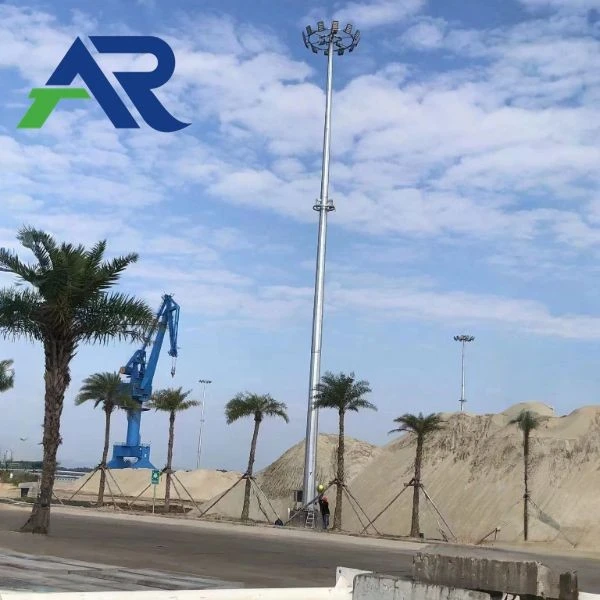
Municipal Light Poles
Municipal Light Poles are used for general street lighting and may also support traffic signals in some cases. These poles are usually shorter and more widely spaced compared to traffic signal poles. Their wind resistance requirements are different, as they're not typically exposed to the same high wind forces as taller traffic signal poles. However, they still need to be designed to withstand the local wind conditions.
When it comes to wind resistance, it's not just about the pole itself. The installation and foundation are also critical. A well-designed foundation can provide the necessary stability for the pole. It needs to be deep enough and strong enough to hold the pole in place, even in high winds. The soil conditions in the area also need to be considered. Soft or sandy soil might require a different type of foundation compared to hard rock soil.
In addition to the design and installation, regular maintenance is essential to ensure the long-term wind resistance of traffic signal poles. Over time, the poles can be affected by corrosion, damage from vehicles, or other factors. Inspections should be carried out regularly to check for any signs of wear and tear. Any damaged parts should be repaired or replaced promptly to maintain the integrity of the pole.
As a supplier of traffic signal poles, we work closely with engineers and contractors to ensure that our poles meet the highest standards of wind resistance. We use advanced manufacturing techniques and quality materials to produce poles that are not only strong but also designed to withstand the elements.
If you're in the market for traffic signal poles, whether it's for a new installation or a replacement project, we'd love to hear from you. We can provide you with detailed information about the different types of poles, their wind resistance capabilities, and how they can be customized to meet your specific needs. Just reach out to us, and we'll be happy to start the conversation about your project.
In conclusion, wind resistance is a complex issue when it comes to traffic signal poles. There are many factors to consider, including the shape, material, height, and design of the pole. By understanding these factors and working with experienced suppliers, you can ensure that your traffic signal poles are safe and reliable in all weather conditions.
References
- "Wind Load Design of Structures" by American Society of Civil Engineers
- "Traffic Signal Design Handbook" by Institute of Transportation Engineers