
Hey there, fellow stargazers and urban dwellers! I'm a supplier of Municipal Light Poles, and I've been thinking a lot about how these poles affect our ability to stargaze in urban areas. It's a topic that's close to my heart because, on one hand, I'm passionate about providing high - quality lighting solutions for cities, and on the other, I know how magical it is to look up at the night sky.
Let's start by understanding what municipal light poles are all about. You can check out more details about Municipal Light Pole. These poles are everywhere in our cities. They line the streets, illuminate parking lots, and make our public spaces safe and accessible at night. They come in all shapes and sizes, from the tall, slender ones on main roads to the shorter, sturdier ones in residential areas.
Now, when it comes to stargazing, the main issue with municipal light poles is light pollution. Light pollution is the excessive or misdirected artificial light that brightens up the night sky. When you have a whole bunch of light poles shining brightly all over the city, they create a glow that makes it difficult to see the stars.
The first way light poles affect stargazing is through skyglow. Skyglow is that hazy, orange - yellow glow you see over cities at night. It's caused by the upward - directed light from light poles and other sources being scattered by the atmosphere. This skyglow effectively drowns out the faint light from stars. Even the most beautiful constellations can be hard to spot because of it. For example, in a truly dark sky, you can see thousands of stars, but in a city with heavy light pollution, you might only be able to see a handful.
Another problem is glare. Glare occurs when the light from a source is too bright and causes discomfort or reduces visibility. Light poles can be a major source of glare, especially if they're not properly shielded. When you're trying to look up at the sky, a bright, unshielded light pole can make your eyes adjust to the bright light, making it even harder to see the dim stars.
But it's not all bad news. There are some ways to mitigate the impact of municipal light poles on stargazing. One solution is to use smart lighting technology. You can learn more about Smart Light Pole. Smart light poles can be programmed to dim or turn off when there's no one around. For example, in a park, the lights can be set to a lower brightness during the late - night hours when there are fewer people. This reduces the amount of light pollution and gives stargazers a better chance of seeing the stars.
Proper shielding is also crucial. When light poles are equipped with shields, they direct the light downwards, where it's needed for safety and visibility, and prevent it from shining upwards into the sky. This significantly reduces skyglow and glare. For traffic areas, different types of poles are used, and you can find out more about Traffic Signal Pole Types. These poles can also be designed with shielding to minimize their impact on the night sky.
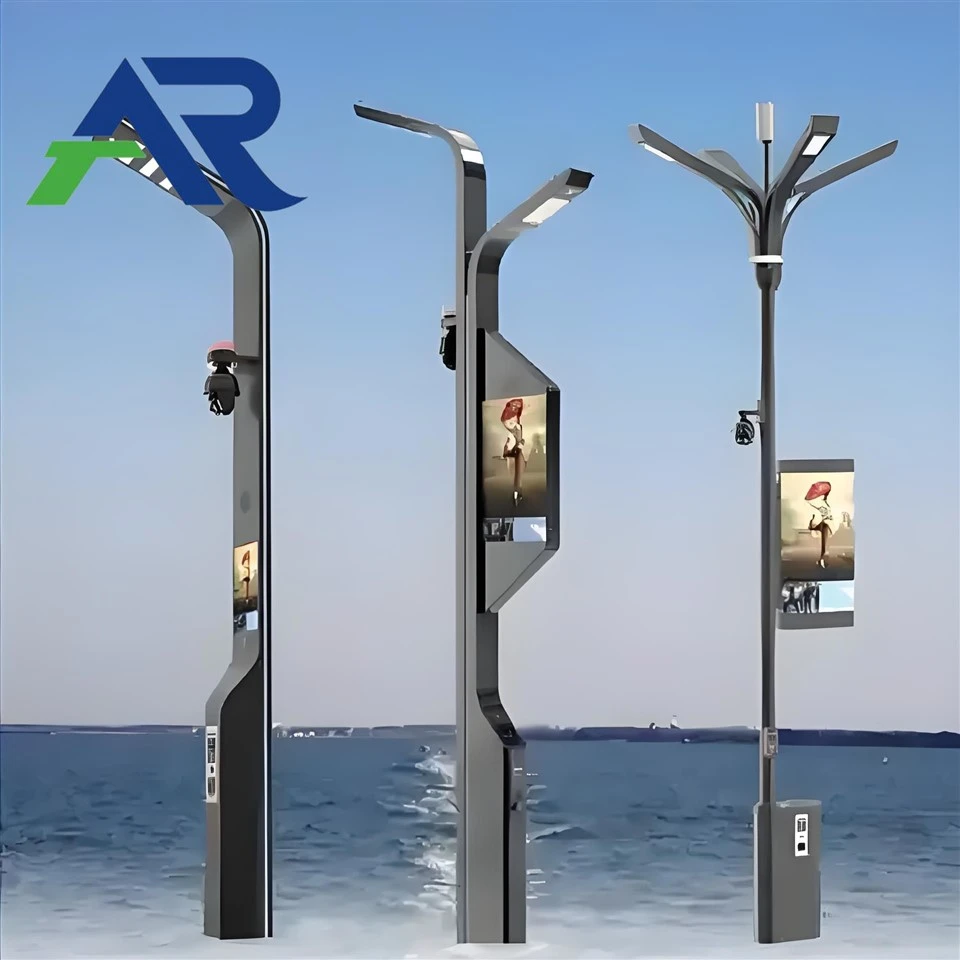

Color temperature is another factor. Lights with a lower color temperature (warmer colors) are less likely to cause light pollution compared to those with a high color temperature (cooler, bluish - white lights). Many modern light poles now offer the option to choose a lower color temperature, which is better for both the environment and stargazing.
As a supplier of municipal light poles, I'm always looking for ways to balance the need for good lighting in cities with the desire to preserve the beauty of the night sky. We're constantly researching and developing new products that are more energy - efficient, have better shielding, and use the right color temperature.
If you're a city planner, an environmentalist, or just someone who loves stargazing and wants to make a difference in your community, I encourage you to consider these factors when it comes to choosing light poles. We offer a wide range of options that can meet your needs while also being more stargazer - friendly.
Whether you're looking to light up a small neighborhood street or a large commercial area, we've got the right solution for you. And if you're interested in learning more about our products or want to discuss a potential project, don't hesitate to reach out. We're here to help you create a well - lit, sustainable, and star - friendly urban environment.
In conclusion, while municipal light poles do have a significant impact on stargazing in urban areas, there are ways to reduce that impact. By using smart technology, proper shielding, and the right color temperature, we can enjoy the benefits of city lighting without completely sacrificing the wonder of the night sky. So, let's work together to make our cities brighter in the right way and keep the stars visible for generations to come.
References
- "Light Pollution: The Global Light Glow." International Dark - Sky Association.
- "The Impact of Artificial Light on Astronomy." Royal Astronomical Society.
- "Smart Lighting Solutions for Urban Areas." Lighting Research Center.