
How are municipal light poles installed?
As a supplier of Municipal Light Pole, I've had the privilege of witnessing firsthand the fascinating process of installing these essential fixtures in urban and rural landscapes alike. The installation of municipal light poles is a multi - step process that requires careful planning, precision, and the right equipment. In this blog, I'll take you through the entire process.
Planning and Design
The first and perhaps most crucial phase of installing municipal light poles is the planning and design stage. This involves a detailed assessment of the area where the light poles will be installed. Factors such as the width of the road, the traffic flow, nearby pedestrian areas, and the overall lighting requirements must be taken into account.
Engineers and planners use advanced software to design the layout of the light poles. They calculate the optimal spacing between poles to ensure uniform illumination. This spacing is based on the wattage of the lighting fixtures, the height of the poles, and the type of area (residential, commercial, or industrial). For example, in a busy commercial district, the light poles might need to be closer together to provide brighter and more consistent lighting.
Local regulations and building codes also play a significant role in the planning process. These regulations govern the height, color, and safety features of the light poles. For instance, some areas might require light poles to be a certain color to blend in with the surrounding environment, while others might have strict requirements for safety features such as break - away bases to prevent injury in case of a vehicle collision.
Site Preparation
Once the planning and design are finalized, the next step is site preparation. This begins with marking the exact locations where the light poles will be installed. Surveyors use GPS and traditional surveying techniques to ensure that the poles are placed accurately according to the design plan.
The ground at the installation sites needs to be prepared to provide a stable foundation for the light poles. This may involve excavating the ground to create a hole for the foundation. The depth and diameter of the hole depend on the height and weight of the light pole. In some cases, soil samples may be taken to determine the soil's bearing capacity, as this will affect the type and size of the foundation required.
For lighter poles, a simple concrete base may be sufficient. However, for taller and heavier poles, a more complex foundation, such as a drilled pier or a pile foundation, might be necessary. The foundation is typically reinforced with steel bars to add strength and stability.
Pole Delivery and Assembly
After the site is prepared, the light poles are delivered to the installation site. As a supplier, we take great care in transporting the poles to ensure they arrive in perfect condition. The poles are usually transported upright on specialized trucks to prevent damage.
Once on - site, the light poles may need to be assembled if they are delivered in sections. This involves bolting or welding the sections together according to the manufacturer's instructions. The assembly process must be carried out with precision to ensure the structural integrity of the pole. At this stage, the lighting fixtures, such as lamps and reflectors, are also attached to the pole. Different types of lighting fixtures may be used depending on the lighting requirements of the area. Energy - efficient LED fixtures are becoming increasingly popular due to their long lifespan and low energy consumption.
Pole Installation
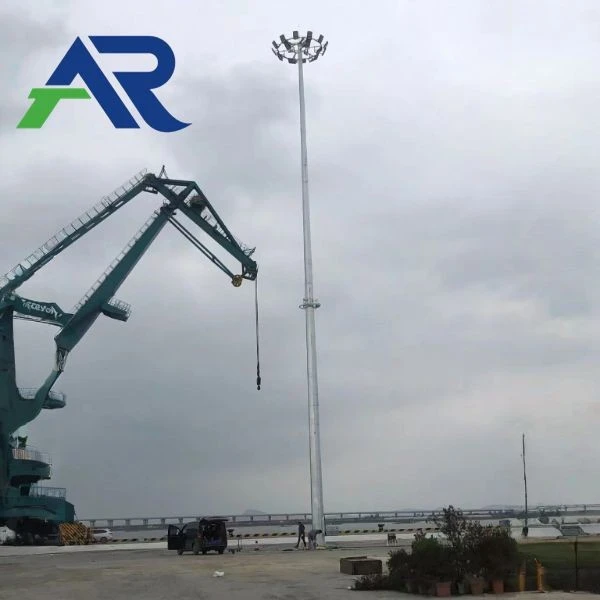
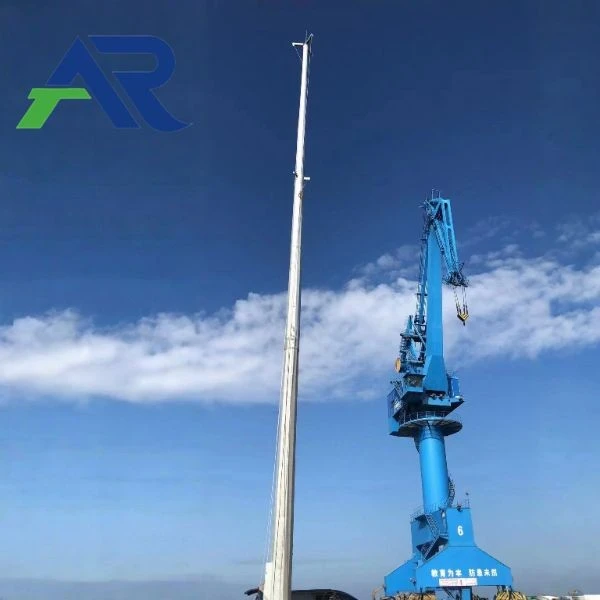
The actual installation of the light pole involves lifting it into place using a crane. The crane operator carefully maneuvers the pole into the prepared foundation hole. Once the pole is in position, it is leveled and plumbed using a spirit level to ensure it is perfectly vertical.
Concrete is then poured into the foundation hole around the base of the pole. The concrete is allowed to set and cure according to the manufacturer's recommendations. This usually takes a few days, during which time the pole must be left undisturbed. During the curing process, the concrete gains strength and bonds securely with the pole and the surrounding soil, providing a stable foundation for the light pole.
Electrical Wiring and Connection
After the foundation has cured, the next step is to install the electrical wiring. This involves running cables from the main power source to each light pole. The cables are typically buried underground to protect them from the elements and potential damage.
At each light pole, the electrical wiring is connected to the lighting fixture. This must be done by a qualified electrician to ensure compliance with electrical codes and safety standards. The wiring is carefully insulated and connected to prevent short circuits and other electrical hazards. Once the wiring is connected, the lighting fixture is tested to ensure it is working properly.
Testing and Commissioning
Once the installation and wiring are complete, a series of tests are conducted to ensure the proper functioning of the light poles. These tests include checking the illumination levels, the electrical connections, and the operation of any control systems.
The illumination levels are measured using specialized light meters to ensure they meet the design specifications. If the illumination levels are too low or too high, adjustments may need to be made to the lighting fixtures or their orientation.
The electrical connections are checked for continuity and proper grounding. Any loose connections or electrical faults are repaired immediately to prevent safety hazards. If the light poles are equipped with a control system, such as a timer or a photocell, the system is tested to ensure it is operating correctly.
After all the tests are successfully completed, the light poles are officially commissioned and put into service.
Maintenance and Upgrades
Even after installation, municipal light poles require regular maintenance to ensure their continued performance and safety. This includes inspecting the poles for signs of damage, such as corrosion or cracks, and replacing any damaged components.
The lighting fixtures also need to be maintained. This may involve replacing bulbs or cleaning the fixtures to ensure optimal illumination. In addition, as technology advances, there may be opportunities to upgrade the light poles. For example, traditional lighting fixtures can be replaced with more energy - efficient LED fixtures, or the poles can be upgraded to Smart Light Pole that incorporate additional features such as environmental sensors or Wi - Fi hotspots.
Conclusion
The installation of municipal light poles is a complex and multi - faceted process that requires careful planning, skilled labor, and the right equipment. From the initial design phase to the final commissioning, every step is crucial to ensuring that the light poles provide safe and effective lighting for the community.
As a supplier of municipal light poles, we are committed to providing high - quality products and supporting our customers throughout the installation and maintenance process. If you are in need of municipal light poles or are interested in learning more about our products, please feel free to contact us for a procurement discussion. We are here to help you find the best lighting solutions for your project.
References
- Lighting Handbook: Reference and Application, Illuminating Engineering Society.
- National Electrical Code, National Fire Protection Association.
- Standard Specifications for Road and Bridge Construction, various local transportation departments.