

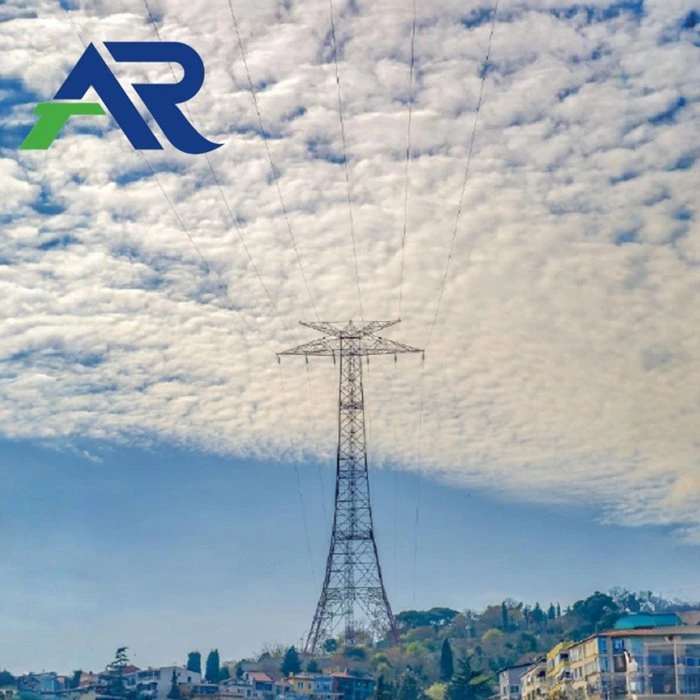
The power transmission line tower is the steel support structure used in overhead electric lines. Its main job is to keep conductors at a safe height, maintain phase spacing, and transfer wire tension, wind load, ice load, and equipment weight to the foundation. It is used in distribution routes, high-voltage transmission routes, crossing sections, and long-distance grid projects. Tower form, steel section, cross arm layout, bolt connection, and anti-corrosion treatment should be selected by voltage grade, span length, turning angle, local weather, and installation ground condition.
Product Parameters
|
Parameter |
Details |
|
Material |
Q235, Q355, Q345, or drawing-specified structural steel |
|
Tower type |
Angle steel tower, steel pipe tower, combined tower, or guyed tower |
|
Voltage range |
10 kV distribution line to high-voltage and ultra-high-voltage routes |
|
Surface treatment |
Hot-dip galvanizing, optional paint or fluorocarbon finish |
|
Connection |
Bolted members, gusset plates, cross arms, and foundation parts |
|
Design life |
Often designed for long outdoor service; galvanizing can support decades of anti-corrosion protection |
Main Applications
1. Straight towers keep the line route steady in normal spans.
2. Angle and tension towers handle conductor pulling force when the route turns or changes height.
3. Crossing towers are used when a power transmission line tower needs extra clearance above roads, rivers, railways, or other lines.
Quality Check
1. Hole position, member length, bolt size, and plate direction should be checked against the approved drawing.
2. Galvanized layer, weld seam, section mark, and packing list should be inspected before delivery.
3. Foundation bolt matching should be checked early to reduce waiting time during site installation.
FAQ
Q: Can the tower be customized by voltage level?
A: Yes. Height, cross arm layout, steel section, and tower type can be designed by voltage, span, and load.
Q: Why are hot-dip galvanized parts common?
A: They protect outdoor steel members from rain and corrosion, so later surface repair is reduced.
Q: What drawings are needed for a power transmission line tower?
A: Plan route data, tower height, conductor data, wind load, ice load, foundation data, and connection drawings are usually needed.
Hot Tags: power transmission line tower, China power transmission line tower manufacturers, suppliers, factory