

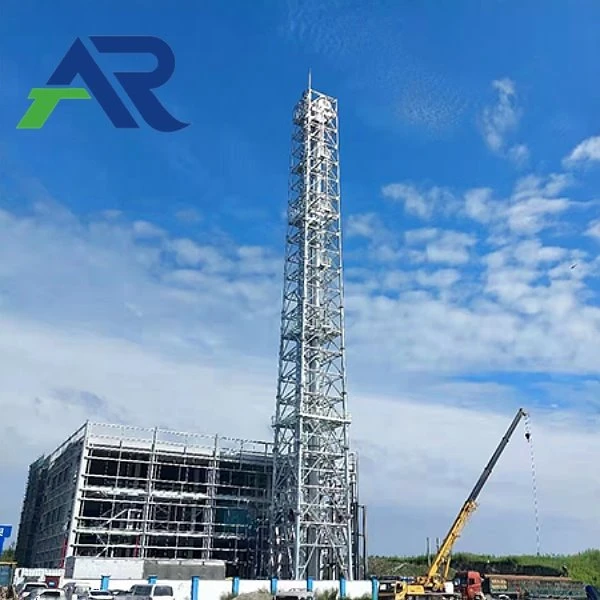
The steel chimney is an exhaust stack made from rolled steel plates and welded cylinder sections. It can be used for industrial boilers, heating systems, power equipment, metallurgical plants, and chemical exhaust lines when the flue gas condition is suitable for steel with paint, lining, or stainless inner parts. Compared with masonry stacks, the steel structure is lighter and can be prefabricated in sections, so site hoisting work is clearer. The outer wall can be treated with primer, intermediate paint, and topcoat, while inner protection is selected by gas temperature, condensate, and corrosion level.
Product Parameters
|
Parameter |
Details |
|
Main body |
Q355B carbon steel or project-specified steel plate |
|
Inner protection |
Anti-corrosion coating, stainless liner, or other lining by gas medium |
|
Connection |
Welded section with flange or field welding joint |
|
Typical accessories |
Ladder, rest platform, manhole, drain point, lightning protection |
|
Surface system |
Epoxy zinc-rich primer, intermediate paint, polyurethane topcoat, or custom coating |
|
Design check |
Wind load, seismic force, foundation, gas temperature, and corrosion class |
Installation Notes
1. Foundation elevation and anchor bolt layout should be checked before the first section is lifted.
2. The lifting order should follow section marks, and flange faces should stay clean before bolt tightening.
3. For a tall steel chimney, verticality should be checked section by section instead of only after final assembly.
Product Advantages
Factory prefabrication can reduce field welding points and make the installation process easier to control.
A painted carbon steel outer shell gives strong support at a lower material cost than full stainless construction in many dry gas projects.
The chimney wall thickness and stiffening rings can be adjusted for local wind load and stack height.
Use Notes
1. Condensate should be drained in time when the exhaust gas contains moisture or acid mist.
2. Paint damage caused during lifting should be touched up before long outdoor exposure.
3. The steel chimney should be matched with gas temperature and corrosion condition, because not all flue gas can use the same lining.
FAQ
Q: Can this chimney be made in sections?
A: Yes. Large stacks are usually made in sections for transport, hoisting, and site alignment.
Q: What affects wall thickness?
A: Height, diameter, wind load, seismic demand, and platform load will affect the wall thickness.
Q: Can the steel chimney be used for wet corrosive gas?
A: It can be used only when a suitable inner lining or stainless inner tube is selected.
Hot Tags: steel chimney, China steel chimney manufacturers, suppliers, factory